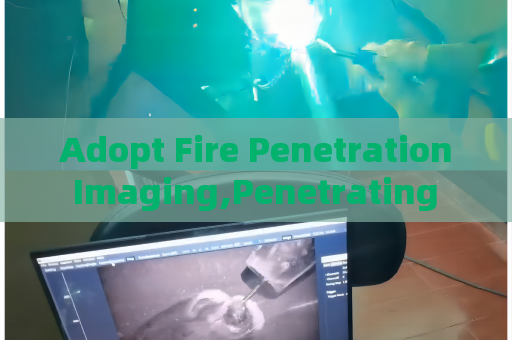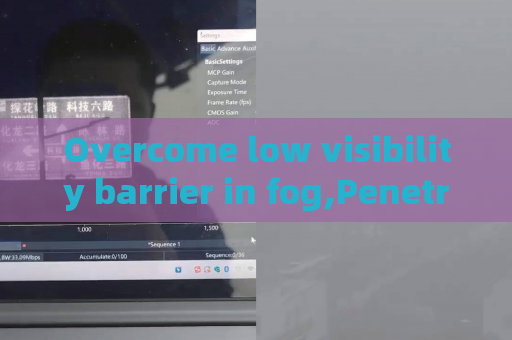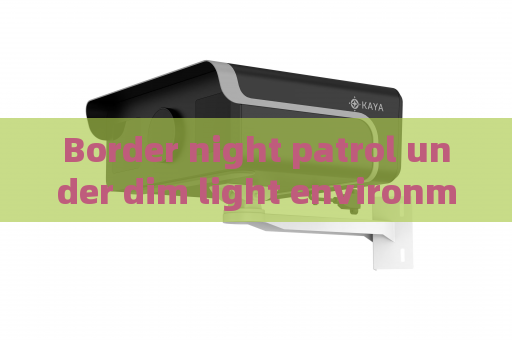
Penetrating Imager serves border tactical defense, adopts Zero-light Imaging to improve remote surveillance capability For border tactical defense, the most persistent surveillance problem appears after dark along unmarked routes, riverbanks, and remote crossing points. Vehicles approach with headlights off, windows closed, and glazing deeply tinted. Ambient light may be absent, while mist, rain, or snow scatters light from distant lamps and creates false highlights. A traditional observation post may detect movement, yet confirm little about the vehicle interior. Occupant count, posture, hand position, and visible equipment remain hidden behind reflective glass. The delay matters because tactical decisions depend on knowing whether a vehicle is civilian, suspicious, or part of an organized crossing attempt. A Penetrating Imager is relevant to this exact gap: remote surveillance must function in near-zero illumination, at long range, and through optical barriers such as vehicle glass without exposing the observation team. The function that addresses this need is laser range-gated imaging, the operating principle of the Penetrating Imager. The system is an advanced optical instrument built around a high-repetition-rate pulsed laser, an image-intensified gated camera with an MCP image intensifier, high-voltage module, timing module, beam expander, and imaging lens. It is an active imaging system. Short light pulses illuminate the target, and the camera gate opens only for the return from the selected distance. This timing suppresses backscatter from fog, rain, haze, and snow, producing high-contrast images with long operating range, high resolution, and strong anti-interference performance. Zero-light Imaging extends that capability into conditions with no useful ambient light, allowing remote surveillance to maintain detail rather than dissolve into noise. The imager works through optical media such as vehicle windows, train windows, aircraft portholes, and glass curtain walls. For border tactical defense, the critical mode is through-glass surveillance: observing a vehicle interior through closed, tinted glazing while the vehicle remains at a safe distance. In practical border operations, the Penetrating Imager can be mounted on a tower, mast, or mobile command platform and directed toward a suspect vehicle or a known crossing corridor. The operator selects a range gate that matches the target distance, so the camera rejects light returning from nearer fog, rain, or reflective ground. The pulsed laser illuminates the vehicle glazing, and the gated camera captures the returning light. The resulting image can show seat rows, silhouettes, movement, and visible objects behind the glass, even when the vehicle cabin receives no external illumination. Through-window tactical observation becomes possible without opening a door, stopping the vehicle, or placing personnel on the road. The same optical path supports covert through-glass recon, because active illumination and gated reception can be brief and directional. This improves remote surveillance capability by turning an uncertain visual return into a readable tactical picture. It also supports continuous monitoring in fog, rain, snow, and haze. The system does not image through opaque solid matter; its advantage is limited to optical media and clear line of sight. For border tactical defense, the operational value comes from early confirmation. A patrol receives an alert from a watchtower or patrol report, and uses the Penetrating Imager to inspect a stopped or moving vehicle through its glass from a concealed position. The image is recorded and streamed to a command post, where a tactical decision can be made before any close approach. If the vehicle moves, the range gate is adjusted to maintain focus on the glazing and cabin. If weather worsens, the gated imaging continues to reject scattered light and preserve contrast. The imager does not replace physical search or legal authority, and it does not reveal what is hidden behind opaque materials. It improves the remote surveillance chain at the precise point where border units need more confidence: night-time, long-range, through-glass observation of vehicle interiors. With Zero-light Imaging, the capability is not merely brighter viewing; it is a timed, active optical method that supports border tactical defense with clearer remote surveillance under zero ambient light.