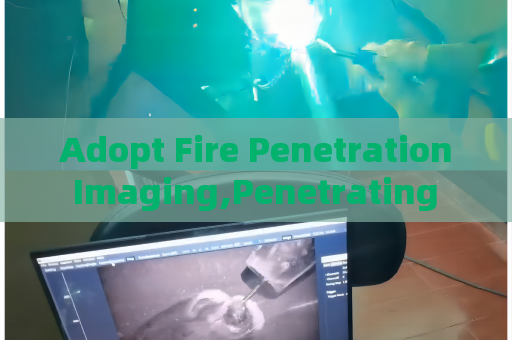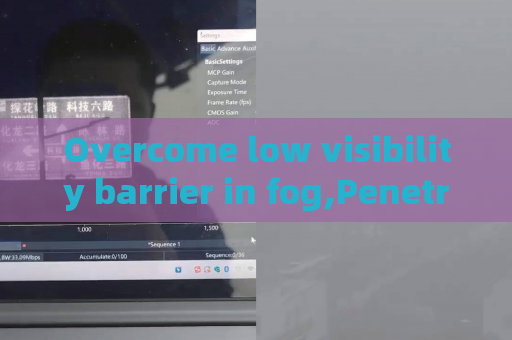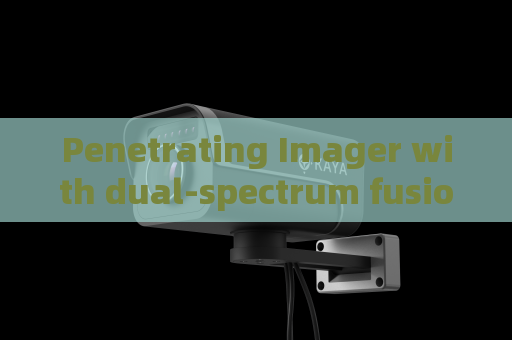
Penetrating Imager with dual-spectrum fusion imaging capability for building fire emergency rescue to locate trapped survivors behind smoke In a building fire, the rescue problem is visual before it is physical. Dense smoke banks along ceilings and corridors, flames bloom, water mist scatters light, and broken glass reflects emergency lamps. A trapped survivor may be only metres away behind a smoke layer, a glass partition, or a curtain wall, yet the naked eye sees a grey wall of particles. Conventional optical cameras lose contrast, saturate on flame, and return backscatter from water droplets. Crews need a fast, non-contact way to confirm human presence without entering every room. The Penetrating Imager is relevant to this exact pressure point, but its role must be understood within optical limits: it does not see through dense smoke, walls, concrete, metal, or clothing. It works with light and optical media. The Penetrating Imager is an advanced optical instrument. Its relevant capability is active laser range-gated imaging, also known as gated imaging, with dual-spectrum fusion imaging capability. A high-repetition pulse laser, beam expander, imaging lens, and image-intensified gated camera with an MCP image intensifier, high-voltage module, and timing module form the optical chain. The system sends short light pulses and opens the camera gate for a selected delay, so returns from a chosen depth are captured while much of the backscatter from flame, mist, haze, rain, snow, and intervening optical clutter is rejected. This active optical system provides high-contrast, long-range, high-resolution imaging with strong anti-interference and effective backscatter rejection. Dual-spectrum fusion combines complementary optical returns to strengthen edge contrast and reveal a human silhouette against fireground glare. Strong Light Suppression Imaging reduces flame bloom and keeps the display readable. The Penetrating Imager can pass through optical media such as vehicle windows, high-speed rail windows, aircraft windows, and glass curtain walls, and it can image clearly despite fire, fog, haze, rain, and snow. Fireground visibility can improve three to five times. Dense smoke remains a hard limit. In use, a fire crew positions the imager at a safe angle and scans windows, glass curtain walls, and other optical openings. The dual-spectrum fusion view is watched for movement, heat-shimmer disruption, or a limb-shaped edge behind smoke-thinned zones and reflective glazing. Range gating isolates a useful depth slice, such as a room interior seen through an intact window, while suppressing the bright flare of a nearby fire and the scattering veil of water spray. If dense smoke fills the entire line of sight, the tool will not produce a through-smoke image; the crew shifts to a window, an open door, a stairwell opening, or an exterior glass facade where the optical path is workable. Through glass, where smoke is thinned or layered, the imager can reveal a trapped survivor who is obscured from direct view by smoke, flame, or mist inside a compartment. The image is not a substitute for entry or search. It is a rapid optical confirmation aid that helps prioritize which window, room, or floor needs immediate rescue attention. The operational value depends on disciplined tactics. A steady rest, short scans, and repeated angles reduce reflection from wet glass and polished curtain walls. The gated camera and pulse laser operate as an active optical system, so an operator must avoid aiming into strong direct flame when a side angle can preserve contrast. A survivor behind a smoke layer may still be detected when a clear optical path exists through a window, glass partition, or exterior glazing; no claim is made for seeing through opaque solids or dense smoke. The Penetrating Imager therefore supports building fire emergency rescue in a narrow but critical task: locating trapped survivors behind smoke when optical barriers and fireground interference compress the rescue window. Its output gives incident command a faster visual cue for where to send search teams, while remaining an optical instrument limited by light, line of sight, and the density of smoke.