Solving the Challenge of Non-Approach Reconnaissance for Tinted Vehicles with Hidden Occupants with Through-Window Imaging
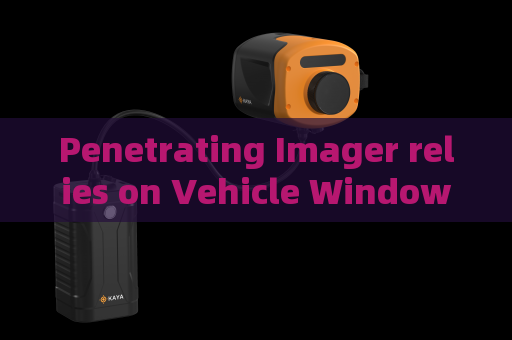
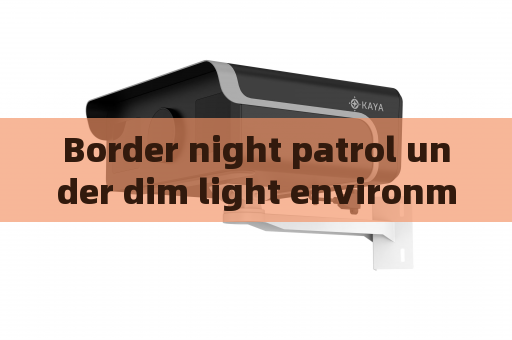
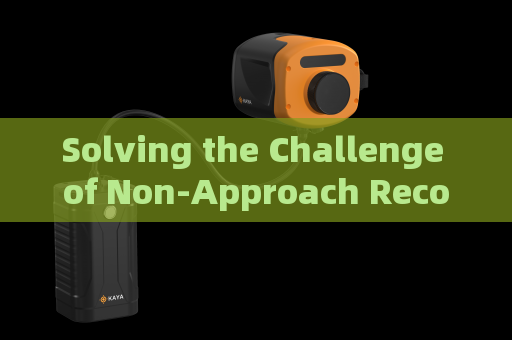
Law enforcement officers routinely face a critical blind spot during vehicle stops or checkpoint operations: heavily tinted windows that conceal occupants and their intentions. Approaching an unknown vehicle involves significant tactical risk, as officers cannot determine the number of individuals inside, their positions, or whether they are holding weapons. Traditional visual inspection fails against aftermarket window films that block over 90% of visible light. Even flashlight illumination or handheld mirrors offer limited help, often forcing officers to abandon non-approach reconnaissance and resort to verbal commands from a distance—a scenario that leaves threats hidden until the moment of contact. The real pain point is not merely the lack of visibility; it is the inability to gather actionable intelligence without physically exposing personnel to potential ambush. This operational gap demands a solution that sees through glass without requiring any physical approach or contact with the vehicle itself. The penetration imager emerges as the only practical answer to this exact challenge. The penetration imager directly addresses this problem through a unique technological capability: laser range-gated imaging. Unlike passive night vision or thermal cameras that struggle with glass reflections and poor contrast, the penetration imager is an active optical system that emits short, high-repetition laser pulses synchronised with a gated intensified camera. By precisely timing the camera's shutter to open only when light reflected from the target returns—while closing before any backscatter from the glass or atmospheric particles arrives—it effectively strips away the obscuring effect of window tint. The system’s core components—a pulsed laser, an image intensifier with microchannel plate, and a synchronization module—work together to produce high-contrast, high-resolution images through any optical medium, including automotive glass, aircraft windows, or glass curtain walls. The key functional advantage is that the penetration imager sees past the tint by rejecting the scattered light that blinds conventional optics, delivering a clear view of hidden occupants from a safe standoff distance. In actual field deployment, the penetration imager transforms non-approach reconnaissance into a routine, low-risk procedure. At a traffic checkpoint, an officer positions the handheld unit at a distance of 30 to 100 meters from the target vehicle, aligns it with the side or rear window, and activates the imaging mode. Within seconds, the display reveals the number of occupants, their seating positions, and any overt hand movements or objects in their laps. Even under challenging conditions—dense fog, heavy rain, or complete darkness—the system maintains its effectiveness because its pulsed laser provides its own illumination and the range-gating mechanism cancels out environmental scatter. The operator can assess whether a driver is reaching for a weapon, whether a passenger is hiding below the window line, or whether the vehicle is empty. This real-time intelligence allows tactical teams to decide whether to escalate, negotiate, or break contact without ever leaving cover. The penetration imager therefore becomes an indispensable tool for pre-contact threat assessment. Further tactical detail reveals the device’s resilience against countermeasures. Because the penetration imager operates strictly within the optical spectrum and uses a narrow-band laser wavelength, standard metallic or ceramic window tints do not degrade its performance; the system is designed to penetrate all common automotive glass compositions, including laminated and tempered varieties. The imaging process requires no prior calibration for each vehicle, and the operator can adjust the gate delay to focus on different depths within the cabin—for example, isolating the driver’s area from the rear seat. The high repetition rate of the laser ensures that even rapid movements, such as a sudden change in posture, are captured without motion blur. In a practical scenario, a swat team approaching a barricaded vehicle can use the penetration imager to confirm the absence of hostages behind tinted windows before initiating a breach. The solution closes a critical information gap, enabling law enforcement to make informed decisions based on visual evidence rather than guesswork. The penetration imager stands as a dedicated, mission-specific answer to the challenge of seeing through tinted vehicle windows without ever needing to step into the danger zone.