Covert monitoring of illegal vessel activities remains a persistent operational difficulty for maritime law enforcement. These vessels, often engaged in smuggling, human trafficking, or illegal fishing, typically conduct their illicit operations inside cabins, wheelhouses, or cargo holds. Standard optical surveillance tools—naval binoculars, conventional cameras, or thermal imagers—struggle to capture clear images through glass portholes or bridge windows. Glare, reflections, and condensation on the glass obscure interior details, while the subjects can easily spot the observer’s platform due to the need for close approach. Fog, sea spray, and rain further degrade visual clarity, forcing enforcement units into risky boarding actions without solid pre-boarding evidence. The core pain point is the lack of a non-intrusive, long-range imaging capability that can see through vessel windows without alerting the crew. This is precisely where the Penetration Imager fills an essential gap.
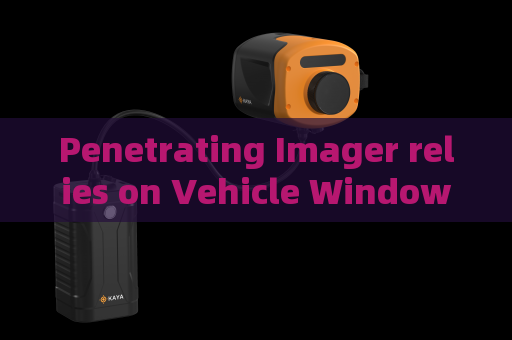
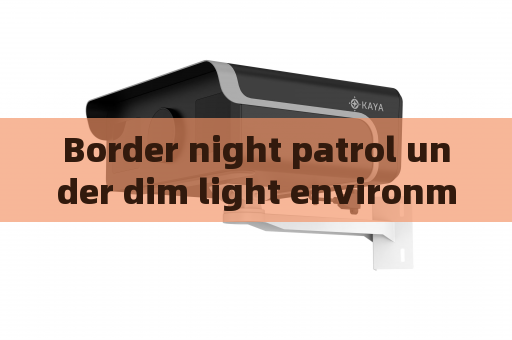
The Penetration Imager is an advanced optical imaging instrument that uses laser range‑gated imaging technology, also known as gated imaging. Its architecture includes a high‑repetition‑rate pulsed laser, an image‑intensified gated camera with an MCP image intensifier, high‑voltage module, and timing module, plus a beam expander and imaging lens. As an active imaging system, it delivers high‑contrast imagery with long operational range, high resolution, strong anti‑interference performance, and effective suppression of backscatter. The specific function relevant to covert vessel monitoring is its ability to penetrate optical media such as glass windows, aircraft portholes, and glass curtain walls. When directed at a vessel’s bridge window or cabin porthole, the Penetration Imager captures unobstructed views of interior activity—personnel handling contraband, loading hidden compartments, or coordinating illegal transfers—without the subjects detecting the observation. The pulsed laser illumination is invisible to the naked eye, and the system operates from stand‑off distances that keep the monitoring platform outside the vessel’s visual horizon.
In field deployment, the Penetration Imager is mounted on a stabilized turret aboard a patrol cutter, helicopter, or unmanned aerial vehicle. Operators select a target vessel based on intelligence or behavioural indicators. The system’s precise timing gates the camera to receive only the reflected laser light from the target window, eliminating backscatter from fog, rain, or sea spray. This produces a sharp, high‑definition image of the vessel interior even at ranges exceeding several nautical miles. For example, during a recent anti‑narcotics operation, a coast guard helicopter employed the Penetration Imager to observe a suspected fishing trawler. The system saw through the wheelhouse glass and revealed crew members transferring bundles of narcotics from a hidden hatch. This positive identification allowed a targeted boarding that led to arrests without a protracted chase or the vessel destroying evidence. The covert nature of the monitoring ensures that illegal vessel operators cannot take countermeasures such as altering course, dumping cargo, or arming themselves before the enforcement team arrives.
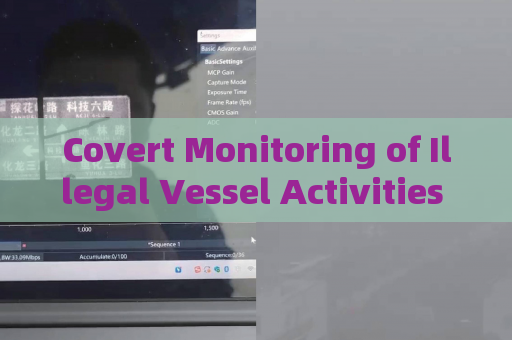
The technique can be further refined by integrating the Penetration Imager with automated tracking software. Once a vessel of interest is locked, the system continuously follows its windows while compensating for vessel pitch, roll, and sea state. Real‑time video feeds are relayed to a command centre, where analysts document illicit activities frame by frame. The Penetration Imager also performs reliably in degraded visibility conditions: it can improve visibility through fire by a factor of three to five, though it is ineffective against heavy smoke. For maritime surveillance, the primary advantage remains its capacity to see through glass even when the panes are rain‑streaked or coated with salt spray. This capability transforms covert monitoring from a high‑risk gamble into a precise, evidence‑gathering tool that operates entirely within the optical spectrum. By effectively neutralizing the concealment advantage provided by vessel windows and adverse weather, the Penetration Imager gives law enforcement a decisive edge in detecting and documenting illegal vessel activities from a safe, covert distance.