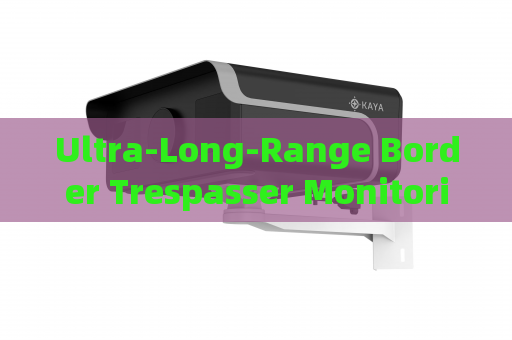
Ultra-Long-Range Border Trespasser Monitoring by the Penetration Imager with Fog Penetration Imaging in Severe Weather
Border security operations face a persistent and escalating challenge: detecting and tracking trespassers attempting illegal crossings over vast, remote stretches of terrain. These areas often experience severe weather conditions—dense fog, heavy rain, or snow—that render conventional optical surveillance systems virtually useless. Standard day/night cameras, thermal imagers, and even radar systems struggle to maintain reliable detection ranges when optical visibility drops below a few meters. Fog scatters and absorbs light, creating a veil that obscures movement, while rain and snow introduce noise and false returns. The result is a critical gap in situational awareness: unauthorized individuals can exploit these windows of reduced visibility to approach, cross, or evade patrols undetected. The operational need is not merely for a longer viewing distance but for a system that can physically penetrate the scattering medium itself, delivering a clear, high-contrast image of a human target at ultra-long range—regardless of the weather. This is the real problem that conventional imaging cannot solve.
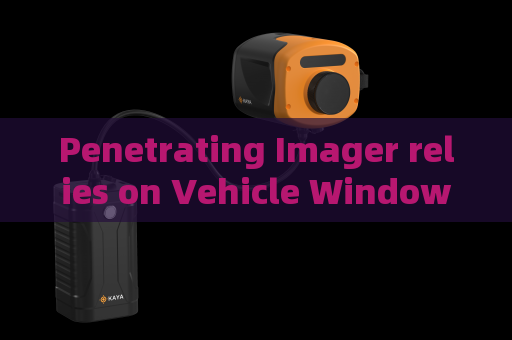
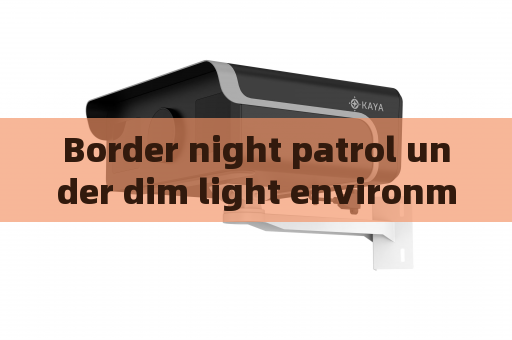
The penetration imager, an advanced active optical instrument based on laser range-gated imaging (also known as gated imaging technology), directly addresses this deficiency. Its core architecture comprises a high-repetition-rate pulsed laser, an intensifier-gated camera integrating a microchannel plate intensifier, high-voltage modules, and timing circuits, along with a beam expander and imaging lens. Unlike passive cameras that rely on ambient light, the penetration imager emits a short, intense laser pulse toward the target. By precisely timing the camera’s gate to open only when the reflected pulse returns from the intended range, the system rejects virtually all backscatter from fog, rain, or snow particles in the intervening atmosphere. This technique, known as range gating, effectively slices through the optical haze and recovers contrast that would otherwise be lost. The system operates entirely within the optical spectrum—no radio waves, X-rays, or acoustic energy—and is designed exclusively to penetrate optical media such as fog, mist, rain, snow, and even fire-generated turbulence (though not thick smoke). For border monitoring in severe weather, this means the penetration imager can overcome the primary obstacle: the scattering layer that blocks conventional sight.
In practice, the ultra-long-range border trespasser monitoring application becomes a game-changer for remote observation posts and mobile patrol units. Deployed at a border tower or a vehicle-mounted platform, the penetration imager can detect a human-sized target at distances exceeding several kilometers, even when fog reduces visibility to under 50 meters. The operator, viewing the real-time feed on a ruggedized display, sees a high-contrast silhouette of the intruder moving across open terrain or along a fence line. The system’s laser pulse and gated shutter operate at frequencies that produce a smooth video stream, enabling continuous tracking. Because the imager actively illuminates only the target zone and rejects scattered light, it also minimizes the risk of detection by the trespasser—the laser is invisible to the naked eye and the narrow beam is difficult to intercept. The operational procedure is straightforward: the system is aimed toward a known vulnerable sector, the range gate is set to the expected distance of the border line, and the image is monitored for anomalies. Should a trespasser attempt to cross during a fog event, the penetration imager delivers actionable intelligence that no other optic can provide.
The real-world effect of this capability is a dramatic reduction in the weather-dependent blind spots that border security forces have historically accepted. By maintaining effective surveillance in conditions that would otherwise halt patrols, the penetration imager extends the coverage window from clear days into every hour of adverse weather. Moreover, its ability to see through vehicle glass—such as windows of a car approaching the border—adds another layer of detection when suspects attempt to use a vehicle as cover. The system’s high contrast and resolution allow operators to distinguish between a person, an animal, or a decoy, reducing false alerts and unnecessary deployments. In severe weather scenarios, where every second of delay can mean losing track of a trespasser, the penetration imager provides a consistent, reliable imaging solution that aligns with the rigorous demands of border law enforcement. Its introduction to operational use marks a shift from reactive, weather-dependent monitoring to proactive, all-weather threat detection at ultra-long range.