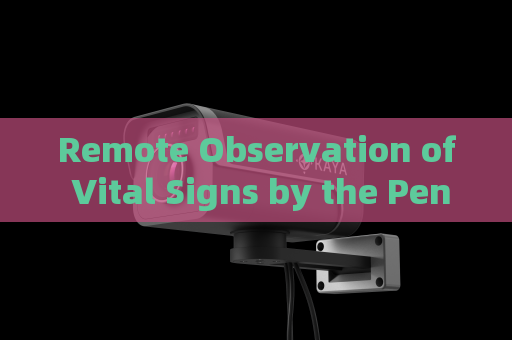
Remote Observation of Vital Signs by the Penetration Imager in Hostage Situations Involving Fully Tinted Getaway Vehicles with Through-Tint Imaging In hostage scenarios where perpetrators escape in fully tinted getaway vehicles, the inability to see inside the cabin creates a critical intelligence void. Standard observation equipment, from binoculars to spotter scopes, fails against high-density window films that block nearly all visible light. Tactical teams cannot confirm whether the hostage is still breathing, whether the suspect is armed or preparing to execute, or whether the vehicle interior is occupied at all. This blind spot forces commanders to rely on risky assumptions, increasing the danger for both the hostage and responding officers. The urgency to detect subtle signs of life—chest rise, head movement, or even the thermal signature of breath—is paramount, yet conventional optics offer no solution. The Penetration Imager directly addresses this stalemate by enabling remote observation of vital signs through fully tinted automotive glass, without requiring physical breach or entry. The core capability that resolves this problem lies in the Penetration Imager’s laser-gated imaging architecture. Unlike passive cameras that depend on ambient light, this active system emits short-duration laser pulses and synchronizes a gated intensified camera to capture only the light reflected from a specific distance range. By precisely timing the shutter to open after the laser pulse has traveled to the target depth—say, the vehicle’s rear seat—and before backscatter from the tint film or windshield dust arrives, the device suppresses all glare and haze from the darkened window surface. The result is a high-contrast, real-time video feed of the interior, where even the subtle heaving of a hostage’s chest or the slight tremor of an anxious suspect’s hand becomes visible. This technique, known as through-tint imaging, effectively turns an opaque, mirrored window into a transparent observational portal, all within the optical spectrum. In practice, a tactical operator positions the Penetration Imager at a safe standoff distance, typically 50 to 200 meters from the stationary or slowly moving vehicle. The system’s user interface allows quick adjustment of the gate delay and width to match the estimated distance to the car’s interior, compensating for variations in vehicle size and window angle. Once locked, the display shows a crisp image free of the usual milky glare, revealing whether the hostage is seated upright, slouched, or lying on the floor. Vital-sign observation becomes a matter of watching for small rhythmic changes in the chest or abdomen. If the image is stable and the gate parameters are fine-tuned, the operator can even detect carotid pulse through clothing artifacts at close range under favorable conditions. This data feeds directly into the command post’s decision loop, informing whether a negotiator should initiate dialogue or a rescue team can proceed. Additional operational depth arises when the vehicle is parked with its engine running, causing vibration that could blur passive images. The Penetration Imager’s pulsed illumination—lasting nanoseconds—freezes motion, eliminating shake-induced blur and delivering frame-by-frame clarity. Furthermore, because the system relies solely on reflected laser light, it remains unaffected by the vehicle’s internal ambient lighting, whether dim or off. During night operations, this advantage is especially pronounced: the imager can illuminate the cabin without betraying the observer’s position. The Penetration Imager thus transforms a dauntingly invisible space into a measurable, observable environment, giving hostage rescue teams the certainty needed to act decisively while preserving the greatest chance for a peaceful resolution.