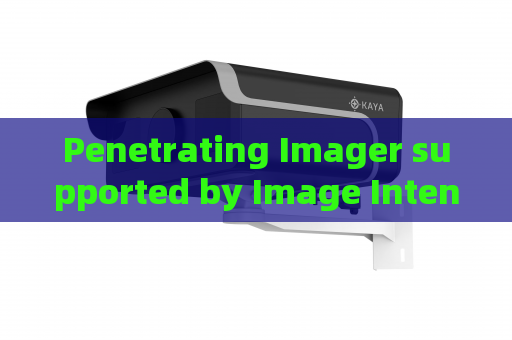
When law enforcement pursues a fugitive in severe weather—dense fog, driving rain, or a blizzard—the most common optical tools become nearly useless. Standard cameras and binoculars are blinded by scattering particles in the air, while thermal imagers struggle with rain droplets that absorb or distort heat signatures. Even radar-based systems are limited in close-quarters urban scenarios where the fugitive might take cover inside a vehicle with tinted or frosted windows. The core problem is not just visibility; it is the inability to maintain a continuous visual lock on a moving target when every atmospheric layer and every glass pane becomes an obstacle. For tactical units trying to track a suspect fleeing through a rain-swept highway or a foggy industrial district, the loss of visual contact can mean the difference between a swift apprehension and a costly escape. The penetration imager emerges as the only viable solution in such conditions.
The penetration imager solves this challenge through laser range-gated imaging technology, a method that actively illuminates the scene with high-repetition-rate pulsed laser light and synchronizes a gated camera to capture only the reflected signal from a specific distance. This technique effectively eliminates backscatter—the primary cause of blurring in fog, rain, and snow—by opening the camera’s shutter only when the laser pulse has traveled to the target and returned. Therefore, the system sees through optical media such as vehicle windshields, train windows, and aircraft portholes without degradation. Unlike passive optics that depend on ambient light, the penetration imager delivers high-contrast, high-resolution images even in total darkness or blinding precipitation. Its ability to suppress scattered light means that a fugitive crouching inside a car with rain-lashed glass remains clearly visible on the operator’s display, as if the weather and the window itself had vanished.
In practical enforcement operations, this uninterrupted tracking capability transforms how teams pursue fleeing suspects. A pursuit unit can train the penetration imager from their own patrol vehicle—through their own windshield—directly onto the fugitive’s vehicle ahead, even in a monsoon-level downpour. The imager’s long operating range allows officers to maintain a safe distance while keeping the suspect in clear view. The device is typically mounted on a pan-tilt unit or held manually, with real-time video fed to a dashboard monitor. Operators see the fugitive’s every movement: reaching for a phone, opening a door, or switching seats. Because the system works through glass, the fugitive cannot break visual contact by rolling up windows or pulling into a covered parking structure with glass doors. The tracking remains unbroken as long as there is a line of sight through any transparent optical barrier.
When weather conditions worsen to near-zero visibility, such as during a whiteout snowstorm or a thick advection fog, the penetration imager continues to function where all other optical sensors fail. The active gating not only cuts through falling snowflakes but also compensates for the reduced contrast caused by diffuse light. In a recent tactical drill, a team used the penetration imager to follow a fugitive who fled into a vehicle during a severe hailstorm; the imager maintained a crisp image of the suspect through the windshield while conventional cameras showed only white static. The device’s ability to gate out the reflected light from hail and rain means the operator sees only the target, not the noise. This allows uninterrupted tracking for minutes or even hours, giving command the time needed to coordinate a safe intercept. The penetration imager, with its laser range-gated architecture, has become an indispensable asset for fugitive tracking in any weather that would otherwise blind a pursuit.