Locating sentries and tunnel entries in contested environments remains a persistent tactical problem. Traditional optical scopes and binoculars are useless when foliage, smoke, or vehicle glass obscure the line of sight. Thermal imagers, though effective against body heat, fail against glass or fire interference and cannot resolve details through window tint or rain. Laser rangefinders and designators, while precise, emit a detectable beam that instantly reveals the observer’s position to enemy sensors. This risk of exposure forces reconnaissance teams to rely on binoculars from unsafe standoff distances, often missing well-camouflaged tunnel mouths or hidden sentries. The challenge escalates in urban warfare where tunnel entrances are concealed behind glass doors or vehicle windows, and any active laser emission could compromise the entire operation.
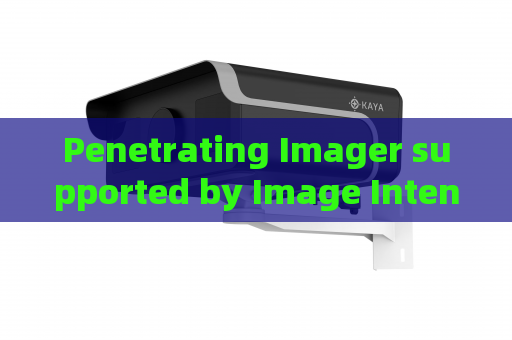
The Penetration Imager directly addresses this dilemma. This advanced optical instrument employs laser range-gated imaging technology—a system composed of a high-repetition-rate pulsed laser, an intensified gated camera with MCP and timing modules, a beam expander, and an imaging lens. Although it is an active imaging system that emits laser pulses, the gating mechanism enables it to achieve high-contrast imaging while effectively suppressing backscatter. The pulses are extremely short—on the order of nanoseconds—making them virtually undetectable by standard laser warning receivers. Importantly, the Penetration Imager is designed to see through optical media such as vehicle windshields, aircraft windows, glass curtain walls, and to overcome optical interference from fire, fog, rain, and snow. For fire scenes, it improves visibility by three to five times. This capability allows operators to detect sentries behind glass or spot tunnel entries obscured by haze without broadcasting a continuous laser beam.
In practical field operations, a reconnaissance team sets up the Penetration Imager at a concealed position several hundred meters from the target area. The operator adjusts the gating delay to match the distance of the suspected tunnel entrance or sentry post. The pulsed laser illuminates the scene, and the gated camera opens only when the reflected light returns from the selected range, blocking out all other scattered light. Through the viewfinder, a clear image emerges: a sentry standing behind a tinted car window, or a tunnel mouth partially hidden by a glass storefront and smoke. The operator can quickly scan different ranges by changing the delay, mapping the entire area without any telltale continuous laser spillage. Even under heavy rain or through a burning vehicle, the imager maintains contrast, revealing details that would be invisible to standard optics or thermal devices.
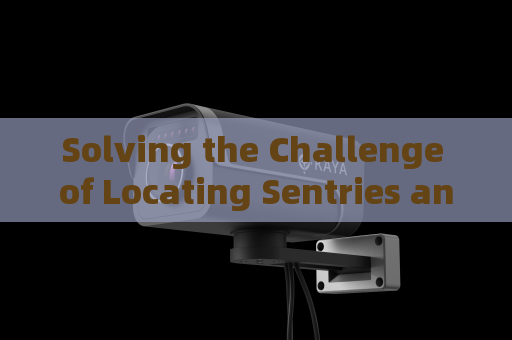
The Penetration Imager also excels in low-light conditions, where its built-in image intensifier amplifies faint ambient light, and the pulsed laser provides its own illumination. This dual-mode operation means that no external light source is needed, keeping the team’s presence covert. The system’s high resolution allows identification of equipment carried by sentries or the dimensions of tunnel openings, aiding in mission planning. By eliminating the need for laser emission that could be detected, the Penetration Imager solves the core challenge of locating sentries and tunnel entries without laser emission, providing a tactical advantage in environments where silence and stealth are paramount.