Overcoming Surveillance Overexposure for Suspicious Vessels Under Severe Port Backlight with Strong Light Suppression Imaging
A coastal surveillance system monitoring a busy port faces a persistent challenge: severe backlight from the low-angle sun reflecting off the water surface creates extreme overexposure in conventional cameras. When a suspicious vessel maneuvers near the dock or in the shipping lane, its silhouette is often lost in a wash of blinding glare. The vessel’s identification markings, deck activity, and even the number of persons on board become impossible to discern. This optical interference is not merely a nuisance—it represents a critical security gap. Port authorities, coast guards, and maritime law enforcement agencies rely on clear visual evidence to assess threats, intercept smuggling attempts, or conduct search-and-rescue operations. Under such lighting conditions, standard electro-optical systems fail, leaving operators with blank white frames or heavily saturated images that yield no actionable intelligence. The need for a technology that actively suppresses strong light while maintaining high-contrast imaging of target vessels is acute. The penetration imager offers a solution tailored exactly to this scenario.
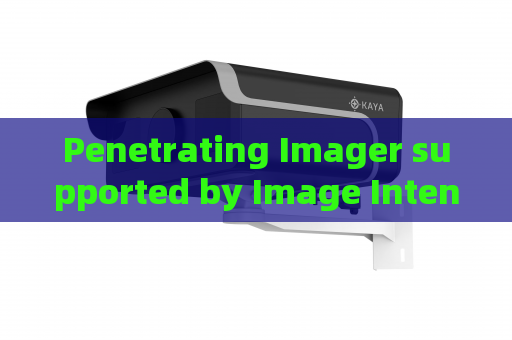
The penetration imager is an advanced optical imaging instrument built on laser range-gated imaging technology. Its core components—a high-repetition-rate pulsed laser, an intensified gated camera with a microchannel plate intensifier, a high-voltage module, and precise timing control—work in concert to overcome the backlight problem. Unlike passive cameras that capture all ambient light, the penetration imager fires a nanosecond laser pulse synchronized with the camera’s electronic shutter. The shutter opens only when the reflected laser light from the target vessel returns, effectively rejecting the overwhelming sunlight that causes overexposure. This strong light suppression mechanism allows the system to image the vessel at a specific distance while ignoring the bright background. The gated operation also cancels out backscatter from atmospheric particles and water spray, a common issue in maritime environments. By controlling the delay between laser emission and shutter activation, the operator can isolate the suspicious vessel from its glare-filled surroundings, producing a crisp, high-contrast image even when the sun is directly behind the target.
In practice, this capability transforms port surveillance. During a late-afternoon patrol, a fast-moving craft approaches the restricted zone with its engine off, hoping to evade detection against the blinding western sun. A fixed camera on the pier shows only a flickering white blob. The penetration imager, however, when aimed at the same bearing, generates a clear silhouette with distinct hull lines, a visible registration number, and even the outline of individuals on deck. The operator can adjust the gate delay across a range of distances, scanning from the vessel’s bow to stern to verify its length and class. This real-time image feedback enables immediate threat assessment: is this a fishing boat drifting off course, or a drug-runner attempting a stealthy rendezvous? The system’s ability to function in full daylight, under harsh backlight, extends the operational window for surveillance far beyond what passive optics can achieve.
The deployment of the penetration imager at a major port reduces the incidence of missed detections caused by solar glare. Maintenance crews install the unit on an elevated gimbal platform, integrated with the existing radar and camera network. During heavy backlight conditions, the operator toggles to the penetration imaging mode, and the system’s automatic gain control adjusts to the laser return intensity. The result is a stable video feed of the suspicious vessel, from several hundred meters to over a kilometer away, without blooming or washout. Even when fog or light rain mixes with the backlight, the gated technology still outperforms thermal imagers, which struggle with wet surfaces and temperature equalization. The penetration imager does not rely on heat signatures; it uses active laser illumination to see through optical media such as the vessel’s glass windows or the spray kicked up by its wake. This precise optical suppression of strong backlight ensures that no suspicious vessel can use the sun as a shield, closing a persistent vulnerability in port security.