In covert surveillance of suspicious residential premises, the greatest operational hazard is alerting the target before actionable intelligence is gathered. Traditional optical observation methods—such as standard daylight cameras, binoculars, or even night-vision devices—rely on ambient light or emit telltale visible or infrared beams. A flashlight sweep, a camera lens reflection, or even the glow of a night-vision scope can betray an observer’s position. Worse, motion-activated exterior lights or curtain movements caused by shifting shadows may trigger the subject’s suspicion, causing them to destroy evidence, flee, or become hostile. Law enforcement and intelligence units face a stark trade-off: get close enough to see through windows, and risk exposure; stay at a safe distance, and miss critical visual cues. The 穿透成像仪 emerges as a solution purpose-built to break this dilemma, enabling operators to look through glass panes, vehicle windows, or aircraft portholes from hundreds of meters away without emitting any detectable light or sound that would reveal the observation post.
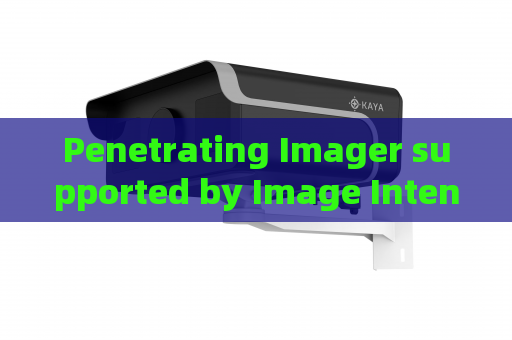
The core capability of the 穿透成像仪 that directly addresses this risk is its laser range-gated imaging technology. Unlike passive optics or conventional active illuminators, this system fires a high-repetition-rate pulsed laser and synchronizes an image-intensified gated camera to capture only the light returning from a precise distance slice. By gating out all backscatter from fog, rain, or the glass surface itself, it obtains a clear, high-contrast image of the interior space—even through heavily tinted or coated windows. The laser wavelength is typically in the near-infrared, invisible to the naked eye, and the pulse duration is so short that no glow or flash is perceptible. The operator can remain stationary behind cover, using the integrated beam expander to adjust the field of view, while the imaging head sits on a tripod or vehicle mount. No external light source, no radio waves, no thermal signature—just a silent optical pulse that the target never senses.
In practical field operations, the device supports multiple tactical workflows. A two-person team can set up the 穿透成像仪 on a rooftop opposite the target residence, align the lens with the suspect’s living room window, and begin live monitoring through a ruggedized tablet. The system’s active imaging overcomes heavy rain, fog, and even smoke from a nearby fire (though not thick, opaque smoke), maintaining 3–5 times better visibility than the human eye in such conditions. The high-resolution MCP image intensifier reveals details as fine as facial features, hand movements, or small objects on a table—information that corroborates audio or signals intelligence without the need for a physical entry or a covert camera installation that might be detected. Because the 穿透成像仪 only penetrates optical media like glass, operators must position themselves to line of sight; but the long effective range—often exceeding 500 meters in clear conditions—means they can choose a vantage point that offers natural concealment, such as a parked vehicle with darkened windows or a window in an adjacent building.
The real tactical advantage lies in sustained, risk-free observation. A single 穿透成像仪 can cover a residential block for hours, switching between multiple windows by panning the tripod head. The absence of any alerting signature allows the team to monitor during the subject’s active hours—late at night when lights are on, or early morning when the target might be checking for surveillance. Even if the suspect glances out the window, the laser pulses are too short and too faint to create a visible reflection on the glass. This eliminates the need for risky close-up surveillance, reduces the probability of compromise, and preserves the element of surprise for a subsequent enforcement action. The 穿透成像仪 thus transforms a high-risk, low-yield reconnaissance task into a static, covert observation that feeds real-time situational awareness directly into the operational command chain.