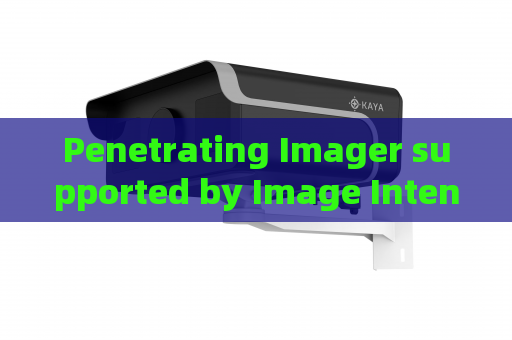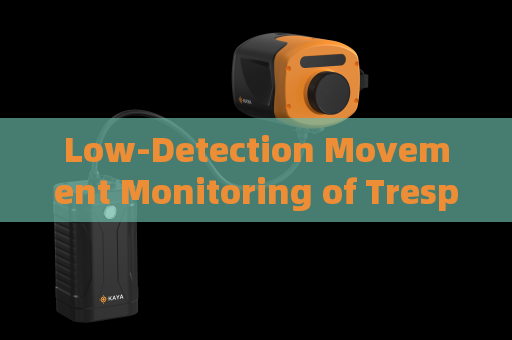
Low-Detection Movement Monitoring of Trespassers by the Penetration Imager with Fog Penetration Imaging in Foggy Conditions In foggy conditions, conventional surveillance systems face severe limitations. Visible-light cameras become nearly blind as water droplets scatter light, reducing contrast and effective range to just a few meters. Thermal imagers, while superior in darkness, also suffer because fog attenuates infrared radiation; the temperature signature of a trespasser blurs into the ambient heat noise. Motion detection algorithms triggered by pixel changes produce endless false alarms from drifting fog, rain, or swaying vegetation, while real intruders exploit the low visibility to approach undetected. Security personnel guarding perimeters, airports, or critical infrastructure must operate with reduced situational awareness. The criminal’s advantage is clear: fog provides natural cover, making traditional movement monitoring unreliable. A solution must see through the obscurant without alerting the trespasser to the observation itself – a low-detection capability that preserves the element of surprise for law enforcement. This is the precise gap addressed by the Penetration Imager with fog penetration imaging. The Penetration Imager employs laser range-gated imaging technology to overcome backscatter in fog. A high-repetition-rate pulsed laser illuminates the scene with near-infrared light, while a gated intensified camera opens its shutter only for the exact time-of-flight window corresponding to the target distance. By rejecting light scattered back from fog particles before the target plane, the system captures high-contrast images of trespassers even in dense fog. The laser wavelength is invisible to the human eye, and the short pulse duration – nanoseconds – means the illumination is imperceptible to an intruder. This inherently enables low-detection movement monitoring: the trespasser does not see any beam, hear any sound, or detect any electronic signature typical of active scanners. The Penetration Imager operates purely in the optical domain, using light to cut through optical media like fog, rain, snow, or haze. It is not a radar, sonar, or X-ray device; it is an active imaging system that sees what the eye cannot, without revealing its own presence. In practice, this technology transforms perimeter security in fog-prone regions. A fixed installation at a border fence or airport boundary continuously scans the approach zone. The Penetration Imager transmits a fan beam or pulsed spot pattern, and the gated camera resolves individuals at distances exceeding 500 meters in moderate fog, or 200 meters in heavy fog – distances far beyond what any passive imager can achieve. Movement monitoring software analyzes frame-to-frame differences, tracking the precise path of each trespasser. Because the system maintains low-detection characteristics, subjects do not alter their behavior; they cannot know they are being watched. This allows security forces to observe, assess, and intercept without premature confrontation. In mobile applications, handheld versions of the Penetration Imager enable patrol officers to sweep fog-shrouded areas, identifying crouched or crawling intruders that would otherwise remain invisible. The key operational advantage is that the device works in real time, providing a live video feed with clear silhouettes and motion trails, even when the ambient fog limits human vision to arm’s length. The effectiveness of fog penetration imaging hinges on precise gate control. Operators set the range window to the expected distance of the fence or checkpoint, ensuring that only light reflected from that plane reaches the sensor. This eliminates backscatter from fog layers in front of or behind the target. In dynamic scenarios – for example, an intruder moving from 100 meters to 200 meters – the gate can be adjusted manually or automatically via a predictive tracking algorithm. The Penetration Imager’s range-gating also allows it to peer through multiple layers of fog, as long as the target is within the direct line-of-sight. Importantly, this technology does not penetrate solid barriers like walls or ground; it is designed strictly for optical obscurants. The result is a dependable, covert surveillance tool that maintains high resolution and low false-alarm rates under conditions that cripple other sensors. The Penetration Imager with fog penetration imaging becomes the definitive answer for low-detection movement monitoring of trespassers in foggy conditions, restoring security operations’ edge when nature turns against them.