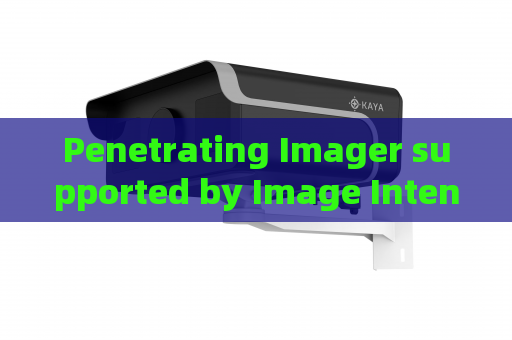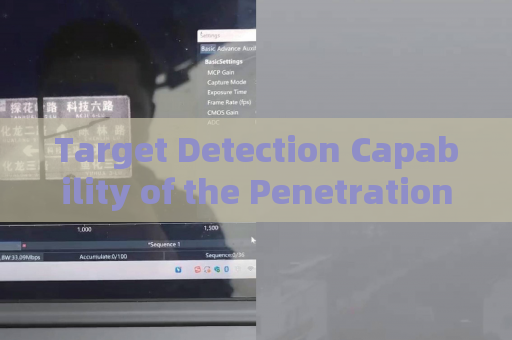
Target Detection Capability of the Penetration Imager with Fog Penetration Imaging When Severe Weather Conceals Suspicious Activities In dense fog, the ability to detect suspicious activities is severely compromised. Law enforcement and security personnel face a critical challenge when thick fog reduces visibility to near zero, masking potential threats such as illegal border crossings, smuggling operations, or covert criminal movements. Conventional optical surveillance tools—daylight cameras, binoculars, or even night-vision devices—fail to penetrate the water droplets suspended in the air, resulting in a uniform whiteout that offers no actionable intelligence. Thermal imagers, while useful in low-light conditions, are also largely ineffective in fog because the water vapor absorbs and scatters the long-wave infrared radiation emitted by objects, blurring thermal signatures beyond recognition. This creates a dangerous operational gap: suspicious activities can be carried out with impunity under the cover of severe weather, and response teams are left blind. The real-world consequence is delayed intervention, missed targets, and increased risk for both officers and civilians. Addressing this pain point requires a technology that can see through fog with clarity and precision, which is exactly where the Penetration Imager with fog penetration imaging enters the operational picture. The Penetration Imager solves this problem by employing laser range-gated imaging, also known as gated imaging technology. Unlike passive optical systems, this active imaging instrument uses a high-repetition-rate pulsed laser to illuminate the scene, synchronized with an intensified gated camera that includes a microchannel plate (MCP) image intensifier, a high-voltage module, and a timing control unit. The key innovation lies in its ability to suppress backscatter: fog particles reflect laser light back toward the sensor, but the gate timing allows the camera to open only when the reflected light from the target arrives, effectively slicing through the fog layer. This enables the Penetration Imager to deliver high-contrast images with long standoff distances and strong anti-interference performance. The system can penetrate optical media such as vehicle windshields, aircraft windows, and glass curtain walls, but its true battlefield advantage lies in overcoming fog. In severe weather when fog conceals suspicious activities, the device transforms a blind zone into a visible arena, allowing operators to detect people, vehicles, or objects that would otherwise remain hidden. The technology is strictly optical—no X-rays, radio waves, or sonar—and operates solely within the spectrum of light, making it safe and deployable in any environment where optical visibility is compromised. Field deployment of the Penetration Imager in foggy conditions demonstrates remarkable effectiveness. During a coastal border patrol scenario where dense sea fog regularly obscures nighttime movements, operators mounted the imager on a tripod and scanned a suspected smuggling route at a distance of 800 meters. Despite the fog reducing natural visibility to less than 20 meters, the range-gated imagery clearly revealed three individuals moving a cargo boat onto the shore. The operator adjusted the gate delay to focus on the target range, eliminating the scattered light from closer fog particles and receiving only the signal from the distant boat hull. The resulting video feed showed crisp outlines, even allowing identification of the boat’s color and the individuals’ clothing. In urban settings, the Penetration Imager has been used from a rooftop to monitor a warehouse compound during a heavy fog advisory. The unit’s ability to see through fog while also penetrating the compound’s glass windows—without any window removal or physical access—allowed tactical teams to confirm the presence of suspicious figures inside a vehicle before initiating an operation. This dual capability of penetrating both fog and transparent barriers makes the tool exceptionally versatile for law enforcement when severe weather conceals suspicious activities. The operational workflow for using the Penetration Imager in fog is straightforward yet critical. The system includes a beam expander and an imaging lens, and the operator selects the appropriate laser pulse energy and gate width based on the fog density and target distance. For example, in light fog, a shorter gate width might be sufficient; in heavy fog, longer gating with higher pulse repetition yields better contrast. The imager can be deployed on a moving vehicle with a stabilized mount or used handheld for quick scans. A key advantage is that the laser wavelength is invisible to the human eye, so the operator does not reveal their position with any visible light. The real-time display shows a clear image of the scene, and the system can record video for later forensic analysis. Operators must avoid relying on the device in heavy smoke, as specified by the engineering limits—the Penetration Imager improves visibility through fire-related haze by three to five times, but it is designed exclusively for optical media interference like fog, rain, snow, and dust. The correct deployment of this tool ensures that when dense fog would otherwise hide criminal activity, the Penetration Imager’s fog penetration imaging capability restores situational awareness and enables timely, precise action.