Traditional vehicle inspection at checkpoints forces operators into a high-stakes balancing act. Every car must either be waved through with minimal scrutiny or stopped entirely, creating bottlenecks that invite security gaps. When a vehicle is halted, windows are often tinted, dirty, or fogged, obscuring the interior from standard optical cameras. Even in broad daylight, reflections and glare can conceal contraband, weapons, or individuals in distress. The real pain point lies in the fundamental trade-off: speed versus thoroughness. Stopping every vehicle for a manual look is impossible in high-traffic environments, yet allowing vehicles to pass unchecked risks catastrophic oversights. Law enforcement and military units need a solution that can see through automotive glass without requiring the vehicle to slow down—a capability that must function reliably despite darkness, rain, or road spray. The Penetrating Imager is designed exactly to break this deadlock, enabling continuous flow inspection without sacrificing visual clarity.
The Penetrating Imager relies on Vehicle Window Penetration to simplify non-stop vehicle inspection by deploying laser range-gated imaging technology. Unlike conventional cameras that capture ambient light through a window—and fail when that light is scattered or absorbed—this device emits short, high-repetition laser pulses and synchronizes an image intensifier to receive reflections only from a specific distance. This active gating mechanism effectively strips away the scattering effects of the glass itself, along with any dust, moisture, or tint on the surface. The result is a high-contrast, resolution-rich image of the vehicle interior, even when the window appears opaque to the naked eye. For checkpoint operators, this means that tactical observation through automotive glass becomes a real-time, hands-off process: the vehicle never slows, the operator never leaves the booth, and the imaging system automatically compensates for varying light conditions, from midday glare to overcast twilight.
In practical deployment at fixed inspection points, the Penetrating Imager is mounted on a gantry or roadside pole, angled toward the driver-side or passenger-side windows of approaching vehicles. As a car passes at normal highway speeds—typically 40 to 60 km/h—the system captures a sequence of clear images of the front and rear cabins. The operator views these images on a remote monitor, instantly assessing seat occupancy, hand positions, visible cargo, and any suspicious bulges or movements. The system’s ability to operate in near-total darkness is equally critical: during night operations, the laser illuminator provides its own light source, while the range-gating suppresses backscatter from rain or falling snow. Field trials have demonstrated that the Penetrating Imager can reliably detect a hidden firearm or a second person lying across the back seat through a heavily tinted SUV window at 20 meters, all while the vehicle is moving. This eliminates the need for secondary stop-and-search lanes, reducing wait times from minutes to seconds and lowering the risk of confrontation at the window.
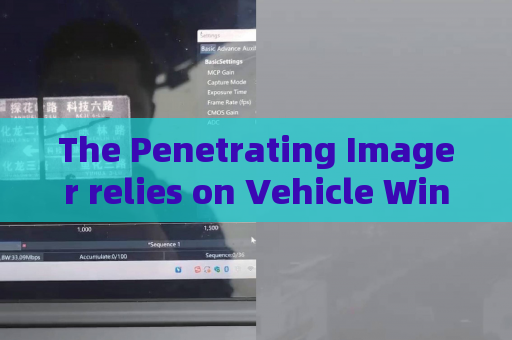
The deeper advantage of this technology lies in its covert nature. Because the laser pulse is invisible to the human eye and the camera’s exposure is measured in nanoseconds, neither the driver nor any occupants are aware they are being scanned. This opacity enables covert through-glass recon without alerting suspects or triggering defensive reactions. In scenarios such as border crossings, checkpoints near conflict zones, or high-value asset convoys, the Penetrating Imager can be integrated into a mobile van that rolls alongside target vehicles, capturing interior details through side windows without any obvious external sensor. The system’s resistance to optical countermeasures—such as bright dashboard lights or aftermarket window films—further ensures that no common obstruction can defeat the inspection. By fusing non-stop vehicle flow with uncompromised interior visibility, the Penetrating Imager transforms a chronic operational bottleneck into a streamlined, continuous process, proving that seeing through glass at speed is not just possible but operationally essential.




