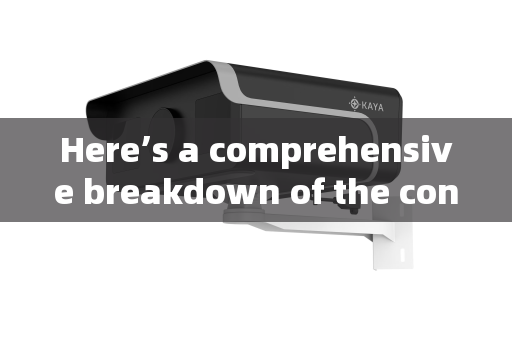
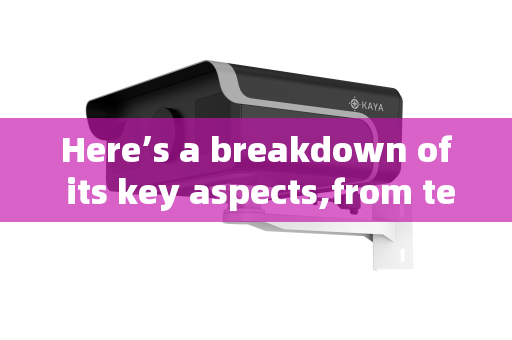
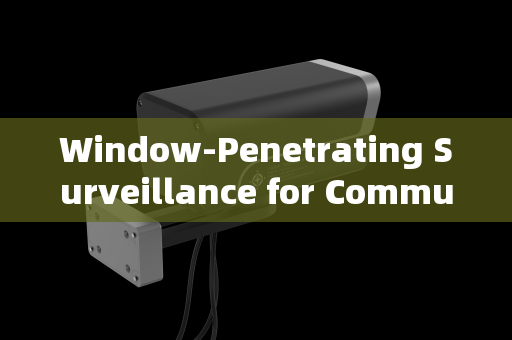
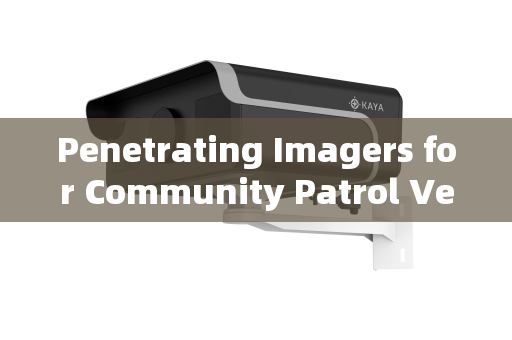
Unseen Threats, Revealed: The Pivotal Role of Penetration Imaging Systems in Full-Area Supervision of High-Level Security Sites In the high-stakes realm of securing critical infrastructure, government facilities, military installations, and other sensitive locations, the imperative for complete situational awareness is absolute. Traditional surveillance systems—reliant on visible light cameras, thermal imagers, or radar—often reach their operational limits when confronted with visual obstructions, adverse weather, or deliberate concealment. It is here that Penetration Imaging Systems (PIS), leveraging advanced Laser Range-Gated Imaging (LRG) technology**, emerge as a transformative force, enabling truly comprehensive, full-area supervision by seeing through the unseen.
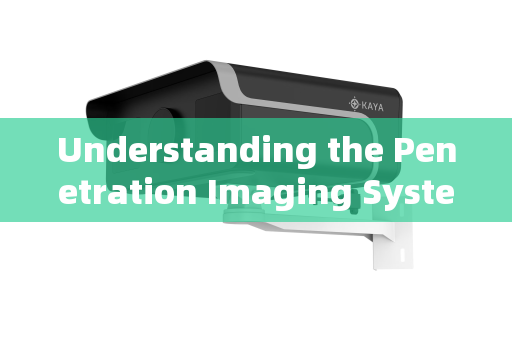
Penetration Imager Effect Images
At its core, a Penetration Imaging System is a sophisticated electro-optical device engineered to acquire clear imagery under extreme conditions where conventional sensors fail. It innovatively integrates a high-repetition-rate pulsed laser with a gated intensified camera. The system's genius lies in its precise, nanosecond-level time synchronization. The pulsed laser illuminates the scene with short, powerful bursts of light. The gated camera's shutter opens only for an exquisitely brief window, precisely timed to capture photons reflected from a specific "slice" of space at a predetermined distance.
By progressively shifting this time delay, the system effectively "stacks" slices, building a high-contrast image of the target while actively rejecting backscattered light from obscurants like smoke, fog, mist, rain, snow, or haze. This range-gating principle grants the PIS its remarkable capabilities: long imaging ranges, high spatial and distance resolution, superior anti-interference performance, and effective suppression of backscatter.
Core Components and Performance A typical system comprises a pulsed laser emitter, a beam expander, an imaging lens, and the critical Gated Intensified Camera. This camera houses a Microchannel Plate (MCP) image intensifier, high-voltage modules, and precision timing (gating & sequencing) electronics. This enables extraordinary performance: optical gain exceeding 10^6, ultra-fast optical gating (<3 ns), and timing synchronization precision better than 10 picoseconds. This allows not only for 2D imaging through obscurants but also for high-accuracy 3D information acquisition of targets.

Penetration Imager Effect Images
The Pivotal Role in High-Level Security Site Supervision
For high-level security sites, perimeter fencing and camera coverage are merely the first layer. True full-area supervision demands the ability to monitor continuously, regardless of environmental or intentional challenges. The PIS plays several indispensable roles:
-
Defeating Environmental Adversity: Security cannot be weather-dependent. PIS provides reliable, long-range surveillance through dense fog, heavy rain, snowstorms, and smoke—conditions that would blind traditional CCTV and severely degrade thermal imagers. This ensures uninterrupted oversight of perimeter lines, coastal approaches (for coastal/ border security), and airfields.
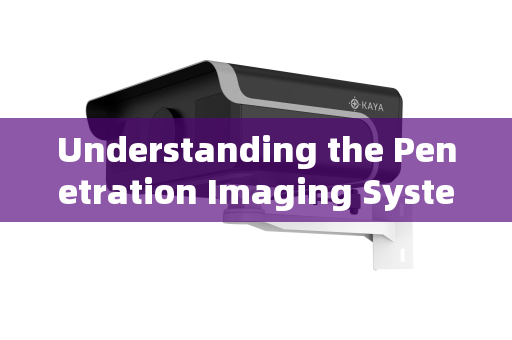
Penetration Imager Effect Images
-
Countering Concealment and Covert Observation: A unique capability is non-invasive penetration of various glass types. This allows security personnel to conduct standoff detection and surveillance through vehicle windows (including on trains and aircraft), building glass facades, and specialized glazing without alerting occupants. It is invaluable for counter-surveillance, investigations, and pre-emptive threat assessment at checkpoints, during VIP movements, or around sensitive buildings, helping to identify hostile reconnaissance or internal threats.
-
Enhancing Emergency & Tactical Response: In the event of a security breach, fire, or CBRNe incident, PIS becomes a critical tool for Emergency Response Teams. Firefighters can use it for search and rescue in smoke-filled structures. SWAT or counter-terrorism units can precisely locate suspects and hostages through non-transparent barriers (e.g., smoke grenades, light curtains) or windows before breaching, maximizing operational effectiveness and officer safety.
-
Ensuring Maritime and Border Integrity: For coastal defense, port security, and border surveillance, the system's long-range, all-weather fog-penetration and glare suppression capabilities are crucial. It enables the monitoring of vessel approaches, detection of illicit activities (e.g., narco-submarines, nighttime trafficking), and identification of threats in challenging littoral environments, ensuring security operations proceed unimpeded.
Application Scenarios in Security and Emergency Domains
- Law Enforcement & Military Operations: Vital for counter-terrorism, force protection, clandestine surveillance, evidence collection, anti-smuggling operations (narcotics, arms), and military reconnaissance. It supports Intelligence, Surveillance, and Reconnaissance (ISR) missions by providing clear imagery in degraded visual environments.
- Critical Infrastructure Protection: Ideal for 24/7 monitoring of nuclear plants, power grids, data centers, and communication hubs, especially in geographically challenging areas prone to fog or storms.
- Aviation & Transportation Security: Enables screening and observation through aircraft fuselage windows or high-speed train windows without interference, enhancing anti-hijacking and customs inspection protocols.
- Smart City & Public Safety Integration: As part of a Smart Security or Smart Policing framework, PIS can be integrated into city-wide surveillance networks, providing resilient imaging capabilities during emergencies like large-scale fires or severe weather events, feeding critical data to command and control centers.
Conclusion
The Penetration Imaging System is far more than a simple camera; it is a force multiplier for security operations. By conquering the traditional blind spots imposed by weather, media, and materials, it provides a persistent, penetrating gaze that is essential for achieving genuine full-area supervision. In protecting high-level security sites against evolving, sophisticated threats, the ability to reveal what was once hidden is not just an advantage—it is a strategic necessity. As threats continue to evolve in complexity, technologies like PIS will remain at the forefront, ensuring that security oversight is never left in the dark.