The Critical Role of Penetration Imaging Systems in Border Control: Enhancing Detection and Interception of Illegal Immigration**
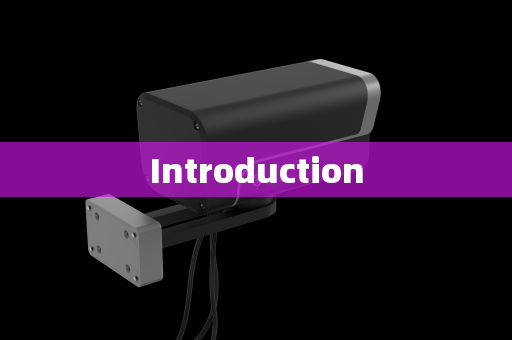
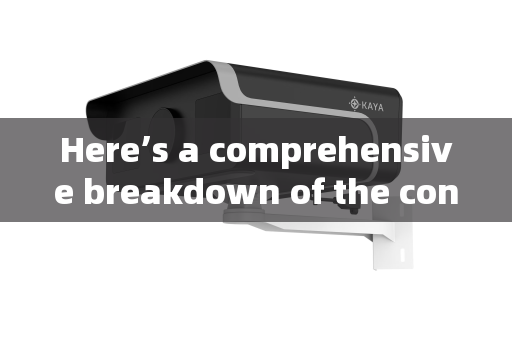
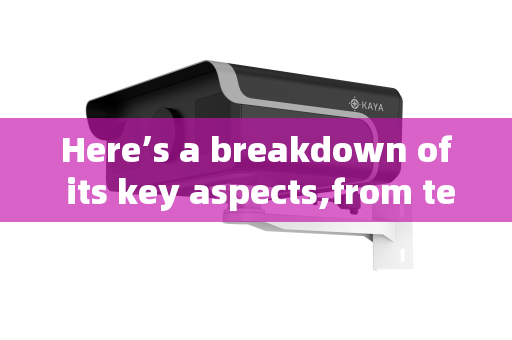
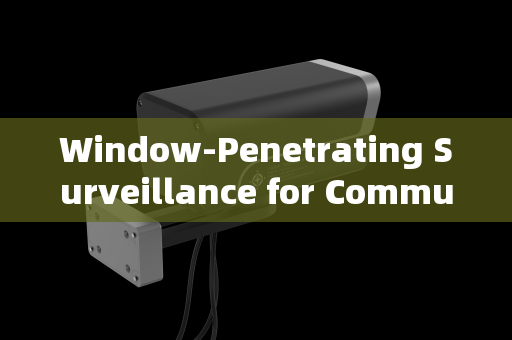
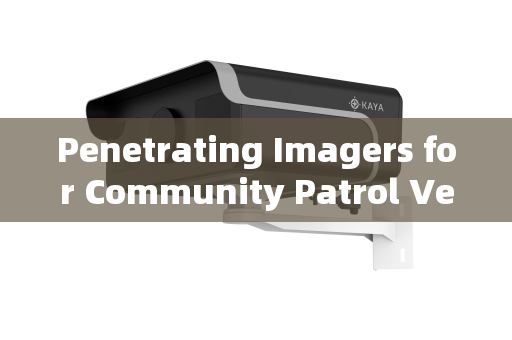
Penetration Imager Effect Images
Border security remains a paramount challenge for nations worldwide, with the clandestine movement of individuals posing significant threats to sovereignty, public safety, and resource management. Traditional surveillance methods—ranging from patrols and physical barriers to standard optical and thermal cameras—often falter under conditions of darkness, obscuration, or when suspects employ concealment tactics within vehicles or structures. In this high-stakes environment, Penetration Imaging Systems have emerged as a transformative technological asset. By leveraging advanced laser-gated imaging technology, these systems provide border security forces with an unprecedented capability to detect, identify, and intercept illegal immigrants attempting cross-border movements under the cover of visual obstructions or adverse environmental conditions.
Technical Foundation: How Penetration Imaging Works
At its core, a Penetration Imaging System is an active imaging solution that transcends the limitations of passive sensors. Its operation is based on Laser Range-Gated Imaging (LRGI) or Gated Imaging Technology. The system innovatively integrates a high-repetition-rate pulsed laser with a gated intensifier camera.
The process involves emitting short, powerful pulses of laser light (in the nanosecond regime) towards the target area. A precisely synchronized gated intensifier camera, acting as an ultra-fast optical shutter, opens only for a brief window timed to coincide with the return of light reflected from a specific "slice" of space. By incrementally delaying this shutter timing, the system sequentially images successive depth slices, which are then computationally stacked to reconstruct a clear, high-contrast image of the target scene.
This methodology confers several decisive advantages critical for border operations:
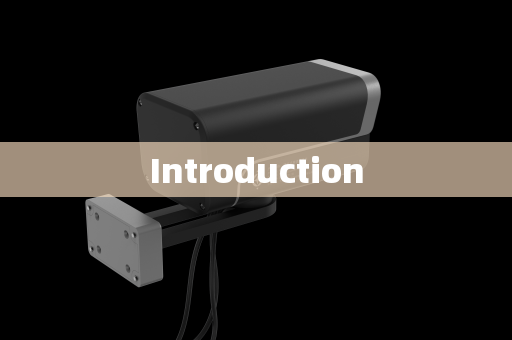
Penetration Imager Effect Images
- Superior Penetration Capability: It can effectively "see through" various obscurants and media that scatter or block conventional light, including smoke, fog, haze, rain, snow, and light foliage. Crucially, it can also achieve non-invasive penetration of vehicle windows (car, truck, high-speed rail), aircraft portholes, glass curtain walls, and certain specialized glass types, revealing occupants and contents without physical inspection.
- Extended Range & High Resolution: The concentrated laser pulse and selective gating enable long-distance imaging with high spatial and range resolution, allowing observation of suspicious activities from a safe, covert standoff position.
- Backscatter Suppression & Anti-Interference: By rejecting light scattered from particles close to the sensor (like dense fog or smoke near the camera), it drastically improves image contrast in degraded environments where traditional cameras see only a "white wall" effect.
- All-Weather, Day-Night Operation: It functions independently of ambient light, providing high-quality imagery in pitch darkness, twilight, or under the glare of vehicular headlights.
System Components and Capabilities
A typical system comprises a pulsed laser illuminator, a beam expander, an imaging lens, and the critical Gated Intensifier Camera. This camera integrates a Microchannel Plate (MCP) image intensifier, high-voltage modules, and precision timing/gating control circuits. This ensemble enables exceptional performance: optical gain exceeding 10^6, an optical shutter speed faster than 3 nanoseconds, and timing synchronization precision better than 10 picoseconds. These specs allow not just for high-contrast 2D imaging but also for the extraction of precise 3D spatial data of the target area, facilitating better assessment and decision-making.
Application in Border Interception: A Game Changer
In the specific context of border control and the interception of illegal immigrants, Penetration Imaging Systems play a multi-faceted and pivotal role:
-
Covert Surveillance of Border Crossings: Systems can be deployed at known illegal crossing points, along fences, or in remote areas. They maintain persistent surveillance through night, fog, or light rain, detecting the movement of individuals or groups that would be invisible to other sensors, enabling early warning and rapid dispatch of response teams.
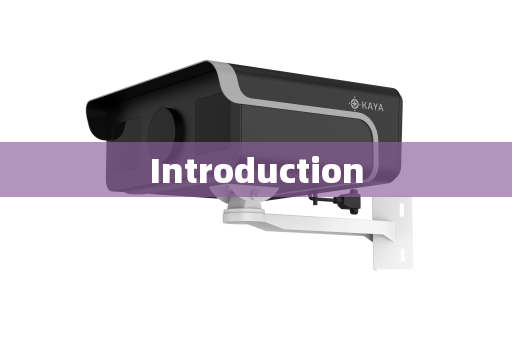
Penetration Imager Effect Images
-
Vehicle Interdiction and In-Vehicle Inspection: One of the most significant applications is at vehicular checkpoints or for monitoring roads near borders. The system can scan approaching or stationary vehicles from a distance, penetrating the windows to clearly identify the number of occupants, their positions, and potentially visible cargo. This allows officers to identify overcrowded vehicles (a common sign of human smuggling) or individuals hiding in trunks or footwells without initially alerting the driver, facilitating targeted and safer inspections.
-
Search and Rescue in Harsh Terrain: Illegal border crossings often occur through dangerous, remote landscapes. If individuals are reported missing or in distress in such areas amidst fog, rain, or forest smoke, these systems can be mounted on patrol vehicles, UAVs, or used by search teams to locate them more efficiently, combining border security with humanitarian response.
-
Maritime and Riverine Border Security: For coastal borders or those defined by rivers, the system's ability for long-range fog-penetrating imaging and glare suppression (overcoming water surface glare or enemy laser dazzling) is vital. It can monitor for small, low-profile vessels, rafts, or swimmers attempting crossings in poor visibility, day or night, significantly enhancing maritime domain awareness.
-
Evidence Gathering and Forensic Investigation: The high-resolution imagery and video provided can serve as valuable evidence for prosecuting smugglers and traffickers, documenting the methods of concealment and the conditions of the illegal border crossing attempt.
Broader Context and Integration
While border security is a standout application, the technology's utility spans across Emergency Services (firefighting, urban search and rescue, hazmat response) and Law Enforcement & Military Operations (counter-terrorism, tactical entry, surveillance, anti-smuggling ops). Its adoption is a key component in the development of Smart Border initiatives, Integrated Border Management Systems, and broader Smart City/Safe City infrastructures, where it fuses with other sensors (radar, thermal, AI analytics) to create a comprehensive, layered security apparatus.
Conclusion
The Penetration Imaging System is far more than just a sophisticated camera; it is a force multiplier for border security agencies. By ripping away the veil of darkness, weather, and common concealment methods, it fundamentally alters the advantage in the cat-and-mouse game of illegal immigration and smuggling. It enables proactive, intelligence-led, and precise interception while enhancing officer safety and operational efficiency. As border threats evolve in complexity, the deployment of such cutting-edge, all-weather surveillance technology will be indispensable for nations striving to maintain secure, sovereign, and well-managed borders.