The Silent Watcher: How Penetrative Imaging Systems Grant Unprecedented Tactical Edge in Pre-Raid Reconnaissance of Terrorist Hideouts* In the high-stakes world of counter-terrorism operations, success or failure, and more critically, the preservation of operator lives, often hinges on the quality of intelligence gathered before* a raid commences. Traditional reconnaissance methods—human intelligence, signals intercepts, or standard optical surveillance—can leave critical gaps, especially when targets are concealed within structures or vehicles. This is where advanced penetrative imaging systems, leveraging cutting-edge laser range-gated imaging technology, emerge as a transformative force in pre-raid reconnaissance, acting as the "silent watcher" that sees through concealment.
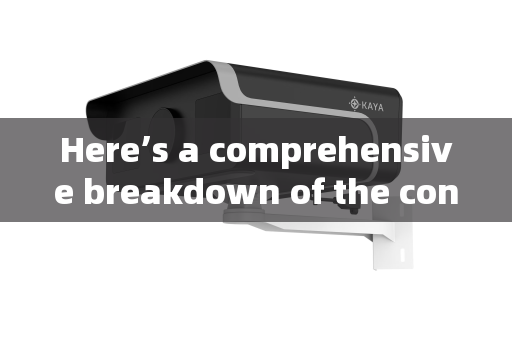
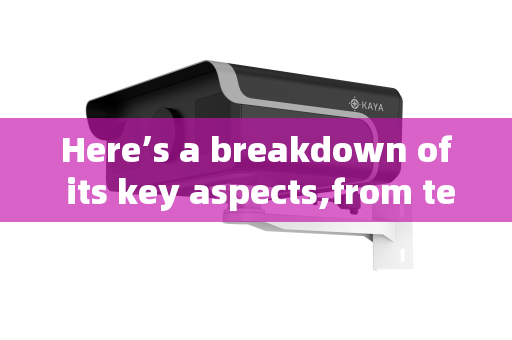
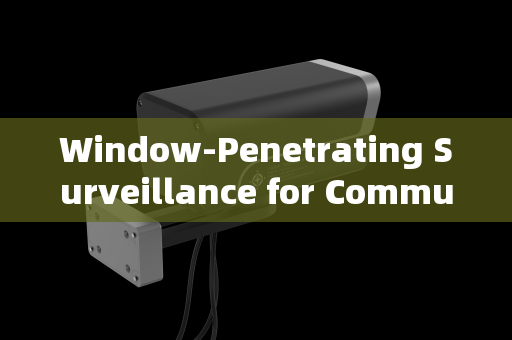
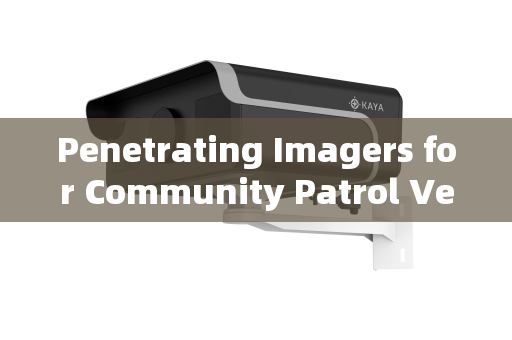
Penetration Imager Effect Images
At its core, a modern penetrative imaging system is an engineering marvel designed to defeat obscurants and barriers. It operates on the principle of Laser Range-Gated Imaging (LRGI). The system innovatively combines a high-repetition-rate pulsed laser with a gated intensified camera. The process is one of exquisite temporal precision: a short, powerful pulse of laser light illuminates the scene. The camera's ultra-fast optical shutter, synchronized with nanosecond (and even picosecond) accuracy to the laser pulse, opens only for the precise moment when light reflected from a specific "slice" of space—at the desired distance—returns. By progressively delaying the camera's opening relative to the laser pulse, the system effectively "slices and stacks" images of different range intervals.
This methodology confers decisive advantages crucial for covert reconnaissance:
- Defeating Backscatter & Obstacles: It selectively ignores light scattered by intervening mediums like smoke, fog, rain, snow, or dust immediately in front of the sensor, which normally blinds conventional cameras and thermal imagers. More remarkably, it can penetrate various types of glass—car windows, building curtain walls, toughened glass, train and aircraft windows—allowing operators to discreetly identify occupants, weapons, or layouts inside a vehicle or room from a standoff distance.
- Long-Range, High-Contrast Imaging: By eliminating the glare from obscurants, it delivers high-contrast images of targets at significant distances, even in total darkness or extremely low-light conditions.
- 3D Information & Precision: The time-slicing nature of the technology inherently provides precise range data for each pixel, enabling high-accuracy 3D mapping of a target area, which is invaluable for planning entry points and assault routes.
The Pre-Raid Game Changer: Applications in Counter-Terrorism
Penetration Imager Effect Images
In the context of preparing an assault on a suspected terrorist hideout, safe houses, or vehicle-borne IED workshops, penetrative imaging systems provide unparalleled situational awareness.
-
Covert Structural Reconnaissance: From a concealed position hundreds of meters away, operators can scan buildings. The system can "see through" windows to map interior rooms, identify the number and location of individuals, and potentially spot weapon caches or improvised explosive devices (IEDs) on the other side of the glass, all without alerting the occupants. This transforms an assault from a high-risk breach into a precision operation with known interior layouts.
-
Vehicle-Borne Threat Assessment: Suspect vehicles are common mobile hideouts or potential VBIEDs. A penetrative imager can clandestinely scan a vehicle through its windows, confirming the presence of occupants, detecting suspicious objects (wires, canisters), or noting if individuals are in a prone or hidden position, indicating an ambush setup.
Penetration Imager Effect Images
-
Operation in Degraded Environments: Terrorist compounds are often deliberately located in areas with poor visibility or may use smoke screens as a defensive tactic. The system’s ability to maintain clear imaging through haze, light fog, and precipitation ensures that reconnaissance and subsequent assault coordination are not halted by adverse weather, maintaining operational timelines.
-
Post-Blast/Disaster Rescue Integration: In the aftermath of an attack or a raid that causes structural collapse and fire, these systems are dual-use. The same technology that enabled the pre-raid scout is instantly repurposed for urban search and rescue (USAR), allowing rescue teams to see through smoke and debris to locate casualties, thereby saving lives even in the operation's aftermath.
System Composition & Operational Integration
Deployable on tripods, vehicle mounts, or potentially UAVs, these systems are built around a pulsed laser illuminator, a beam expander, an imaging lens, and the critical gated/intensified camera. The camera's heart is the Microchannel Plate (MCP) image intensifier, coupled with high-voltage and precision timing modules. This enables an optical gain exceeding 10^6, shutter speeds faster than 3 nanoseconds, and synchronization precision better than 10 picoseconds—the technical backbone of its extraordinary capability.
Conclusion: Redefining the Tactical Advantage
The role of penetrative imaging systems in pre-raid reconnaissance is fundamentally that of a force multiplier and a lifesaver. By granting law enforcement and military units the ability to conduct detailed, covert reconnaissance through barriers and in conditions that would otherwise blind them, these systems dramatically reduce the "fog of war" surrounding a target. They enable evidence collection (reconnaissance and evidence-gathering), enhance operational surprise, allow for more precise and safer tactical planning, and directly contribute to minimizing collateral damage and operator casualties. As terrorist tactics evolve towards greater concealment, technology like LRGI-based penetrative imaging ensures that counter-terrorism forces retain the decisive edge, seeing first, seeing clearly, and acting with informed precision. In the silent, critical minutes before a raid, it is the ultimate silent watcher.