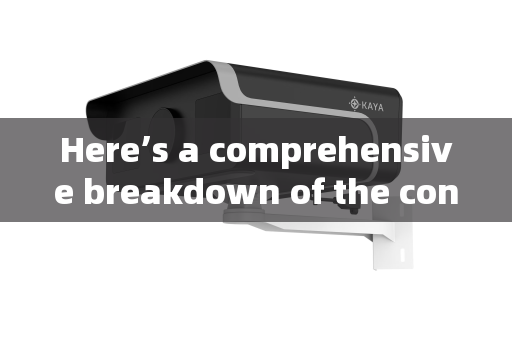
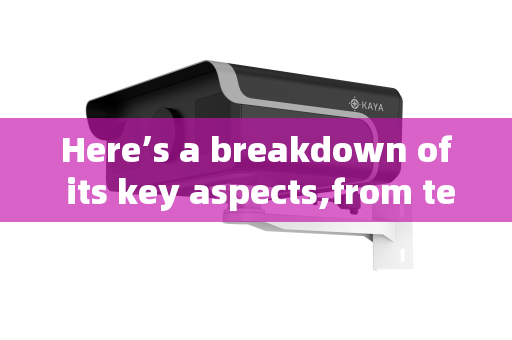
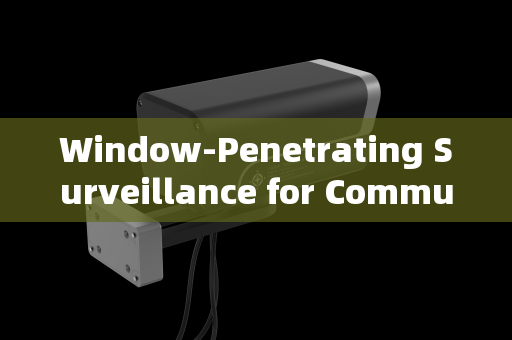
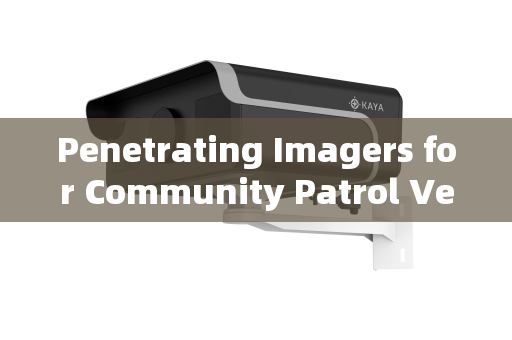
In the high-stakes domain of aviation security, the imperative to detect, assess, and neutralize threats before they materialize is paramount. Traditional surveillance and imaging technologies, while effective in standard conditions, often reach their operational limits in adverse environments or when faced with obfuscating barriers. This is where advanced Penetration Imaging Systems emerge as a transformative force, fundamentally augmenting the capabilities of airport security monitoring networks. By leveraging cutting-edge Laser Range-Gated Imaging (LRG) technology, these systems provide security personnel with unparalleled visual intelligence, ensuring robust protection across the entire airport ecosystem.
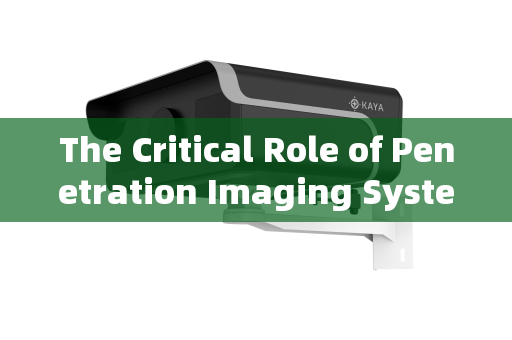
Penetration Imager Effect Images
Understanding Penetration Imaging Technology
A Penetration Imaging System represents a significant leap in active imaging. Its core innovation lies in the precise synchronization of a high-repetition-rate pulsed laser and a gated intensifier camera. The system operates by emitting nanosecond-duration laser pulses toward a target area. The gated camera, electronically synchronized with picosecond-level precision, opens its ultra-fast optical shutter (as brief as 3ns) only for the precise moment when the reflected light from a specific, pre-determined "slice" of space returns. By sequentially scanning through different time delays (distance slices) and stacking these images, the system constructs a high-contrast, detailed picture.
This time-slicing methodology confers several critical advantages essential for security applications: exceptional range resolution, extended imaging distance, powerful resistance to backscatter from obscurants, and formidable anti-interference capability. It effectively mitigates the visual degradation caused by various media, including smoke, fog, haze, rain, snow, and flames. Most notably for airport contexts, it can passively penetrate various glass barriers—such as aircraft cabin windows, terminal glass facades, and vehicle windscreens—to reveal interior details without alerting subjects, all under conditions of extreme low light or complete darkness.
Key Components for High-Stakes Performance
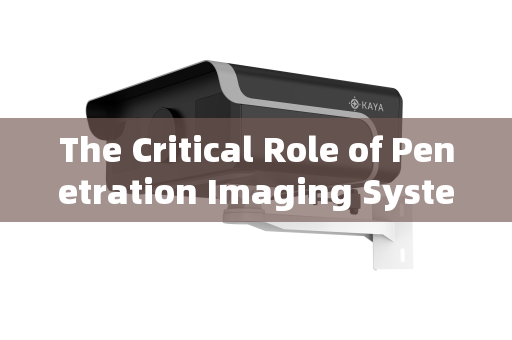
Penetration Imager Effect Images
The system's efficacy stems from its sophisticated architecture:
- Pulsed Laser Illuminator: Provides the coherent, high-power light pulses.
- Beam Expander: Shapes and directs the laser beam.
- Imaging Lens: Gathers reflected light.
- Gated Intensifier Camera: The heart of the system, incorporating a Microchannel Plate (MCP) image intensifier capable of >10^6 optical gain, a high-voltage module, and precision timing and gating modules. This assembly enables the ultra-fast, gain-controlled detection crucial for high-fidelity 3D information acquisition.
Application in Airport Security Monitoring: A Multi-Layered Defense
The integration of Penetration Imaging Systems creates a multi-layered, proactive security shield at airports:
-
Perimeter and Runway Surveillance: Ensuring the sanctity of the Air Operations Area (AOA) is critical. These systems enable long-range, 24/7 monitoring of runways, taxiways, and perimeter fences through dense fog, precipitation, or darkness. They can detect unauthorized intrusions, suspicious objects, or individuals in restricted zones with high clarity, far beyond the range of standard CCTV.
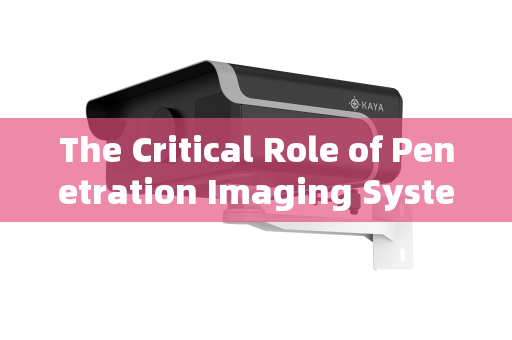
Penetration Imager Effect Images
-
Aircraft Inspection and Stand-Off Screening: While aircraft are on the ground, parked, or being serviced, security teams can conduct non-invasive, stand-off inspections. The system can peer through aircraft cockpit and cabin windows from a safe distance to identify potential threats, suspicious activities, or stowaways inside an unoccupied aircraft, without ever needing to breach the door.
-
Terminal Building and Critical Infrastructure Security: Large airport terminals present vast, complex surveillance challenges. Penetration imaging can be deployed to monitor areas through glass curtain walls or tinted windows. It is invaluable for counter-terrorism and law enforcement operations, allowing for the discreet observation of persons or packages inside rooms or vehicles from an external vantage point, aiding in evidence collection and pre-emptive threat neutralization.
-
Vehicle and Cargo Checkpoint Enhancement: At vehicle entry points for cargo, fuel, or catering services, these systems can augment standard checks. They can screen the interior of trucks or vans through their windows and windscreens for concealed individuals (human trafficking interdiction) or anomalies without impeding the flow of traffic.
-
Emergency and Crisis Response: In the event of a fire, hazardous material release, or other incident within a terminal or aircraft hangar, the system's ability to see through smoke and flame is lifesaving. It provides firefighting and rescue teams with real-time visual intelligence on the location of victims, structural integrity, and fire spread, directly enhancing operational efficiency and personnel safety during urban search and rescue (USAR) scenarios within the airport infrastructure.
-
Anti-Smuggling and Customs Enforcement: For customs and border protection agencies operating at international airports, the technology assists in counter-smuggling operations. It can be used to conduct preliminary scans of cargo containers or the interior of vehicles approaching aircraft for contraband, without the need for immediate physical intervention.
Conclusion
The Penetration Imaging System is far more than a simple camera; it is a force-multiplying sensor that redefines the possibilities of airport security surveillance. By delivering clear, actionable intelligence through visual barriers and in environmental conditions that would blind conventional systems, it empowers security forces to shift from reactive monitoring to proactive, predictive threat detection. Its applications span from routine perimeter watch to critical counter-terrorism and disaster response missions. As security threats evolve in sophistication, the adoption of such dual-use technologies—proven in military, law enforcement, and emergency service sectors—becomes not just advantageous but essential for safeguarding the complex, vulnerable, and vital nodes of global air travel. In the relentless pursuit of aviation security, penetration imaging stands as a pivotal tool, illuminating the shadows and seeing the unseen.