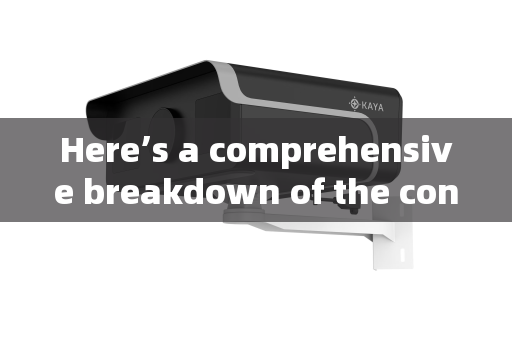
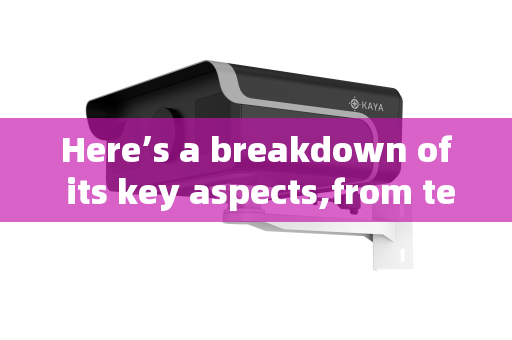
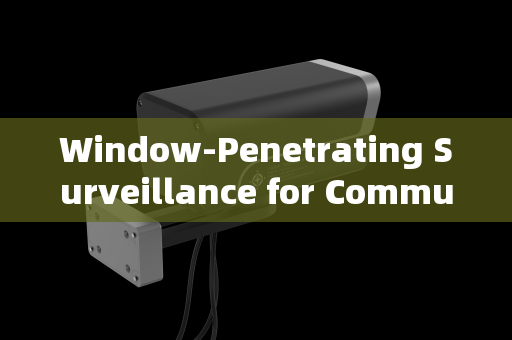
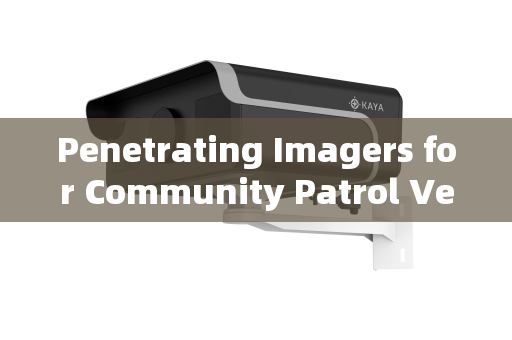
In the high-stakes realm of tactical law enforcement and military operations, the success of a raid hinges on one critical phase: pre-assault reconnaissance. The quality and accuracy of intelligence gathered about the objective—its layout, the presence and disposition of threats, and the condition of potential hostages or non-combatants—directly dictate operational planning, risk assessment, and ultimately, mission success and personnel safety. In this context, Penetration Imaging Systems (PIS), leveraging advanced laser range-gated imaging technology, have emerged as a transformative force multiplier, piercing through visual obstructions to deliver unprecedented situational awareness before the first operator crosses the threshold.
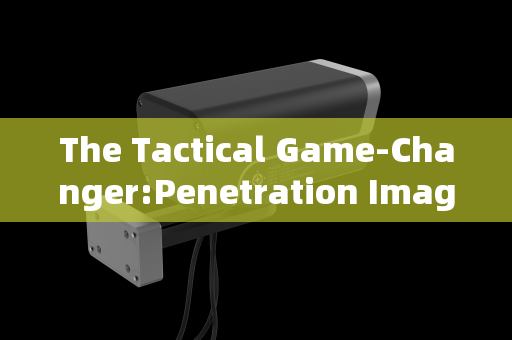
Penetration Imager Effect Images
Demystifying the Technology: Seeing the Unseeable
At its core, a Penetration Imaging System is a sophisticated electro-optical device designed to acquire clear imagery under extreme conditions where conventional optics fail. Its operational principle is a masterclass in precision timing. The system integrates a high-repetition-rate pulsed laser with a gated intensifier camera. The laser emits ultra-short, intense pulses of light. Crucially, the camera’s sensor (often an Image Intensifier Tube with a Microchannel Plate - MCP) is synchronized to open its nanosecond-scale optical shutter only for the precise moment when the laser light reflected from a specific, predetermined distance slice returns.
This time-slicing or "range-gating" process effectively rejects all ambient light and, most importantly, backscatter from obscurants like smoke, fog, dust, rain, or mist that lie between the sensor and the target zone. By sequentially stacking these "slices" of cleared imagery from different distances, the system constructs a high-contrast, detailed image of the target scene. With optical gains exceeding 10^6, shutter speeds below 3 nanoseconds, and synchronization precision better than 10 picoseconds, these systems achieve remarkable clarity and depth resolution.
The "Penetration" Capability: A Tactical Reconnaissance Revolution
The system’s defining feature is its ability to "see through" various media that traditionally blind tactical teams during the critical pre-raid scan. This capability redefines covert reconnaissance:
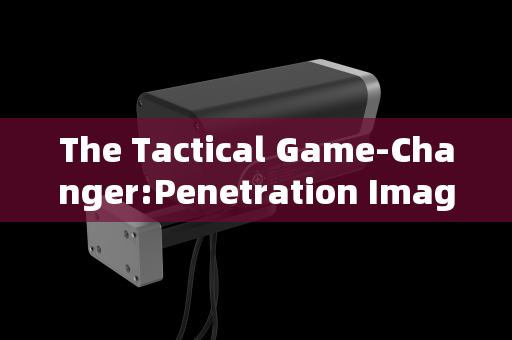
Penetration Imager Effect Images
-
Covert Surveillance through Barriers: PIS can passively or actively penetrate standard and specialized glass, including vehicle windows, building curtain walls, train windows, and aircraft portholes, without detection. This allows teams to conduct stand-off reconnaissance of structures or vehicles, identifying occupant numbers, weapon presence, and internal layouts without alerting suspects. For counter-terrorism and hostage rescue (HRU) scenarios, verifying the status and location of individuals inside a barricaded room or vehicle is invaluable.
-
Dominance in Degraded Visual Environments (DVEs): Raids do not wait for clear weather. PIS excels where human vision and standard optics are useless. It can effectively see through fire, dense smoke, industrial haze, and precipitation. In a dynamic entry scenario following a flash-bang or in a fire-compromised structure, commanders can maintain a real-time visual on the objective’s interior to track threat movement or locate casualties, dramatically improving officer safety and mission effectiveness.
-
Extended Range and Anti-Interference: The system’s powerful laser illumination and rejection of clutter provide long-range imaging capability even at night or in low-light conditions, useful for perimeter reconnaissance of compounds. Its immunity to common battlefield or urban light interference (e.g., streetlights, flares) ensures a stable, reliable image feed for intelligence analysis.
Application in Pre-Raid Phases: From Planning to Breach
The role of a PIS in the pre-raid timeline is multifaceted:
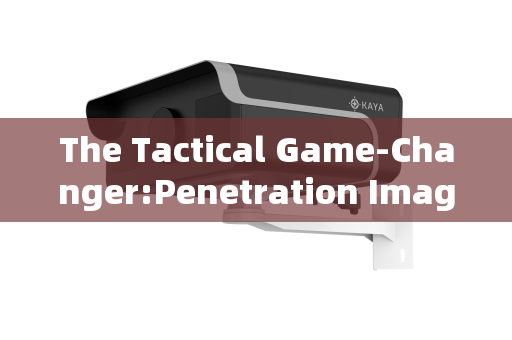
Penetration Imager Effect Images
-
Phase 1: Initial Isolation and Perimeter Setup: As an Advanced Force Operations (AFO) team establishes an outer cordon, a PIS can be deployed from a concealed position or unmanned ground/aerial vehicle (UGV/UAV) platform. It scans building facades, identifying entry points, blacked-out windows, and potential sniper positions or IED placements on approaches.
-
Phase 2: Detailed Objective Analysis: This is the system’s most critical contribution. Focused on the primary breach point and adjacent areas, it provides:
- Room Clearance Preview: Identifying the number and location of occupants, distinguishing between combatants and non-combatants.
- Threat Verification: Spotting visible weapons, body armor, or suspicious packages (Potential Explosive Devices - PEDs).
- Interior Layout Mapping: Identifying furniture, doorways, and internal barriers that will affect the flow of the assault team. This information is fed directly into the Final Tactical Briefing, allowing for refined squad movement patterns and breaching point selection.
-
Phase 3: Dynamic Reassessment: Even during the final moments before breach, a PIS can monitor for last-minute changes inside the objective, providing the assault commander with real-time updates to confirm or adjust the plan.
Broader Operational Context
While its pre-raid role is paramount, the utility of penetration imaging extends across the mission spectrum. It is equally vital in post-blast investigation to see through smoke at incident sites, in maritime interdiction (VBSS) to scan vessel interiors before boarding, and in force protection for monitoring sensitive perimeters through fog or darkness.
In conclusion, the Penetration Imaging System is far more than just a sophisticated camera. It is a critical intelligence, surveillance, and reconnaissance (ISR) asset that effectively lifts the fog of war and the veil of concealment in tactical environments. By delivering clear, actionable visual intelligence on threat disposition and environmental conditions through virtually any visual barrier, it empowers tactical commanders to make informed decisions, minimize uncertainty, and execute raids with a level of precision and safety previously unattainable. In the lexicon of modern tactical operations, it has become an indispensable tool for ensuring operational supremacy from the first moment of reconnaissance to the final act of resolution.