In the high-stakes, zero-visibility environment of a structural fire, the ability to locate victims and navigate hazards quickly can mean the difference between life and death. For decades, firefighting has been described as “going in blind,” reliant on thermal imaging for heat signatures and firefighters’ tactile senses. A critical question now drives technological innovation in emergency services: Can a penetration imaging system penetrate flames for imaging during fire rescue? The answer, underpinned by cutting-edge Laser Range-Gated (LRG) or Gated Imaging technology, is a transformative yes.
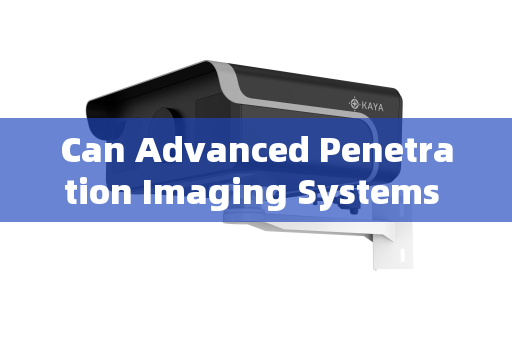
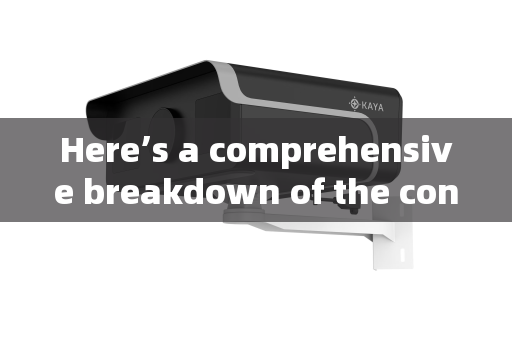
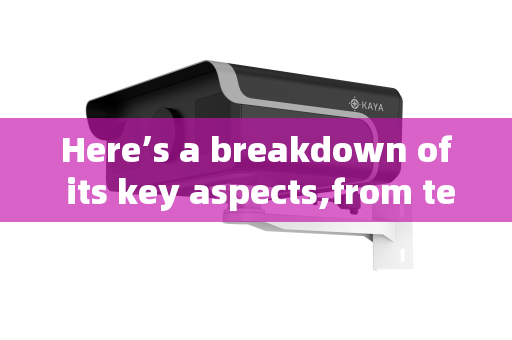
Penetration Imager Effect Images
Understanding Penetration Imaging: Beyond Conventional Vision
A penetration imaging system, in this context, is not a standard optical or thermal camera. It is a sophisticated active imaging platform designed to acquire clear visual information through obscurants that traditionally block or scatter light. Its core function is to perform “visual slicing” of a scene by distance, selectively imaging only a specific, user-defined slice of space while rejecting light from all other distances, particularly backscatter from particulates close to the lens.
This capability is achieved through the precise synchronization of a high-repetition-rate pulsed laser and a gated intensifier camera. The system emits extremely short, powerful pulses of laser light (nanosecond duration). The camera’s shutter, or “gate,” remains closed until the precise moment the laser pulse illuminates the target area at a specific distance. It then opens for an equally brief period (as short as 3 nanoseconds), collecting only the light reflected from that targeted “slice” of space. By stacking images from successive slices, the system builds a high-contrast, detailed composite view. Key components include the pulsed laser, the gated intensifier camera (featuring a Microchannel Plate (MCP) for gains exceeding 10^6x), beam expanders, and imaging lenses.
The Fire Rescue Challenge: Penetrating the Dynamic Obscurant
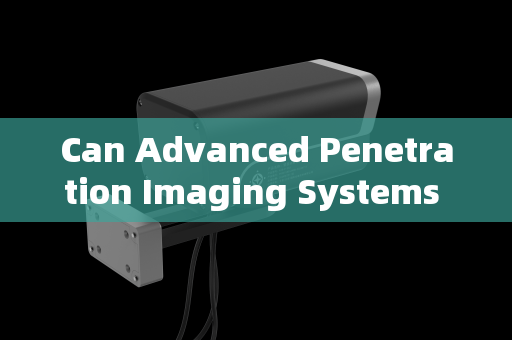
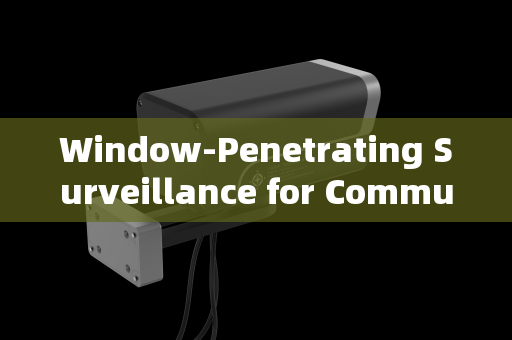
Penetration Imager Effect Images
Flames, combined with dense smoke, present a uniquely challenging obscurant. They are a dynamic mix of intense, broadband light emission (from combustion) and a high concentration of particulates (soot, ash) that cause severe backscatter. Traditional thermal imagers see heat, not visual details, and can be blinded by the overwhelming thermal radiation of flames. Standard visible-light cameras are useless in smoke and overwhelmed by flare.
This is where LRG technology excels. Its operational advantages are directly applicable to the fireground:
- Overcoming Backscatter: By timing the camera gate to open only when light from the distant target returns, the system effectively ignores the backscattered light from smoke and water droplets close to the camera, which is the primary cause of “white-out” in conventional imaging.
- Flame Penetration: The nanosecond-scale gating can, in principle, be timed to see between the fluctuating intensity peaks of turbulent flames or to filter out their specific spectral emission. When combined with spectral filtering, the system can prioritize the reflected laser light over the flame’s own light, allowing it to “see through” the flame curtain to identify objects, structural features, or victims behind it.
- Extended Range & Resolution: The powerful, focused laser illumination provides its own light source, enabling imaging in total darkness or thick smoke at distances far beyond conventional illumination. The time-slicing provides inherent distance resolution, aiding in spatial awareness.
Application in Emergency Scenarios: Transforming Search and Rescue
In Fire and Rescue operations, the implications are profound. For urban and industrial firefighting, teams can use handheld or helmet-mounted penetration imagers to scan ahead through rooms filled with rolling smoke and intervening flames. They could identify downed colleagues, locate casualties obscured by fire, assess structural integrity of beams behind flames, or identify the location of volatile materials. In forest fire management, airborne or ground-based systems could help map fire fronts and spot firefighters in distress through smoke. For mine rescue and HazMat incidents, the ability to see through particulate-heavy atmospheres is invaluable.
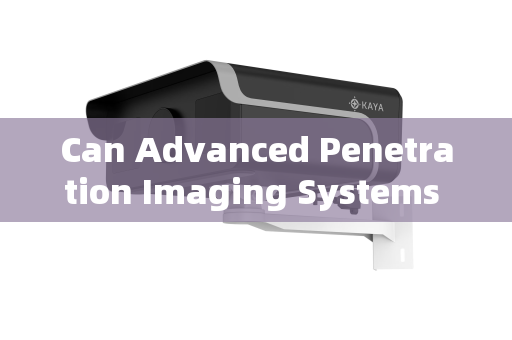
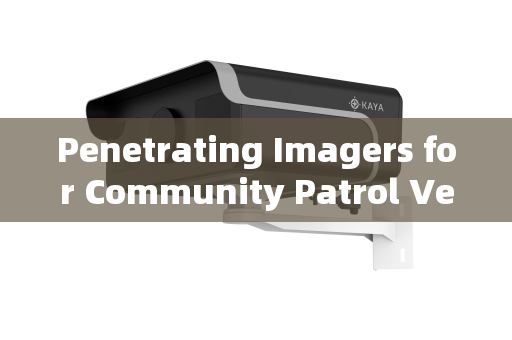
Penetration Imager Effect Images
The technology also enhances training and preparedness at live-fire training facilities and critical infrastructure sites, allowing for detailed monitoring of exercises and security perimeters through visual barriers.
Broader Horizons: Multi-Domain Deployment
The utility of penetration imaging extends far beyond the fire service, validating its robustness:
- Law Enforcement & Military: For counter-terrorism, hostage rescue, and covert surveillance, it allows seeing through tinted windows, obscured windscreens, and light foliage. It is vital for maritime interdiction, border security (seeing into vehicles), and forensic examination in low-visibility conditions.
- Coastal & Maritime Security: These systems provide fog-penetrating and glare-suppression capabilities, ensuring continuous surveillance for port security, navigation aid, and littoral operations in adverse weather.
- Smart Cities & Critical Infrastructure: They offer a reliable, all-weather imaging solution for perimeter security of airports, power plants, and landmarks, penetrating rain, snow, and haze.
Conclusion
The evolution from “going in blind” to “seeing through the inferno” is underway. Penetration imaging systems based on laser range-gating technology offer a resounding affirmative to the question of imaging through flames. By rejecting backscatter and selectively capturing light from targeted distances, they provide a visual intelligence capability previously deemed impossible in severe fire conditions. While operational integration requires consideration of size, cost, and training, its potential to dramatically increase situational awareness, accelerate victim location, and enhance firefighter safety is unequivocal. As the technology matures and becomes more accessible, it is poised to become a standard, life-saving tool in the frontline responder’s arsenal, turning the opaque, deadly environment of a fire into a navigable space for rescue.