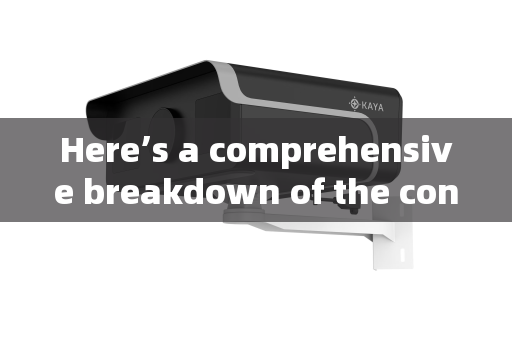
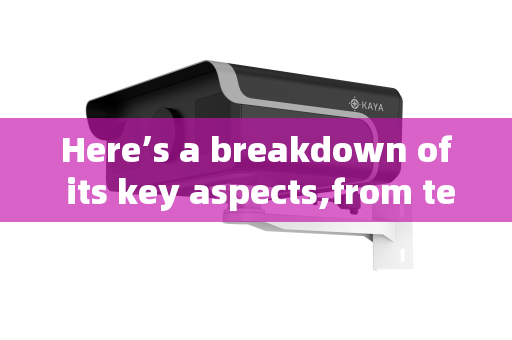
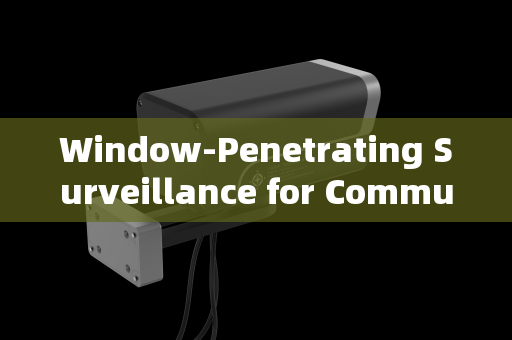
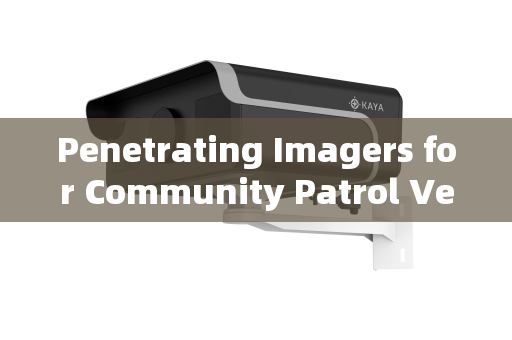
In the high-stakes realm of fire rescue, visibility is often the difference between life and death. Dense smoke, a common and deadly obstacle in fires, can render traditional optical and thermal imaging systems ineffective, blinding rescue teams and hindering rapid victim localization. This raises a critical question: Can a penetration imaging system penetrate smoke for imaging during fire rescue? The answer is a resounding yes. Advanced penetration imaging systems, leveraging cutting-edge laser range-gated imaging technology, are revolutionizing fireground reconnaissance by providing clear, high-contrast imagery through obscurants like smoke, fog, and even certain structural barriers. These systems are becoming indispensable tools for first responders, dramatically improving situational awareness, operational efficiency, and ultimately, survival rates.
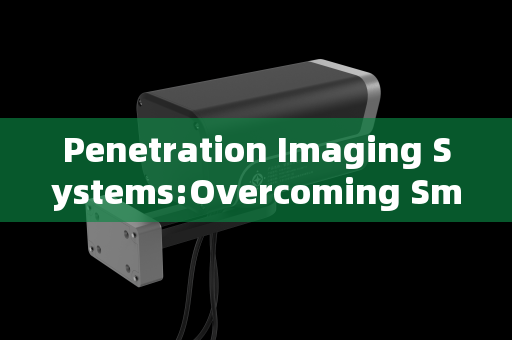
Penetration Imager Effect Images
Understanding Penetration Imaging Systems
A penetration imaging system is a sophisticated electro-optical device designed to acquire visual information under extreme environmental conditions where conventional imaging fails. Its core function is to actively illuminate a scene and selectively capture light returned from a specific, narrow slice of space, effectively "seeing through" various obscuring media. The key technological innovation enabling this capability is Laser Range-Gated Imaging (LRGI) or Gated Imaging Technology.
This technology innovatively combines a high-repetition-frequency pulsed laser with an image-intensified gated camera. The system operates by emitting short, nanosecond-duration laser pulses to illuminate the target area. The gated camera, synchronized with nanosecond precision to the laser pulses, opens its ultra-fast optical shutter only during a precise time window corresponding to the round-trip travel time of light to and from a desired distance slice. By sequentially adjusting this time delay, the system can perform a "slice-stacking" scan of different spatial ranges. This process rejects backscattered light from particles close to the observer (like smoke, fog, or rain) and only collects light reflected from the target plane, thereby achieving high-contrast imaging. The primary components include a pulsed laser, an image-intensified gated camera (incorporating a Microchannel Plate - MCP - image intensifier, high-voltage module, timing module, and gating module), beam expander, and imaging lens.
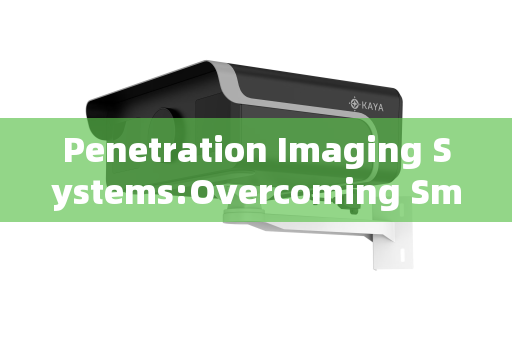
Penetration Imager Effect Images
Core Capabilities and Advantages
The penetration imaging system delivers exceptional performance tailored for harsh environments:
- Superior Penetration and Clarity: It can effectively overcome backscatter from various media including fire, smoke, dust, rain, snow, fog, and haze. Furthermore, it can achieve non-invasive penetration of windows and glass barriers such as vehicle windshields, architectural glass幕墙, special security glass, high-speed train windows, and aircraft portholes, enabling covert observation.
- Extended Range and High Resolution: The system offers long imaging ranges with high distance resolution, allowing for detailed target identification at significant distances.
- Robust Anti-Interference: It is highly resistant to environmental interference and can suppress glare, making it effective in complex lighting conditions.
- Versatile Imaging Modes: Beyond atmospheric penetration, some systems are capable of underwater imaging, expanding their utility to maritime and diving rescue operations.
- Precision Timing: With an optical shutter faster than 3 nanoseconds and timing synchronization precision better than 10 picoseconds, coupled with optical gain exceeding 10^6, the system enables high-precision three-dimensional information acquisition of targets.
Application Scenarios in Emergency and Public Safety
The unique capabilities of penetration imaging systems have led to their widespread adoption across critical sectors.
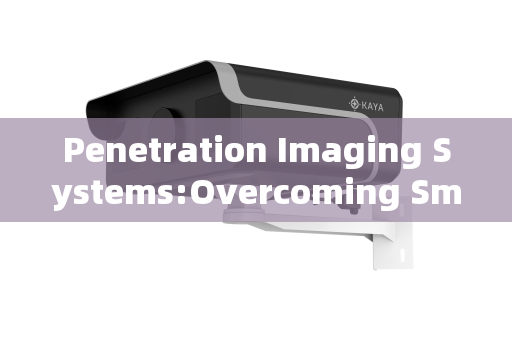
Penetration Imager Effect Images
Emergency Response and Fire Rescue: This is the primary domain addressed by the central question. In fireground operations, these systems are vital for:
- Urban and Structural Firefighting: Enabling firefighters to navigate through smoke-filled buildings, locate victims, identify structural integrity hazards, and pinpoint fire seats with unprecedented clarity, significantly accelerating search and rescue (SAR) and improving firefighter safety.
- Wildland Firefighting: Providing vision through smoke curtains for monitoring fire fronts, spotting hotspots, and guiding aerial or ground teams.
- Complex Incident Response: Essential for technical rescues in industrial settings (like chemical plants or mining accidents) and water rescue operations, where visibility is compromised by smoke, steam, or turbid water.
- Training and Preparedness: Used in training facilities, fire simulation systems, and for securing critical infrastructure (skyscrapers, landmarks) to develop and validate high-level firefighting tactics.
Military, Law Enforcement, and Security Operations: These systems provide a critical tactical edge:
- Covert Surveillance and Reconnaissance: For counter-terrorism operations, hostage rescue, narcotics interdiction, smuggling prevention, and military intelligence, surveillance, and reconnaissance (ISR), allowing observation through windows or foliage.
- Security and Enforcement: Aiding in arrest operations, evidence collection, perimeter control, crowd monitoring, and detecting vehicle overloading or unauthorized modifications.
- Integrated Security: Playing a key role in Smart City initiatives, Smart Policing, and comprehensive security platforms by providing all-weather, all-condition surveillance capabilities.
Maritime and Border Security: In challenging coastal and maritime environments, these systems ensure continuous domain awareness:
- All-Weather Maritime Operations: Enabling long-range imaging through fog and mist for naval missions, port and harbor surveillance, ship boarding operations, and anti-piracy activities.
- Border and Coastal Patrol: Enhancing border security by allowing effective monitoring in poor weather, detecting illegal crossings, and supporting interdiction efforts day or night.
- Strong Light Suppression: The technology's ability to suppress glare from water surfaces or other light sources is particularly valuable for maritime safety and security.
Conclusion
The question of whether a penetration imaging system can penetrate smoke for fire rescue imaging is not merely theoretical but a demonstrated reality. By harnessing advanced laser range-gated imaging, these systems transform opaque, hazardous environments into navigable spaces for first responders. Their ability to deliver clear, actionable intelligence through smoke, glass, and other obscurants directly translates to faster rescue times, reduced risk to both victims and personnel, and more effective emergency and security operations overall. As the technology continues to evolve, its integration into standard response protocols for fire services, law enforcement, and military units worldwide promises to set a new standard for safety and operational effectiveness in the face of adversity. The future of rescue and security is clearer, thanks to the penetrating vision of these remarkable systems.