Introduction
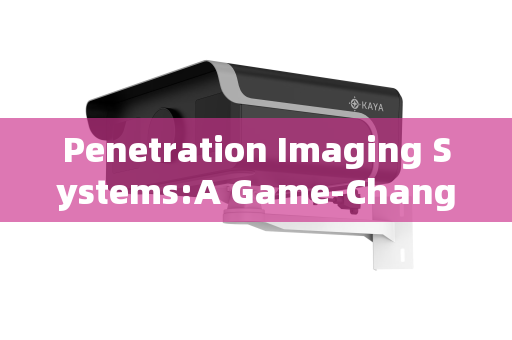
Penetration Imager Effect Images
The core mission of fire and rescue services—saving lives and mitigating disaster—relies fundamentally on situational awareness. In hostile environments characterized by zero visibility, intense heat, toxic smoke, and structural chaos, traditional search methods and even standard thermal imaging cameras (TICs) reach their limits. The critical question emerges: Can a penetration imaging system improve efficiency in fire rescue operations? The answer, underpinned by advanced laser-gated imaging technology, is a definitive and transformative yes. These systems are redefining reconnaissance capabilities, offering a decisive edge in time-sensitive rescue scenarios.
Understanding Penetration Imaging: Beyond Conventional Limits
A Penetration (or Gated) Imaging System is not merely an incremental upgrade to existing optics. It represents a paradigm shift in active imaging. At its heart lies Laser Range-Gated Imaging (LRGI), a sophisticated technique that combines a high-repetition-rate pulsed laser with a gated, intensified camera. The system operates by emitting ultra-short, nanosecond-duration laser pulses toward the target area. The key innovation is the precise, time-synchronized control of the camera’s optical shutter (or "gate"), which opens only for a minuscule window (as low as 3 nanoseconds) to capture the returning laser light from a specific "slice" of space.
This process, akin to temporal slicing and stacking, delivers several groundbreaking advantages over passive thermal or standard low-light imaging:
- Superior Contrast & Rejection of Backscatter: By ignoring all light returning outside its precisely timed gate, the system effectively cancels out the blinding backscatter from obscurants like smoke, fog, dust, rain, and snow—the primary challenge for conventional imaging in fire environments.
- Long-Range, High-Resolution Target Acquisition: The coherent, pulsed laser illumination provides intense, focused light, enabling target detection and identification at significantly greater distances than passive systems, even in total darkness.
- "See-Through" Capability: A hallmark of this technology is its ability to penetrate various transparent and semi-transparent media with minimal distortion. This includes vehicle windshields, architectural glass, train and aircraft windows, through flames, and even for underwater search applications. It provides "stand-off" inspection without physical contact or breach.
The system's architecture—comprising a pulsed laser, beam expander, imaging lens, and a gated intensified camera with a Microchannel Plate (MCP) offering >10^6 optical gain and picosecond-level synchronization—enables the capture of high-fidelity imagery and precise 3D data where other sensors fail.
Transforming Fire and Rescue Operations: Specific Applications
Penetration Imager Effect Images
In the high-stakes domain of emergency response, penetration imaging systems directly address critical pain points, thereby dramatically improving operational efficiency and safety.
-
Urban Firefighting & Structural Search and Rescue (USAR):
- Rapid Victim Localization: Firefighters can scan smoke-filled rooms, collapsed structures, or industrial complexes from a safer distance or through windows, identifying human silhouettes or movements long before making physical entry. This enables faster, more informed deployment of crews directly to victim locations.
- Interior Reconnaissance: Commanders gain real-time intelligence on fire spread, structural integrity behind smoke, and the presence of hazards (e.g., chemical containers, compromised stairs) without risking personnel. This improves tactical decision-making and resource allocation.
- Training & Simulation: In live-fire training facilities and simulation systems, the technology allows instructors to safely monitor trainee movements and techniques through obscurants, enhancing training realism and assessment.
-
Wildland Firefighting:
Operations often suffer from poor visibility due to smoke and haze. Penetration imaging can aid in spotting hotspots, monitoring fire lines, and locating personnel or assets in dense smoke from airborne or ground-based platforms, improving coordination and safety.
-
Hazardous Materials (Hazmat) & Industrial Incidents:
The ability to inspect scenes from a stand-off position through contaminated atmospheres or containment glass is invaluable for assessing leaks, vessel integrity, and potential victims while minimizing exposure risk.
Penetration Imager Effect Images
-
Maritime and Water Rescue:
The system's capability to image through surface glare, light fog, and even penetrate water surfaces aids in search operations for drowning victims or debris, day or night.
Broader Implications for Security and Defense
The utility of this technology extends seamlessly into law enforcement, military, and critical infrastructure protection:
- Law Enforcement & Counter-Terrorism: For barricaded suspect scenarios, hostage rescues, and covert surveillance, the ability to see through windows or obscurants provides unparalleled tactical intelligence. It is crucial for anti-smuggling operations (vehicle inspection), evidence collection, and high-risk entries.
- Border & Coastal Security: The system's long-range, anti-fog, and strong-light-suppression capabilities ensure continuous surveillance of maritime borders, port approaches, and coastal areas under all weather conditions, day or night.
- Aviation & Critical Infrastructure Security: Stand-off inspection of aircraft cabins from the tarmac or monitoring of sensitive facilities through visual barriers enhances security protocols.
Conclusion: A Resounding Affirmation of Enhanced Efficiency
The integration of penetration imaging systems into fire and rescue workflows is not just an addition of new equipment; it is the introduction of a critical force multiplier. By cutting through the visual chaos that defines disaster scenes, these systems provide what was previously unattainable: clear, actionable intelligence in real-time.
The efficiency gains are quantifiable and profound: reduced time-to-locate victims, minimized risk to first responders through improved situational awareness, optimized deployment of personnel and assets, and enhanced mission success rates across a broader spectrum of extreme conditions. From navigating a smoke-logged high-rise to locating a missing person in a forest fire or conducting a covert security scan, penetration imaging technology delivers a decisive visual advantage. For modern fire rescue operations striving for peak performance and survivability, the answer is clear: advanced penetration imaging systems are indispensable tools for saving lives and safeguarding responders.