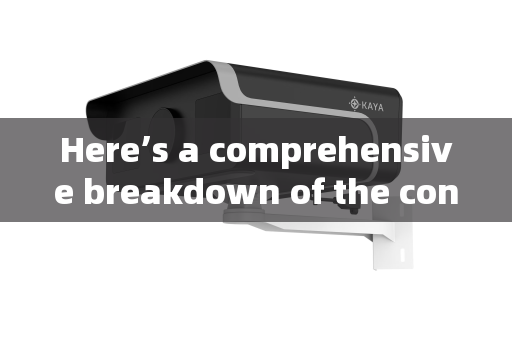
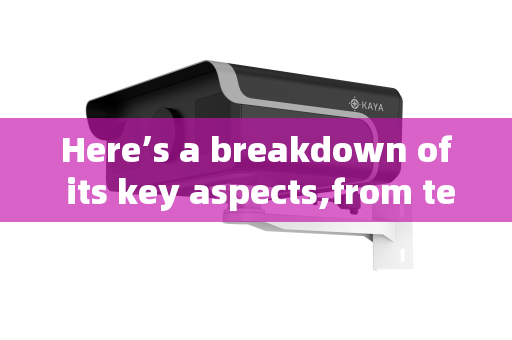
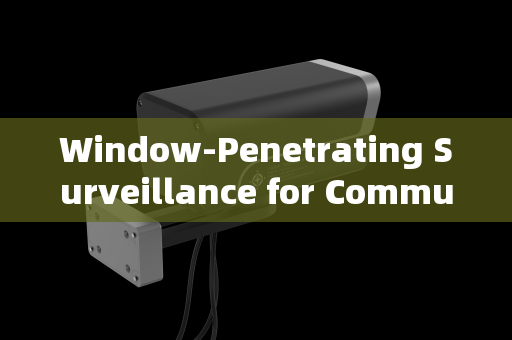
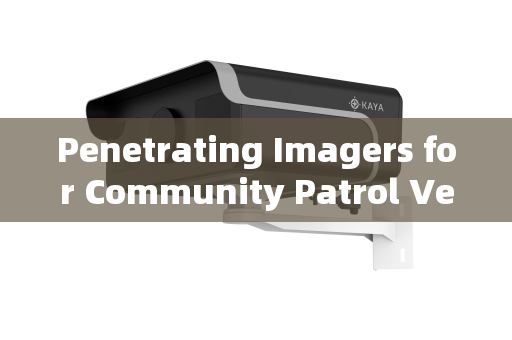
In the realms of emergency response, law enforcement, and military operations, situational awareness is paramount. A critical obstacle to this awareness, especially in urban and complex environments, is the ubiquitous presence of glass—be it in the form of towering curtain walls, vehicle windows, or specialized panes. Traditional imaging systems fail when faced with the intense reflections, glare, and obscured views caused by these barriers. This is where advanced Penetration Imaging Systems (PIS), leveraging cutting-edge Laser Range-Gated Imaging (LRGI) or Gated Imaging technology, provide a revolutionary solution, enabling operators to "see through" optically challenging media with remarkable clarity.
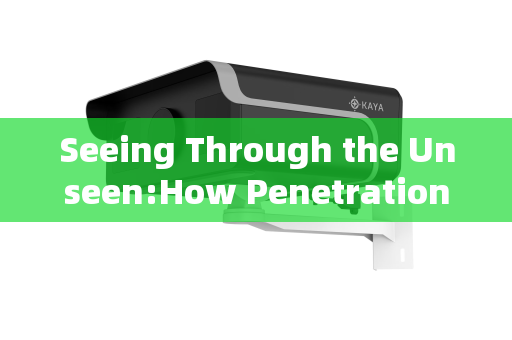
Penetration Imager Effect Images
Demystifying the Core Technology: Laser Range-Gated Imaging
At its heart, a penetration imaging system is a masterclass in precision timing and light control. It ingeniously combines a high-repetition-rate pulsed laser with a specialized gated intensifier camera. The process can be broken down into a sequence of highly synchronized events:
- Pulsed Illumination: The system emits extremely short, powerful bursts of laser light (nanosecond pulses) towards the target scene.
- Precision Gating & Synchronization: The core innovation lies in the camera's gated intensifier, which contains a Microchannel Plate (MCP) image intensifier. This intensifier acts as an ultrafast optical shutter, controlled by a high-precision timing module. The system electronically synchronizes this shutter to open with a precise, nanosecond-scale delay after the laser pulse is emitted.
- Distance Slice Imaging: By carefully controlling this delay, the system selectively captures only the light that has traveled a specific distance to the target and back. Light reflected from closer obstructions—like the surface of a glass curtain wall, smoke, or fog—arrives earlier and is excluded because the camera's shutter is still closed. Only the light from the desired distance slice (e.g., the room behind the glass) is captured when the shutter briefly opens.
- Image Stacking & Reconstruction: This process is repeated at high speed for successive distance slices. By stacking or scanning these "time-sliced" images, the system constructs a high-contrast, clear image of the target area, effectively suppressing backscatter and foreground reflections.
Conquering the Glass Curtain Wall: The Technical Triumph
Penetration Imager Effect Images
A glass curtain wall poses a dual challenge: strong specular reflection of ambient light and direct reflection of any active illumination source. Here’s how LRGI technology neutralizes this:
- Rejection of Front-Surface Reflection: The light reflecting off the glass surface returns to the sensor first. The gated intensifier's shutter is timed to remain closed during this initial return, completely rejecting this overpowering, non-informative glare.
- Capture of Target Reflection: The pulsed laser light that passes through the glass, illuminates the interior space (people, objects), and returns is slightly delayed. The ultrafast shutter opens precisely at this moment, collecting only this useful signal. The result is a clear image of the scene behind the glass, as if the reflective barrier were virtually absent.
- Overcoming Environmental Clutter: This same principle allows the system to cut through other interposing media like smoke, drizzle, fog, and haze, which are common in emergency scenarios, ensuring reliable performance in adverse conditions.
System Composition & Capabilities
A typical PIS comprises a pulsed laser illuminator, a gated intensifier camera (integrating MCP, high-voltage supply, and nanosecond-precision timing/gating modules), and transmitting/receiving optics. Key performance metrics enable its success:
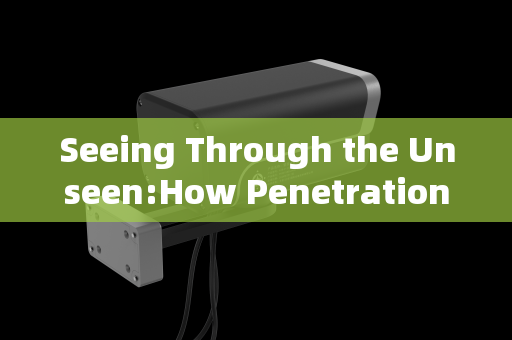
Penetration Imager Effect Images
- Extreme Optical Gain (>10⁶): Amplifies ultra-weak return signals.
- Ultrafast Gating (<3 ns): Provides exceptional range resolution and clutter rejection.
- Picosecond-Level Synchronization: Ensures accurate slicing of the optical path.
Critical Application Scenarios
Emergency & Fire Services:
- Urban/Search & Rescue: Enables firefighters to assess occupancy, locate victims, and identify hazards through smoke-filled rooms and windows of high-rise buildings with glass facades during firefighting operations.
- Training & Infrastructure: Used in live-fire training simulators and for inspecting critical buildings (landmarks, large complexes) to enhance preparedness and safety audits.
Law Enforcement & Security:
- Covert Surveillance & Reconnaissance: Allows for standoff, undetected observation through windows and glass structures for counter-terrorism, hostage rescue, and evidence gathering.
- Checkpoint & Border Security: Facilitates the non-invasive inspection of vehicles (cars, trains, aircraft) for hidden occupants, contraband, or threats through tinted or reflective windows, aiding in anti-smuggling and counter-narcotics operations.
Maritime & Border Defense:
- All-Weather Surveillance: Provides long-range imaging capability that penetrates mist, fog, and sea spray, crucial for maritime interdiction, port security, and coastal patrol, ensuring continuous domain awareness despite poor visibility.
Conclusion
The penetration imaging system, powered by Laser Range-Gated Imaging, transcends the limits of conventional optics. By harnessing precise light control and temporal discrimination, it solves the persistent challenge of imaging through reflective and obscuring media like glass curtain walls. This capability transforms operational effectiveness across emergency response, law enforcement, and defense sectors, offering a critical technological edge in missions where seeing the unseen can mean the difference between success and failure, safety and peril. As these systems evolve, their role in enhancing situational awareness and protecting personnel in high-stakes environments will only become more indispensable.