Introduction
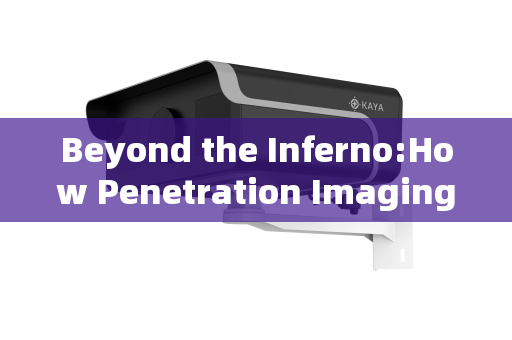
Penetration Imager Effect Images
In high-stakes emergency response, military operations, and security scenarios, visibility is synonymous with situational awareness, and often, survival. Traditional optical and thermal imaging systems are frequently defeated by pervasive obscurants such as dense smoke, fog, and, most challengingly, intense flames. The dynamic, luminous, and scattering nature of fire creates a visual barrier that can hide victims, threats, or critical structural details. Penetration Imaging Systems, leveraging advanced Gated Imaging or Laser Range-Gated (LRG) technology, provide a revolutionary solution. This article explores the fundamental principles of how these systems achieve the seemingly impossible: delivering high-contrast, detailed imaging directly through flames and other severe obscurants.
Core Technology: Laser Range-Gated Imaging
At the heart of a modern Penetration Imaging System is the precise synergy between nanosecond-pulsed lasers and an intensified gated camera. This technology operates on a time-slicing principle to selectively image a specific slice of space while rejecting unwanted light from other distances.
- Pulsed Illumination: The system emits a very short, high-power pulse of laser light (often in the near-infrared spectrum for better penetration) towards the target area.
- Precision Gating: The camera’s sensor, typically an Intensified Charge-Coupled Device (ICCD) or similar, remains closed or "gated off" initially. It is synchronized with the laser pulse with exquisite timing precision (often better than 10 picoseconds).
- Time-Delay Control: A carefully calculated time delay is applied after the laser pulse is fired. This delay corresponds to the time it takes for light to travel to the desired target plane behind the obscurant (e.g., the flame front) and back to the camera.
- Slice Acquisition: The camera’s gate opens for an extremely brief period (e.g., <3 nanoseconds) only when the photons reflected from the target of interest are returning. Photons scattered from the obscurants themselves (like the flame particles close to the observer) or from other distances arrive at different times and are largely excluded because the gate is closed when they reach the sensor.
This process effectively performs a "range slice" or "time slice" of the scene. By stacking or scanning multiple slices at different delays, the system can construct a clear, high-resolution image or even 3D data of the target environment behind the disruptive medium.

Penetration Imager Effect Images
Key System Components & Capabilities
A typical system comprises:
- Pulsed Laser Illuminator: Provides the coherent, high-frequency light pulses.
- Beam Expander: Collimates and shapes the laser beam for uniform area illumination.
- Gated Intensified Camera: The core sensor. It incorporates a Microchannel Plate (MCP) image intensifier, which provides extreme optical gain (>10⁶), coupled with a fast gate module and precision timing electronics.
- Imaging Lens: Collects the returning light.
This configuration delivers critical advantages:
- Superior Contrast: By rejecting scattered light from the foreground (flames/smoke), it drastically improves target-to-background contrast.
- Long Range & Resolution: The directed laser energy and selective detection enable imaging at distances where passive systems fail.
- Strong Anti-Interference: Immune to ambient light glare and can mitigate backscatter from particulates.
- Multi-Medium Penetration: Capable of seeing not only through flames but also smoke, fog, haze, rain, snow, and even transparent barriers like vehicle windows, glass facades, or aircraft portholes.
Application Scenarios in Emergency, Law Enforcement & Defense
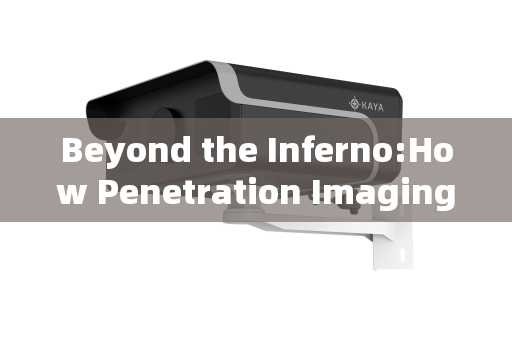
Penetration Imager Effect Images
Emergency Response & Firefighting: In urban and wildland firefighting, these systems are force multipliers. They allow incident commanders and rescue teams to see through walls of flame to locate trapped individuals, identify fire spread paths behind the flame front, assess structural integrity of burning buildings, and navigate in zero-visibility, smoke-filled interiors. They are equally vital for mine rescue, water rescue operations, and integrated into live-fire training simulators for realistic, observable training scenarios.
Law Enforcement & Security: For tactical law enforcement and counter-terrorism units, penetration imaging enables covert surveillance and threat assessment through windows, smoky environments, or light obscurants. It aids in hostage rescue situations by providing visual intel from outside a barricaded location. Applications extend to border security, anti-smuggling operations, maritime interdiction, and evidence gathering in challenging conditions, playing a pivotal role in the ecosystem of Smart Policing and Secure Cities.
Maritime & Coastal Defense: In homeland security and naval operations, the ability to penetrate fog, mist, and sea spray is crucial. These systems ensure reliable, long-range imaging for vessel identification, port security, navigation in poor weather, and coastal surveillance, maintaining operational continuity when conventional electro-optical systems are blinded.
Military Operations: The technology supports target acquisition, reconnaissance, and combat identification in degraded visual environments (DVEs) caused by battlefield smoke, dust, or intentional obscurants. It enhances situational awareness for pilots, vehicle operators, and dismounted soldiers.
Conclusion
Penetration Imaging Systems, powered by laser range-gated technology, represent a paradigm shift in imaging under extreme conditions. By mastering the dimension of time at the nanosecond level, they effectively "look past" luminous and scattering interferences like flames, providing a clear visual channel where none existed before. From saving lives in infernos to ensuring mission success in the most demanding security and defense operations, this technology is redefining the limits of visibility, making the opaque transparent and turning perilous obscurity into actionable intelligence. As the technology matures and becomes more integrated, its role as a critical tool for professionals facing the world's most visually hostile environments will only solidify.