In high-stakes emergency response, military operations, and law enforcement activities, visibility is often the single greatest factor determining success or failure, life or death. Smoke, whether from fires, explosives, or obscurants, has traditionally created an impenetrable barrier, blinding personnel and jeopardizing missions. Penetrative Imaging Systems, specifically those utilizing Laser Range-Gated Imaging (LRG) technology, have emerged as a revolutionary solution, effectively "seeing through" smoke and other obscurants to deliver critical visual intelligence. This article explores the operational principles, technical architecture, and diverse applications of these advanced imaging systems.
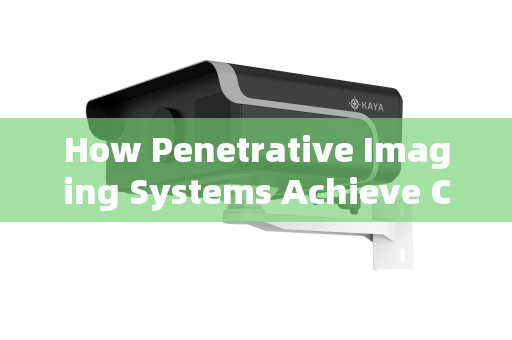
Penetration Imager Effect Images
Core Principle: Laser Range-Gated Imaging (Gated Imaging)
At the heart of modern smoke-penetrating capability is Laser Range-Gated Imaging. This sophisticated technique innovatively combines a high-repetition-rate pulsed laser with a gated intensifier camera. The fundamental concept is time-slicing and spatial discrimination.
The process works as follows:
- Pulsed Illumination: The system emits extremely short, powerful bursts of laser light (nanosecond pulses) toward the target area.
- Precision Synchronization: A high-speed gating circuit synchronizes the camera's shutter with the laser pulse with ultra-high precision (often better than 10 picoseconds).
- Time-Delay Gating: The camera's shutter, or "gate," is kept closed as the laser pulse travels. It is programmed to open only for a very brief window (e.g., <3ns) precisely when the light reflected from the target is due to arrive back at the lens.
- Scatter Rejection: By the time the desired target-reflected light returns, the light scattered back by smoke particles close to the camera (the primary cause of "white-out" in conventional imaging) has already passed. The camera gate effectively ignores this unwanted backscatter.
- Slice Stacking & Imaging: By progressively adjusting the time delay between the laser pulse and the camera gate, the system can scan through different range "slices" of the scene. Stacking these slices enables the construction of a high-contrast, clear image of the target, effectively bypassing the obscuring smoke layer.
This method provides exceptional range resolution, long imaging distance, powerful anti-interference capability, and critically, effective suppression of backscatter.
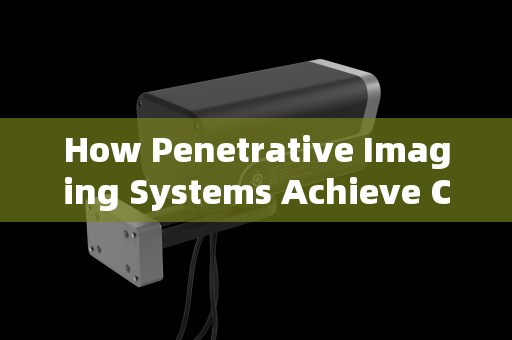
Penetration Imager Effect Images
System Composition & Key Capabilities
A typical LRG-based Penetrative Imaging System comprises:
- Pulsed Laser Illuminator: Provides high-power, eye-safe (in most designs) pulsed lighting.
- Beam Expander: Collimates and expands the laser beam for uniform scene illumination.
- Imaging Lens: Gathers reflected light.
- Gated Intensifier Camera: The core component. It integrates a Microchannel Plate (MCP) image intensifier, high-voltage module, timing module, and gating module. This assembly can achieve:
- Optical gain exceeding 10^6 for operation in extreme low-light or pitch-dark conditions.
- An ultra-fast optical shutter (<3ns) for precise slice selection.
- Subliminal synchronization precision for accurate 3D data acquisition.
Beyond smoke, these systems are engineered to penetrate various media including fog, haze, rain, snow, dust, and even certain types of glass (e.g., vehicle windows, building facades, aircraft portholes), fulfilling requirements for covert surveillance and information gathering in complex environments. They also hold potential for underwater imaging applications.
Application Scenarios
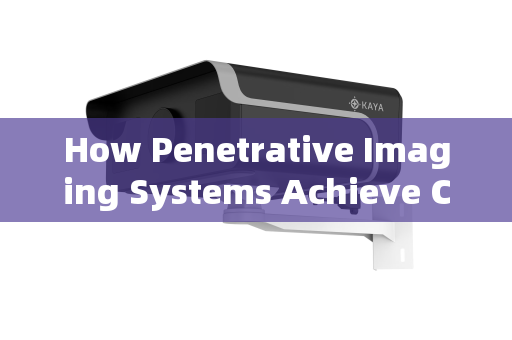
Penetration Imager Effect Images
Emergency & Rescue Services: In Urban and Wildland Firefighting, these systems allow incident commanders and search teams to locate victims, identify structural integrity, and navigate through dense smoke, drastically improving rescue efficiency and firefighter safety. They are vital for Mine Rescue, Water Rescue, and National Disaster Response teams operating in visually degraded conditions. Furthermore, they serve high-value assets like training facilities, high-rise buildings, landmark structures, and live-fire training systems for advanced fire protection.
Military, Law Enforcement & Security: These systems provide a decisive tactical advantage. Applications include:
- Counter-Terrorism & Hostage Rescue: Visualizing interiors of obscured structures.
- Security Checkpoints & Border Control: Covert inspection of vehicles and cargo.
- Surveillance & Evidence Collection: Conducting observations through windows or in adverse weather.
- Tactical Assault & Military Engagement: Target acquisition and navigation in smoke-grenade or naturally obscured environments.
- Anti-Smuggling & Drug Interdiction: Surveillance in challenging conditions. They form a critical component in the development of Smart Cities, Intelligent Security, and Smart Policing infrastructures.
Coastal & Border Defense: For maritime security and border patrol, penetrative imaging systems enable long-range fog-penetrating imaging and strong light suppression. This ensures the continuity of critical missions such as maritime interdiction, vessel approach and docking oversight, and perimeter security during fog, mist, or haze, day or night.
Conclusion
Penetrative Imaging Systems based on Laser Range-Gated Imaging technology represent a paradigm shift in situational awareness under adverse conditions. By mastering the dimension of time at the nanosecond level, they cut through the visual clutter imposed by smoke and other obscurants. From saving lives in fiery infernos to executing precise tactical operations and safeguarding national borders, these systems empower professionals across critical sectors with the "sight" they need when it is needed most, transforming opacity into actionable intelligence.