Introduction In high-stakes operational environments such as law enforcement, emergency response, border security, and military reconnaissance, the ability to rapidly and accurately gather visual intelligence is paramount. A critical and persistent challenge in these scenarios is obtaining a clear view through obscured barriers, particularly tinted vehicle windows. These windows, designed to reduce glare and provide privacy, simultaneously hinder traditional optical surveillance and reconnaissance methods. Penetration imaging systems have emerged as a groundbreaking technological solution to this problem. This article explores the sophisticated working principles of these systems, detailing how they achieve the remarkable capability of "seeing through" tinted glass to deliver critical visual intelligence to operators.
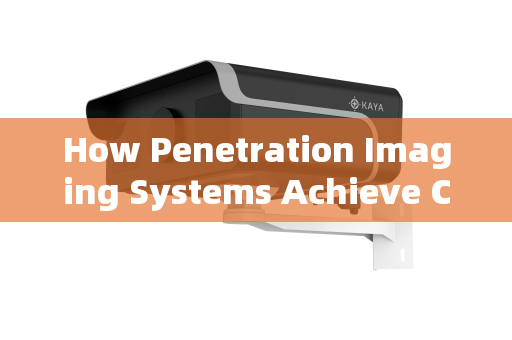
Penetration Imager Effect Images
Understanding Penetration Imaging Systems A penetration imaging system is an advanced electro-optical system engineered to acquire high-contrast imagery in extreme low-light or no-light conditions and through various obscurants. Its core function is to overcome the limitations of conventional cameras and thermal imagers when faced with reflective or absorptive media like glass, smoke, fog, or water. By utilizing a precise combination of pulsed laser illumination and synchronized gated detection, these systems can selectively image specific distance slices within a scene, effectively rejecting unwanted backscatter and reflections. This makes them indispensable for covert surveillance, tactical entry planning, search and rescue (SAR), and force protection.
Core Technology: Laser Range-Gated Imaging (Gated Imaging) The breakthrough capability of imaging through tinted windows is achieved primarily through Laser Range-Gated Imaging (LRG) technology. This innovative method creatively integrates a high-repetition-rate pulsed laser with a gated image-intensified camera.
The process operates on a precise time-slicing principle:
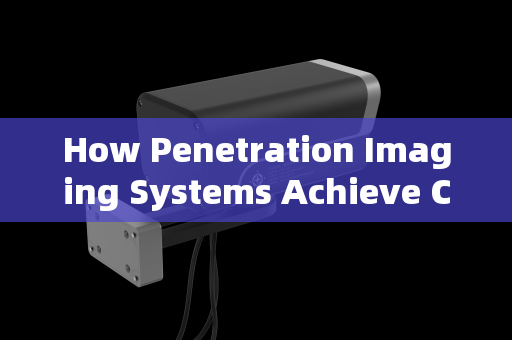
Penetration Imager Effect Images
- Pulsed Illumination: The system emits an ultra-short, high-power pulse of laser light (often in the near-infrared spectrum, which exhibits better penetration through certain materials than visible light) towards the target area, such as a vehicle with tinted windows.
- Precision Synchronization: A high-precision timing generator (with synchronization accuracy better than 10 picoseconds) controls the camera's "gate" or shutter. This gate is electronically synchronized with the outgoing laser pulse.
- Time-Delayed Gating: The key to defeating the tint lies in the strategic delay applied before the camera's gate opens. Light reflected from the front surface of the tinted window (the primary source of glare and reflection that blinds conventional cameras) returns to the camera first. The system's gate remains closed during this period, rejecting this unwanted signal.
- Selective Capture: After a precisely calculated delay corresponding to the time it takes for light to travel to the target inside the vehicle and back, the camera's gate opens for an extremely brief duration (e.g., less than 3 nanoseconds). Only the laser light that has penetrated the window, reflected off the interior objects or occupants, and traveled back through the window is captured during this narrow window. Light from all other distances is excluded.
- Stacked Imaging: By rapidly repeating this process with varying time delays, the system can "slice" and scan through different depth planes. These slices are then computationally stacked or processed to construct a clear, high-contrast 2D or even 3D image of the scene behind the tinted glass, effectively rendering the opaque window transparent to the operator.
System Composition & Key Capabilities A typical penetration imaging system comprises several high-performance components:
- Pulsed Laser Illuminator: Provides the structured, high-frequency light pulses.
- Beam Expander: Shapes and directs the laser beam.
- Gated Image-Intensified Camera: The heart of the system. It incorporates a Microchannel Plate (MCP) image intensifier, capable of providing optical gain exceeding 10^6, coupled with dedicated high-voltage, gating, and timing modules. This enables extreme light amplification and nanosecond-scale shutter control.
- Imaging Lens: Collects the returning light.
This configuration grants the system exceptional capabilities: long operational range, high distance resolution, strong resistance to interference (e.g., ambient light), and effective suppression of backscatter. It fulfills the need for long-range/unobtrusive imaging through not only vehicle windows but also architectural glass, special-purpose glass (in trains/aircraft), and various atmospheric obscurants like fire, smoke, rain, snow, fog, and haze. It also holds potential for underwater imaging.
Application Scenarios

Penetration Imager Effect Images
-
Emergency Response & SAR: These systems dramatically enhance situational awareness for firefighting teams (urban and wildland), USAR (Urban Search and Rescue) units, and hazardous material response crews. They enable victim detection through smoke and flames in structural fires, locate individuals in collapsed buildings obscured by dust, and assist in water rescue operations. They are also vital for high-level fire safety training in live-fire simulation facilities and for securing critical infrastructure.
-
Law Enforcement & Military Operations: The ability to conduct covert reconnaissance through windows is a game-changer. Applications include:
- Tactical Assault: Visualizing interior layouts and suspect positions before dynamic entry.
- Surveillance & Investigation: Covertly monitoring suspect vehicles or buildings for evidence collection.
- Checkpoint Security: Screening vehicles for concealed persons, smuggling (narco-trafficking, contraband), or overloading without physical inspection.
- Counter-Terrorism & VIP Protection: Assessing threats inside vehicles or structures during protective details or anti-terror raids.
- Military Reconnaissance: Intelligence, Surveillance, and Reconnaissance (ISR) of vehicles and structures in denied areas.
-
Coastal & Border Defense: These systems provide crucial capabilities for maritime domain awareness. They enable long-range identification and monitoring of vessels through fog and haze (fog-penetrating imaging), support anti-glare imaging in bright conditions for vessel approach and boarding operations, and enhance perimeter security for coastal installations.
Conclusion Penetration imaging systems, built on the foundation of laser range-gated imaging technology, provide a decisive advantage by overcoming one of the most common visual obstacles in security and response operations: tinted windows. By mastering the dimension of time at the nanosecond level, these systems filter out blinding reflections to reveal the critical scene behind. As the technology advances, its integration into Smart City frameworks, next-generation public safety platforms, and integrated border security systems will continue to expand, offering clearer vision and greater safety for operators facing uncertain and obscured environments.