Penetration Imaging Systems vs. Infrared Thermal Imagers: A Comparative Analysis for Emergency Response and Tactical Operations** In the demanding fields of emergency services, law enforcement, and defense, advanced imaging technologies are critical for mission success and personnel safety. Two powerful but fundamentally different tools are the Penetration Imaging System (PIS) and the Infrared Thermal Imager (ITI). While both enhance vision in challenging conditions, their underlying principles, capabilities, and optimal applications differ significantly. This article explores these distinctions, focusing on the novel capabilities of penetration imaging.
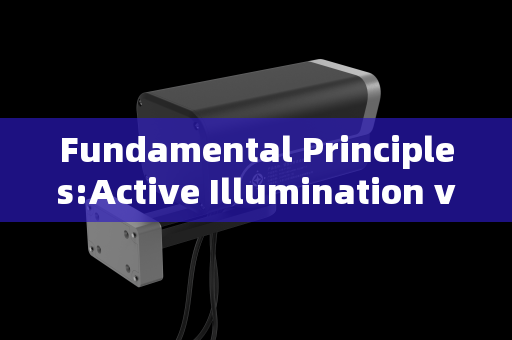
Penetration Imager Effect Images
The core difference lies in how they generate an image.
-
Infrared Thermal Imagers (ITIs) are passive sensors. They detect the mid-wave (MWIR) or long-wave (LWIR) infrared radiation naturally emitted by all objects based on their temperature. They create a "heat map" visualization, where contrast depends on thermal differences between a target and its background. They do not require an external light source but are inherently limited by the physics of thermal radiation and emissivity.
-
Penetration Imaging Systems (PIS), specifically those utilizing Laser Range-Gated Imaging (LRGI) or "gated imaging" technology, are active systems. They combine a high-repetition-rate pulsed laser with a gated, intensified camera. The system works by emitting a short, intense pulse of laser light and then precisely synchronizing the camera's ultra-fast shutter (gating) to open only when light reflected from a specific, user-selectable distance slice returns. By sequentially "slicing" through different range intervals and stacking these images, the system constructs a high-contrast, detailed visual representation. This active, time-sliced method is key to its unique abilities.
Key Technical Advantages and Performance Contrast
The active gated imaging principle grants PIS several distinct advantages in specific scenarios:
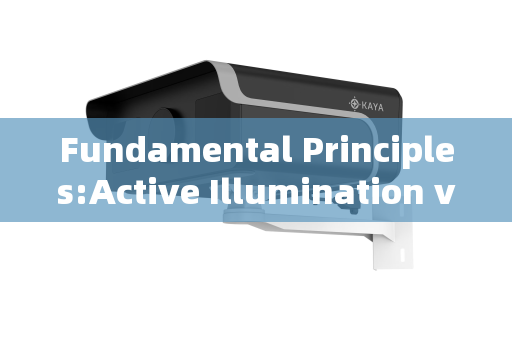
Penetration Imager Effect Images
-
Superior Penetration of Obstacles: This is the defining capability. While thermal imagers struggle with glass (which is opaque to most IR wavelengths and reflects thermal signatures) and are degraded by dense, particulate obscurants, PIS can see through various media. Its synchronized, gated detection effectively rejects backscatter from particles close to the sensor (e.g., fog, smoke, rain, dust). More importantly, by using a specific laser wavelength and precise timing, it can achieve non-invasive penetration of glass surfaces like vehicle windows, building facades, aircraft portholes, and specialized glass, revealing interior details. It is also capable of underwater imaging.
-
Long-Range, High-Resolution Detail: PIS provides high-resolution, intensity-based images (similar to a sharp, illuminated photograph) rather than a heat signature. This allows for better long-range identification, recognition of specific features (e.g., faces, license plates, equipment details), and even 3D data acquisition with precision better than 10ps timing, which thermal imagers cannot match at similar ranges, especially through glass.
-
Effective Backscatter Suppression: The nanosecond-scale gating acts as a precise temporal filter, effectively eliminating the blinding effect of backscatter from obscurants close to the observer—a common problem for both conventional cameras and thermal imagers in smoke, fog, or haze.
-
Ambient Light Independence: Unlike standard low-light cameras, PIS operates effectively in total darkness using its own laser illumination. Thermal imagers also work in darkness but provide only thermal data, not visual-grade imagery.
Application Scenarios: Choosing the Right Tool
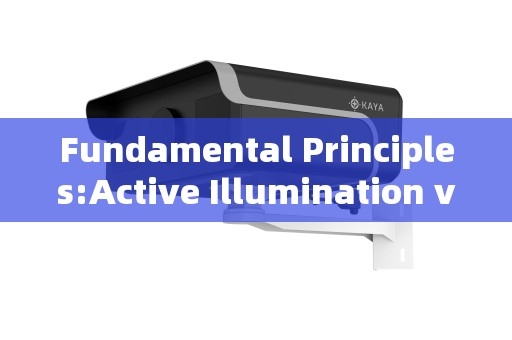
Penetration Imager Effect Images
Understanding these differences guides their deployment:
-
For Emergency Response & Firefighting:
- ITI: Invaluable for locating fire hotspots, victims via body heat through walls (non-glass), and navigating dense smoke based on thermal contrast. Essential for initial scene assessment and searching in structural collapses.
- PIS: Crucial for through-glass reconnaissance in urban/forest fires (e.g., seeing into buildings or vehicles before entry), search and rescue in obscurant-filled environments (thick smoke, dust), and underwater recovery operations. It provides clear visual intelligence that thermal cannot.
-
For Law Enforcement, Counter-Terrorism, and Military Operations:
- ITI: Excellent for perimeter surveillance, detecting hidden individuals at night, identifying recently used equipment (residual heat), and conducting covert observations where passive detection is mandatory.
- PIS: Ideal for covert, standoff surveillance through windows for hostage situations, drug busts, or vehicle interdiction. Its ability to see through atmospheric obscurants and glass provides actionable visual intelligence for tactical planning and evidence gathering. It is also suited for long-range maritime/coastal surveillance in fog.
-
For Border/Coastal Security and Critical Infrastructure Protection:
- ITI: Effective for wide-area surveillance to detect intruders based on heat signatures and monitoring perimeter fences.
- PIS: Provides high-definition visual identification of vessels or individuals at long range, capable of penetrating haze, fog, and glare (strong light suppression). It can be used to inspect ship cabins or vehicle interiors from a distance without alerting occupants.
Conclusion: Complementary, Not Competitive
The Penetration Imaging System and the Infrared Thermal Imager are not replacements for one another but highly complementary technologies. The thermal imager is the go-to tool for detecting heat signatures, operating passively, and seeing through some non-transparent obstacles. In contrast, the penetration imaging system is a revolutionary tool for acquiring detailed, visual-light-grade imagery through specific transparent and semi-transparent barriers (glass, water) and severe obscurants, offering long-range identification and 3D data where thermal imaging falls short.
For agencies operating in high-stakes environments—from fire rescue and SWAT teams to maritime security and military units—integrating both technologies into their operational toolkit significantly enhances situational awareness, operational safety, and mission effectiveness across a vastly broader spectrum of challenging conditions. The choice depends not on which is superior overall, but on which is superior for the specific intelligence gap that needs to be filled: thermal presence or visual detail through barriers.