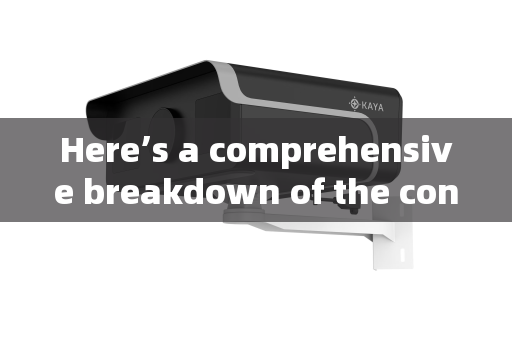
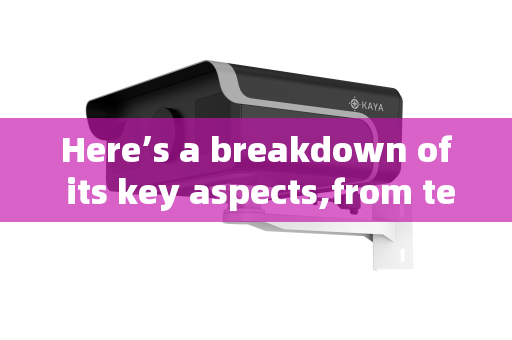
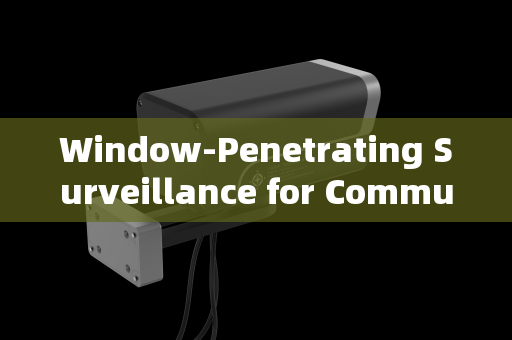
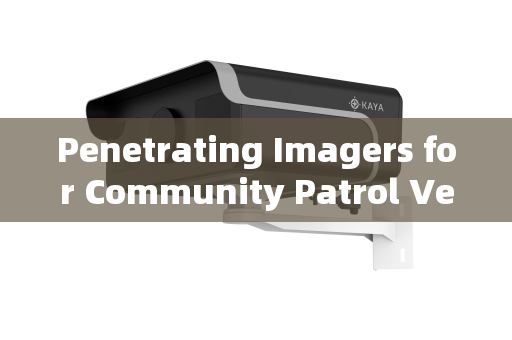
In the realm of high-level security, the imperative for comprehensive, uninterrupted surveillance is paramount. Sites such as critical infrastructure facilities, military installations, border zones, correctional institutions, and major transportation hubs demand a supervisory paradigm that transcends the limitations of conventional security optics. The challenge lies in maintaining persistent, high-fidelity situational awareness through visual obscurants, structural barriers, and under cover of darkness. This is where advanced penetration imaging systems emerge as a transformative force, redefining the capabilities of full-area supervision.
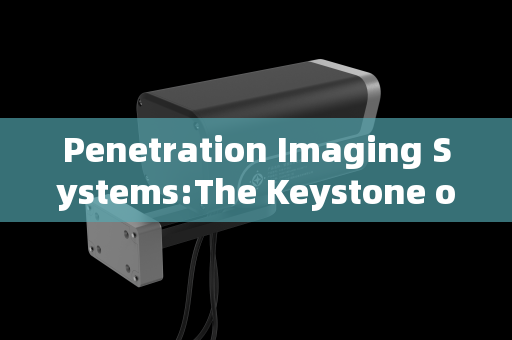
Penetration Imager Effect Images
Understanding Penetration Imaging Technology
At its core, a penetration imaging system is a sophisticated electro-optical device designed to "see through" visual obstacles that typically blind standard cameras and the human eye. It leverages Laser Range-Gated Imaging (LRG) or gated imaging technology. The system innovatively combines a high-repetition-rate pulsed laser illuminator with a gated, intensified camera. The operational principle hinges on precise, nanosecond-level synchronization between the laser pulse emission and the camera's shutter.
Here’s how it works: The system emits a short, intense pulse of laser light. The gated camera's shutter remains closed initially, blocking all light, including backscatter from nearby particles like fog, smoke, or rain. After a precisely calculated time delay—corresponding to the time it takes for light to travel to a specific distance range and back—the camera's shutter opens for an ultra-short duration (e.g., <3ns). Only photons reflected from targets within that specific "slice" of space arrive at the sensor during this open gate, creating a high-contrast image of that slice. By rapidly scanning through successive range slices, the system can build a detailed, layer-by-layer representation of the scene.
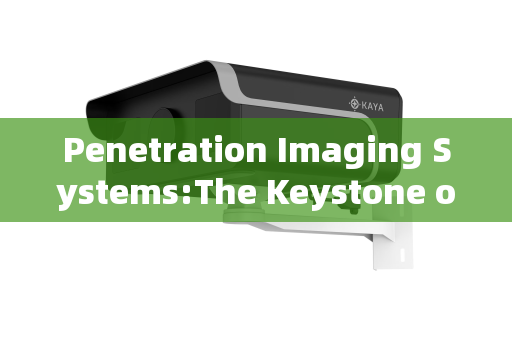
Penetration Imager Effect Images
Key technological components include a pulsed laser, a beam expander, imaging optics, and crucially, the Gated Intensified Camera. This camera incorporates a Microchannel Plate (MCP) image intensifier, delivering optical gain exceeding 10^6, a high-voltage module, and timing/gating modules capable of synchronization precision better than 10 picoseconds. This enables not only high-contrast 2D imaging but also accurate 3D information acquisition of targets.
Capabilities Defining Its Role in Full-Area Supervision
The role of a penetration imaging system in full-area supervision is defined by its unique ability to overcome specific surveillance gaps:
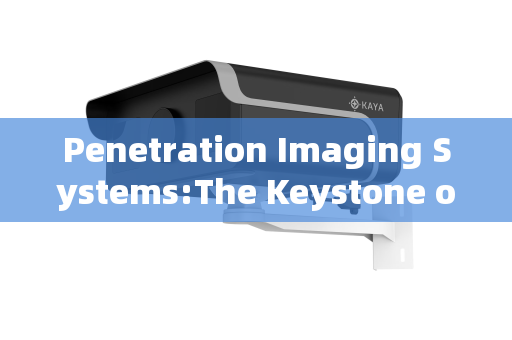
Penetration Imager Effect Images
- Penetration of Barriers: It can passively "see through" various glazing materials without alerting occupants, including vehicle windows, architectural glass, train windows, and aircraft portholes. This allows for covert inspection of stationary or moving vehicles and structures from a safe standoff distance.
- Defeat of Environmental Obscurants: The system excels in conditions that cripple other sensors. Its time-gating effectively rejects backscatter, enabling clear imaging through smoke, fog, haze, rain, and snow. This ensures 24/7 operational capability regardless of weather.
- Operation in Extreme Low-Light/No-Light: The intense laser illumination and massive gain of the MCP allow for high-quality imaging in total darkness, eliminating the need for visible floodlights that could compromise a covert posture.
- Long-Range, High-Resolution Imaging: By using eye-safe laser wavelengths and advanced optics, these systems can identify and recognize targets at distances far beyond those of standard low-light or thermal cameras, providing early warning and threat assessment.
- Enhanced Situational Awareness: The combination of barrier penetration, all-weather operation, and night vision provides security personnel with a continuous, unimpeded visual stream, which is critical for monitoring large perimeters, open areas, and approach vectors.
Application Scenarios in High-Security Contexts
- Law Enforcement & Counter-Terrorism: Vital for covert surveillance, reconnaissance, and evidence gathering on vehicles and buildings. It aids in counter-terrorism operations, hostage rescue scenarios (providing interior views), narcotics interdiction (inspecting concealed compartments), and tactical entry by revealing interior layouts and occupant positions. It is instrumental in security screening at VIP event perimeters and for monitoring high-value conveyances.
- Border & Coastal Security: Essential for maritime domain awareness and border patrol. It enables long-range surveillance through fog and haze, detection of vessels and personnel attempting illicit crossings, inspection of ship cabins from patrol boats or shore stations, and monitoring of port activities in all weather conditions, ensuring port security.
- Critical Infrastructure Protection: For facilities like power plants, refineries, and communications hubs, these systems monitor vast perimeters, see through industrial smoke or steam, and inspect vehicles at checkpoints without physical search. They can also peer into buildings from a distance to detect unauthorized activity.
- Correctional Facility Security: Enhances perimeter control by allowing guards to monitor activity outside and inside vehicles approaching gates, even at night or in poor weather. It can also be used for internal surveillance in challenging conditions.
- Military & Defense: Used for long-range reconnaissance, target acquisition, intelligence gathering in obscured environments, battlefield surveillance, and force protection at forward operating bases. The ability to see into structures or vehicles from a distance is a significant tactical advantage.
Integration into Smart Security Ecosystems
Penetration imaging is not a standalone solution but a powerful force multiplier within integrated Smart City, Smart Security, and Smart Policing frameworks. When fused with data from radar, thermal cameras, acoustic sensors, and AI-powered analytics platforms, it provides a multi-layered, resilient surveillance network. This fusion enables automated threat detection, tracking across different sensor modalities, and predictive analysis, empowering command centers with unprecedented decision-support capabilities.
Conclusion
In the demanding arena of high-security site supervision, penetration imaging systems play a pivotal and often indispensable role. They effectively nullify the traditional adversaries of surveillance—darkness, weather, and concealment—filling the critical gaps in a full-area monitoring strategy. By delivering reliable visual intelligence through barriers and obscurants, they elevate situational awareness to a new level, enabling proactive threat mitigation, enhancing officer safety, and ensuring the integrity of secured zones. As threats evolve and technology advances, these systems will continue to be at the forefront of next-generation security and defense infrastructure.