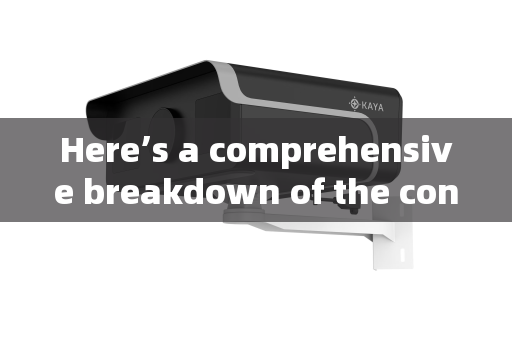
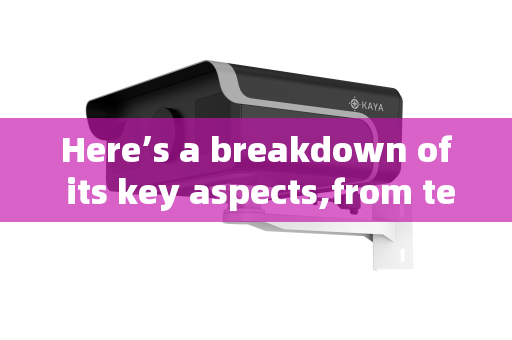
In the relentless pursuit of public safety and national security, law enforcement and border control agencies globally face the formidable challenge of identifying and intercepting dangerous criminals who often employ sophisticated methods to conceal weapons, contraband, or themselves. Traditional screening technologies, while effective in many scenarios, reach their limits when confronted with obscured visibility, adverse environmental conditions, or deliberate concealment behind barriers. This is where advanced Penetration Imaging Systems emerge as a transformative force, playing a pivotal role in the modern arsenal for screening and countering high-threat individuals.
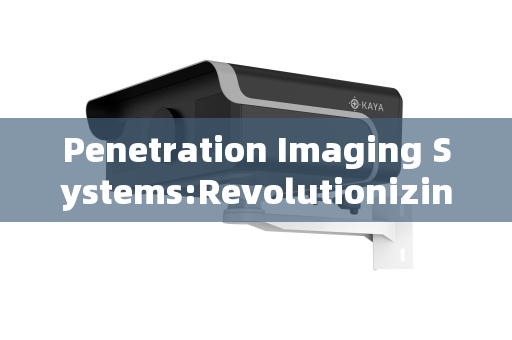
Penetration Imager Effect Images
Understanding Penetration Imaging Technology
At its core, a Penetration Imaging System is not a conventional X-ray or thermal camera. It is a sophisticated active imaging platform that utilizes Laser Range-Gated Imaging (LRG) technology, also known as gated imaging. The system innovatively combines a high-repetition-rate pulsed laser with a gated intensified camera. The principle involves emitting ultra-short, nanosecond-scale laser pulses toward a target scene. A highly sensitive camera, synchronized with precise temporal accuracy (often better than 10 picoseconds), opens its "shutter" or "gate" only for the exact moment when the light reflected from a specific distance slice returns. By sequentially adjusting this time delay, the system computationally "stacks" these slices, building a clear image of objects within a selected range zone.
This method confers exceptional capabilities:
- Superior Contrast & Range Resolution: It isolates targets from foreground and background clutter.
- Backscatter Suppression: It effectively negates the blinding effect of scattering from obscurants like smoke, fog, dust, rain, or snow between the sensor and the target.
- Long-Range, Covert Imaging: It operates effectively in total darkness or extreme low-light conditions without revealing its position with visible light.
- Medium Penetration: A key tactical advantage is its ability to "see through" various types of glass (car windows, building facades, train/aircraft windows) and visually opaque media like flames and dense foliage, revealing occupants or objects behind them.
Critical Role in Screening Dangerous Criminals
Penetration Imager Effect Images
The operational profile of Penetration Imaging Systems makes them indispensable in several high-stakes law enforcement and security scenarios:
-
Covert Surveillance and Standoff Detection: Officers can conduct safe, long-range observation of vehicles, vessels, or structures suspected of harboring fugitives or criminal activity. The system can identify the number of occupants, their movements, and the potential presence of weapons through glass, even at night or in poor weather, all while maintaining a safe standoff distance and operational stealth. This is crucial for building situational awareness before a tactical intervention.
-
Vehicle Interdiction and Checkpoint Screening: At strategic checkpoints or during mobile patrols, these systems can scan approaching or stationary vehicles. The ability to non-invasively penetrate tinted windows, sunstrips, or condensation-covered glass allows officers to assess potential threats (e.g., armed individuals, restrained hostages, visible IEDs) inside the cabin before initiating a stop or approach, dramatically enhancing officer safety.
-
Counter-Terrorism and Hostage Rescue: In barricade situations, active shooter incidents, or hostage crises, penetrating obscurants like smoke from flashbangs or fires is vital. The system can provide rescue teams with clear visuals through smoke and windows, identifying perpetrator locations, their armament, and the status of hostages, thereby informing precision tactical decisions.
Penetration Imager Effect Images
-
Maritime and Border Security: For coast guards and border patrol agencies, the system’s long-range, fog-penetrating capability is vital for monitoring coastal waters, identifying suspicious vessels, and verifying activities on board through portholes or cabin windows during interdiction operations, even in complete darkness or inclement weather.
-
Fugitive Tracking in Complex Environments: In search operations through forested areas, industrial sites with smoke/steam, or urban settings with visual obstructions, the technology can help track individuals attempting to use the environment for concealment.
System Composition and Integration
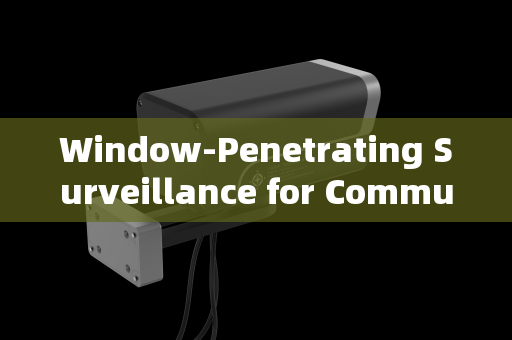
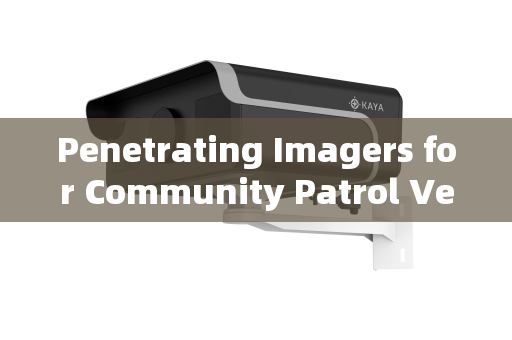
A typical field-deployable system integrates a pulsed laser illuminator, a gated/intensified camera (often with a Microchannel Plate - MCP - for gains exceeding 10^6), beam expanders, imaging lenses, and precise timing/control electronics. It can be vehicle-mounted, integrated into fixed surveillance posts, or deployed on UAVs for aerial reconnaissance. In the context of the "Smart City" and "Smart Policing" paradigms, these systems feed critical real-time intelligence into broader security networks, enhancing collective response capabilities.
Conclusion
The Penetration Imaging System transcends the limitations of passive surveillance. By actively illuminating scenes with precision laser pulses and using temporal gating to reject noise, it provides law enforcement with a "superhuman" ability to see the unseen. Its role in screening dangerous criminals is profound—shifting operations from reactive to proactively intelligence-led, mitigating risks to officers and the public, and delivering a decisive technological advantage in the critical mission of preventing crime and apprehending those who pose the gravest threats. As technology evolves, its integration with AI-driven analytics for automatic threat detection promises to further revolutionize security screening protocols worldwide.