The Critical Role of Penetration Imaging Systems in Modern Port and Border Security: Enabling Non-Intrusive, Multi-Layer Inspection** Ports and border crossings represent critical nodes in the global flow of commerce and people. They are also prime targets for threats ranging from smuggling and trafficking to terrorism. Traditional inspection methods—physical checks, X-ray scanners for cargo, and standard optical cameras—often reach their limits in challenging environmental conditions or against deliberate concealment. This is where advanced penetration imaging systems emerge as a transformative technology, providing security personnel with unprecedented visibility into vehicles and obscured compartments, fundamentally enhancing inspection protocols for incoming vehicles and personnel.
Penetration Imager Effect Images
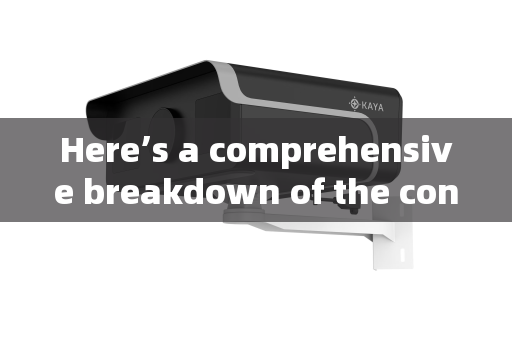
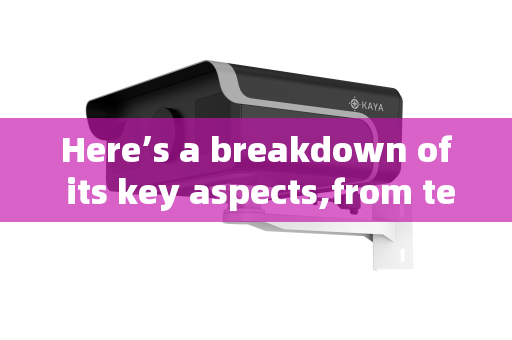
Understanding Penetration Imaging Technology A penetration imaging system is not a conventional camera. It is a sophisticated active imaging solution that operates on the principle of Laser Range-Gated (LRG) imaging, or gated imaging technology. Its core innovation lies in the precise synchronization of a high-repetition-rate pulsed laser and a gated intensifier camera. The system emits short, powerful laser pulses (nanosecond duration) towards a target. The gated camera's shutter opens only for an extremely brief window (less than 3 nanoseconds), precisely timed to capture the laser light reflected from a specific "slice" of space at a controlled distance.
By progressively delaying this time window, the system performs a "slice-and-stack" scan of the scene. This method delivers several key advantages essential for port and border environments:

Penetration Imager Effect Images
- Long-Range, High-Contrast Imaging: It achieves clear imaging over several hundred meters, crucial for perimeter security and inspecting approaching vessels or vehicles.
- Effective Backscatter Suppression: It selectively ignores light scattered by particles close to the sensor (like fog, rain, or smoke), "seeing through" these obscurants.
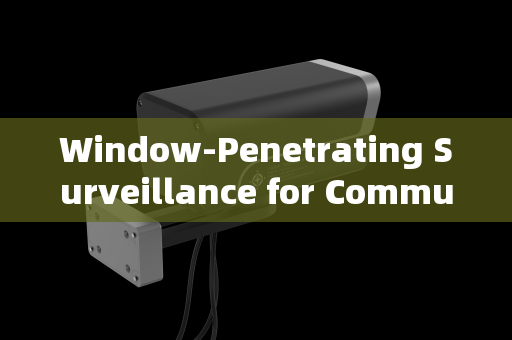
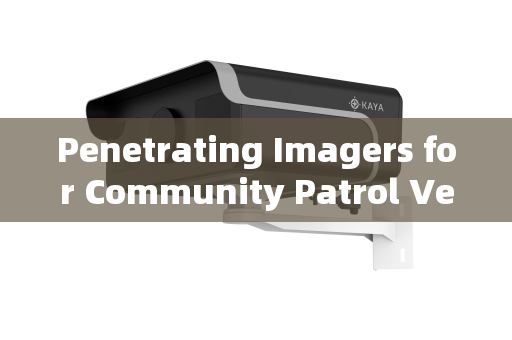
- Non-Intrusive Penetration Capability: The system can penetrate various transparent and semi-transparent barriers, including vehicle windshields, side windows, laminated glass, aircraft portholes, and train windows, revealing contents and occupants without physical contact.
- 3D Data Acquisition: With sub-10 picosecond timing precision, it can generate high-precision three-dimensional information of the target area.
Core Applications in Port and Border Inspections
Enhanced Vehicle and Cargo Screening: At vehicle checkpoints, penetration imaging serves as a powerful first-pass or targeted screening tool. Officers can discreetly scan approaching trucks, containers with viewing ports, or passenger vehicles. The system can:

Penetration Imager Effect Images
- Detect concealed individuals in compartments, false walls, or hidden within cargo loads, addressing human trafficking and stowaway threats.
- Identify anomalous objects behind tinted windows, sun strips, or dirty glass without alerting the occupants.
- Screen the cabins of trucks and tankers for unauthorized personnel or contraband from a safe, stand-off distance.
Personnel Screening and Covert Surveillance: While not for scanning individuals directly, the technology is invaluable for monitoring personnel in sensitive areas or during specific operations. It can:
- Observe activity inside vehicles, vessels, or control rooms through windows in low-light or nighttime conditions, supporting investigations into illicit exchanges or pre-attack staging.
- Assist in counter-terrorism and anti-smuggling operations by providing visual intelligence on suspect movements within vehicles near critical infrastructure.
Operations in Adverse Environmental Conditions: Ports and borders operate 24/7, regardless of weather. Penetration imaging systems ensure continuity of security operations by:
- Penetrating fog, mist, haze, and light rain/snow, maintaining surveillance and inspection capabilities when standard optical and thermal systems degrade significantly.
- Providing usable imagery in glare conditions, such as from vehicle headlights or bright waterfront lights, due to their active illumination and gating.
Maritime and Coastal Border Security: For coast guards and naval patrols, these systems are integrated into maritime domain awareness networks. They enable:
- Long-range identification and inspection of vessels approaching territorial waters or port limits, day or night, in clear or slightly obscured conditions.
- Pier-side and harbor surveillance, monitoring for underwater threats, suspicious approach by small boats, or unauthorized access to docked ships.
- Search and Rescue (SAR) support by helping to locate individuals in the water or in lifeboats through obscurants.
Integration into Broader Security Ecosystems The true power of penetration imaging is realized when its data is fused with other security systems. In the context of Smart Ports, Smart Borders, and Homeland Security frameworks, these systems feed critical visual data into command-and-control centers. When correlated with radar tracks, AI-powered video analytics, and database alerts (e.g., for license plates), they provide operators with a comprehensive, actionable picture of potential threats.
Conclusion: A Paradigm Shift in Proactive Security Penetration imaging systems represent a paradigm shift from reactive to proactive and intrusive to non-intrusive inspection at ports and borders. By allowing security forces to "see the unseen"—through barriers, in darkness, and despite challenging weather—they add a vital, resilient layer to the security apparatus. Their role extends beyond mere detection; they act as a powerful deterrent, complicate concealment methods for adversaries, and ultimately safeguard national borders, economic assets, and public safety by ensuring that inspections are both more thorough and less disruptive to legitimate trade and travel. As threats evolve, so too must inspection technologies, and penetration imaging stands at the forefront of this necessary advancement.