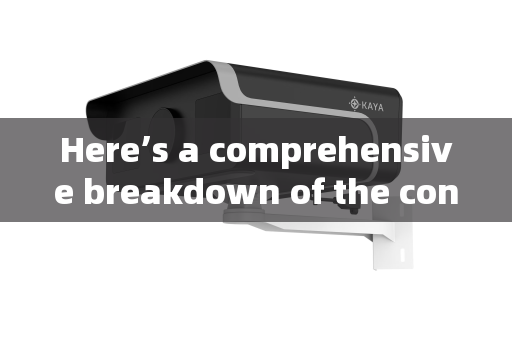
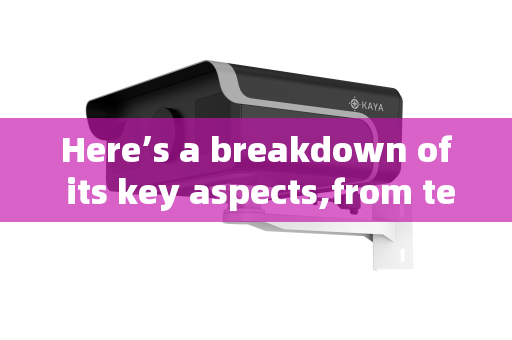
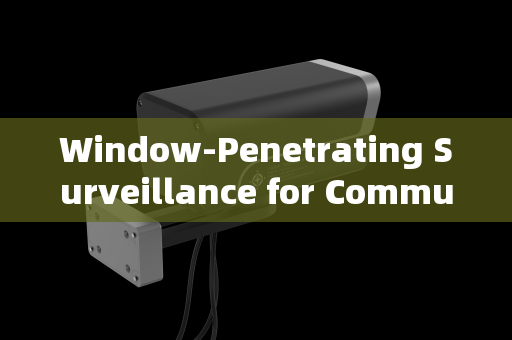
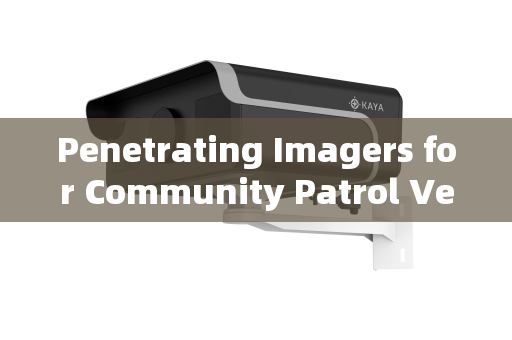
In the complex and demanding landscape of modern urban security, checkpoint reconnaissance stands as a vital first line of defense. Whether managing high-threat perimeters, securing critical infrastructure, or conducting dynamic law enforcement operations, personnel face the persistent challenge of obtaining actionable intelligence through visual obstructions and in poor environmental conditions. It is within this operational gap that advanced Penetration Imaging Systems (PIS) emerge as a transformative technology, fundamentally enhancing situational awareness and mission efficacy.
Penetration Imager Effect Images
Understanding Penetration Imaging Technology
A Penetration Imaging System is not a conventional camera. It is a sophisticated electro-optical system designed to "see through" visual barriers that defeat standard imaging. At its core, it employs advanced Laser Range-Gated Imaging (LRG) technology. This innovative approach synergistically combines a high-repetition-rate pulsed laser with a gated intensifier camera.
The system operates on a precise time-slicing principle. The pulsed laser illuminates the scene with extremely short, powerful bursts of light. The gated camera, synchronized to the laser with nanosecond (and even picosecond) precision, opens its "shutter" only for the exact moment when light reflected from a specific distance slice returns. By progressively delaying the camera’s gate relative to the laser pulse, the system digitally "stacks" these slices, building a clear, high-contrast image of the target zone. This method effectively filters out unwanted backscatter from obscurants like smoke, fog, rain, or dust, and crucially, can negate the reflectance from transparent barriers like glass.
Penetration Imager Effect Images
Key Technical Advantages for Urban Operations:
- Long-Range, High-Resolution Imaging: Provides clear identification and assessment capabilities from stand-off distances, enhancing operator safety.
- Superior Penetration Capability: Can "see through" standard and reinforced automotive glass, building windows, glass facades, train windows, and aircraft portholes without detection, enabling covert reconnaissance.
- Robust Anti-Interference & All-Weather Performance: Effectively overcomes severe backscatter, maintaining performance in challenging conditions including smoke, fog, haze, and light rain—common in urban and emergency environments.
- High-Speed Gating: With optical shutter speeds below 3 nanoseconds and synchronization precision better than 10 picoseconds, the system can achieve exceptional depth resolution and detail.
Application in Urban Checkpoint Reconnaissance
The unique capabilities of PIS directly address critical needs across the spectrum of urban security and emergency response.
Penetration Imager Effect Images
Law Enforcement & Counter-Terrorism Operations: At vehicle checkpoints or during surveillance of static locations, PIS plays a pivotal role. It allows officers to conduct covert, non-invasive searches of vehicle interiors from a safe distance, identifying hidden occupants, suspicious packages, or weapons without alerting suspects. This is invaluable for counter-terrorism watch lists, tactical interdiction, evidence collection, and anti-smuggling operations. In high-risk arrest scenarios or hostage situations, it provides critical interior layout and occupant intelligence before entry, directly supporting SWAT and special operations teams.
Emergency Response & Urban Search and Rescue (USAR): For fire departments and urban rescue teams, PIS is a life-saving tool. In dense smoke-filled buildings or during industrial fires, it enables firefighters to navigate, locate victims, and identify structural hazards through impenetrable smoke. It can assess the interior of burning vehicles or look behind walls/ceilings for fire spread. This dramatically improves fireground situational awareness, accelerates rescue timelines, and reduces first responder casualties.
Critical Infrastructure & Border Security: Securing ports, airports, government complexes, and smart city perimeters requires persistent surveillance. PIS enhances this by enabling long-range observation through atmospheric obscurants. It can monitor sensitive areas for intruders or unattended items despite fog or haze. In maritime or coastal urban settings, it supports harbor patrols and coast guard operations by providing clear imaging for vessel identification, boarding preparation, and search and rescue in poor visibility.
Intelligence, Surveillance, and Reconnaissance (ISR): For prolonged covert surveillance and intelligence gathering in urban environments, PIS offers a distinct advantage. Its ability to image through windows from a concealed position allows for the discreet monitoring of activities inside buildings, vehicles, or vessels, providing a continuous intelligence feed without physical intrusion.
Conclusion
The Penetration Imaging System is far more than a simple imaging device; it is a force multiplier for urban security and emergency services. By cutting through visual noise, atmospheric challenges, and man-made barriers, it delivers a level of clarity and covert insight previously unattainable. In the high-stakes environment of urban checkpoint reconnaissance—where every piece of information can dictate success or failure—the integration of PIS into operational protocols translates to enhanced officer safety, superior tactical decision-making, and ultimately, more secure urban spaces. As threats evolve and cities grow more complex, the role of such advanced imaging technology will only become more central to effective security and rescue strategies.