Introduction
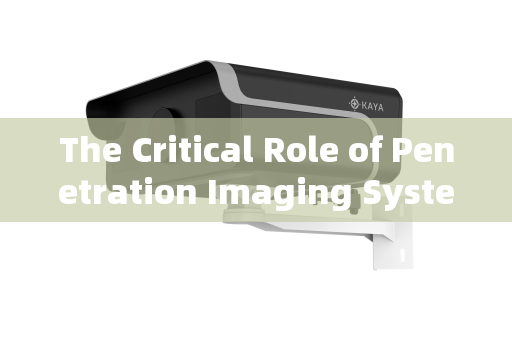
Penetration Imager Effect Images
In the ever-evolving landscape of global security, the protection of public spaces like parks, which are symbols of leisure and community, presents unique challenges. Checkpoints at park entrances and sensitive perimeters serve as the first line of defense against potential threats, ranging from contraband smuggling to acts of terrorism. Traditional security measures, often reliant on visible light cameras and manual inspections, are frequently hindered by environmental conditions, obstructions, and the inherent limitations of human perception. This is where advanced penetration imaging systems emerge as a transformative technology, fundamentally reshaping security protocols and providing unparalleled situational awareness for personnel at park checkpoints.
Understanding Penetration Imaging Technology
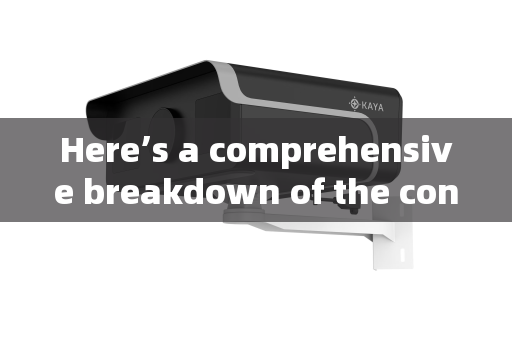
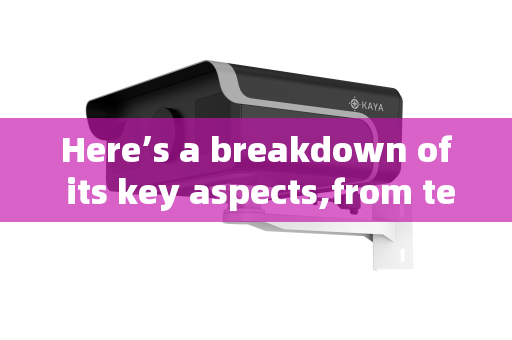
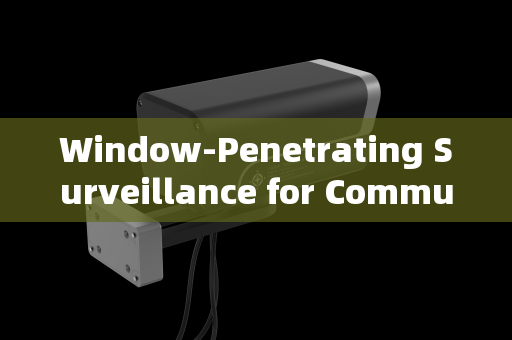
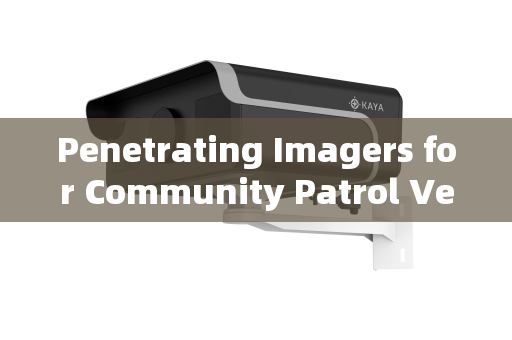
A penetration imaging system is not a conventional camera. It is a sophisticated electro-optical system engineered to "see through" visual obscurants and certain barriers that defeat standard imaging. At its core, it utilizes Laser Range-Gated Imaging (LRGI) or gated imaging technology. This innovative approach synergistically combines a high-repetition-rate pulsed laser with a gated intensified camera.
The system operates by emitting extremely short, nanosecond-duration pulses of laser light. The gated camera, synchronized with picosecond-level precision to these pulses, acts as an ultrafast shutter. It opens only for a brief window timed to the return of light reflected from a specific, pre-determined "slice" of space. By progressively delaying this gate time, the system scans through different range slices, stacking them to construct a clear, high-contrast image of the target. This method effectively rejects scattered light from obscurants like fog, smoke, rain, or snow (backscatter) that lie between the camera and the target, as well as ambient light clutter.
Key components include a pulsed laser illuminator, a beam expander, an imaging lens, and the crucial gated intensifier camera. This camera incorporates a Microchannel Plate (MCP) image intensifier, delivering optical gains exceeding 10^6, a gating capability faster than 3 nanoseconds, and ultra-precise synchronization electronics. This allows for not only high-resolution 2D imaging but also the extraction of precise 3D range data for each pixel.
Primary Functions and Capabilities in Security Contexts
The capabilities of penetration imaging systems directly address critical gaps in checkpoint security:

Penetration Imager Effect Images
-
Barrier Penetration: It can passively and non-invasively "see through" various types of glass, including vehicle windows (cars, buses), architectural glass facades, specialized laminated glass, train windows, and aircraft portholes. This allows for the discrete inspection of a vehicle's interior cabin before it reaches the inspection officer, identifying concealed individuals, weapons, or suspicious packages without alerting occupants.
-
All-Weather, All-Light Operation: The system is virtually impervious to adverse conditions. It provides clear imaging in total darkness, through dense fog, haze, smoke, and precipitation. This ensures continuous, 24/7 operational capability regardless of weather or time of day, a vital requirement for perimeter security.
-
Long-Range, High-Resolution Surveillance: These systems can identify and classify potential threats at distances far beyond the effective range of standard CCTV or thermal cameras, allowing security forces to assess situations and prepare responses well in advance of a vehicle or individual reaching the checkpoint.
-
Anti-Interference & Glare Suppression: The active laser illumination and gated reception make the system highly resistant to deliberate jamming by bright lights (e.g., vehicle high beams). It can also perform glare suppression imaging in maritime or coastal environments, crucial for parks bordering waterways.
Application at Park Checkpoints: A Multilayered Security Enhancement
At park security checkpoints, the deployment of penetration imaging systems creates a robust, multi-layered security apparatus:
-
Vehicular Screening: As vehicles queue for entry, remotely deployed systems can scan their interiors. This enables the detection of hidden passengers (relevant for counter-terrorism or immigration control), visible weapons, or large unauthorized items without physical contact or slowing down the initial approach. Suspicious vehicles can be discreetly flagged for secondary inspection.
Penetration Imager Effect Images
-
Perimeter and Border Surveillance: For parks with extensive boundaries or those adjacent to unguarded areas, these systems act as force multipliers. They can monitor distant tree lines, waterways, or fences for intruders attempting covert entry, even through fog or at night, providing early warning to patrol units.
-
Crisis Response and Counter-Terrorism: In the event of a hostage situation, armed intrusion, or terrorist threat within the park, penetration imaging provides critical intelligence. Tactical teams can use it to assess structures (e.g., visitor centers, kiosks) through windows, locating threats and hostages without exposing themselves, thereby planning safer and more effective interventions.
-
Overcoming Environmental Challenges: Parks often experience microclimates—morning mist, campfire smoke, or heavy foliage. Traditional surveillance cameras "go blind" in these scenarios. Penetration imaging maintains clarity, ensuring the checkpoint's visual oversight is never compromised.
Broader Applicability and Future Integration
The utility of this technology extends far beyond park checkpoints, underscoring its versatility. In Emergency Response, it is indispensable for firefighting (seeing through smoke in urban or forest fires), search and rescue operations in rubble or murky water, and training simulations. In Military, Law Enforcement, and Homeland Security (HLS) scenarios, it supports anti-smuggling operations, coastal and border patrol (long-range over-water surveillance), evidence collection, and covert surveillance.
Looking ahead, the integration of penetration imaging systems with Smart City, Smart Security, and Smart Policing platforms is inevitable. As a sensor node within a broader IoT network, its real-time data can feed into AI-driven analytics engines for automated threat detection (e.g., identifying a weapon shape inside a vehicle), facial recognition through glass, and predictive risk assessment, creating a truly proactive and intelligent security ecosystem for public spaces.
Conclusion
The penetration imaging system is far more than just a camera; it is a decisive force multiplier for security control at critical infrastructures like park checkpoints. By granting security personnel the unprecedented ability to perceive threats through barriers and environmental obscurants, it shifts security operations from reactive to proactive. It enhances both the effectiveness and safety of security forces while maintaining a non-intrusive, efficient flow of legitimate park visitors. As security challenges grow more complex, the adoption of such cutting-edge, all-condition imaging technology will become not just advantageous, but essential for safeguarding our public spaces and ensuring the security apparatus operates with clarity, confidence, and decisive advantage.