Introduction
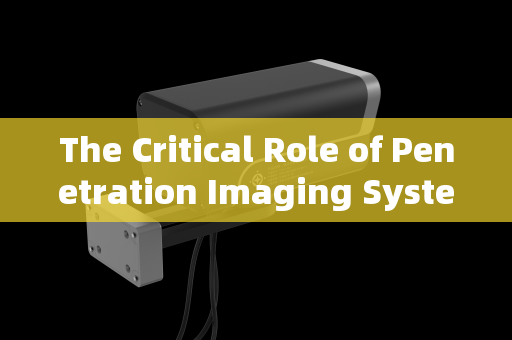
Penetration Imager Effect Images
Bonded zones, as critical nodes in international trade and logistics, demand the highest levels of security and contraband control. Checkpoints at these zones face the constant challenge of inspecting vehicles, cargo, and personnel swiftly and thoroughly without disrupting the flow of commerce. Traditional inspection methods often fall short when confronting concealed threats, obscured compartments, or adverse environmental conditions. Here, advanced penetration imaging systems emerge as a transformative force in security control, offering unprecedented capabilities to see through visual obstacles and ensure robust perimeter and access security.
Understanding Penetration Imaging Technology
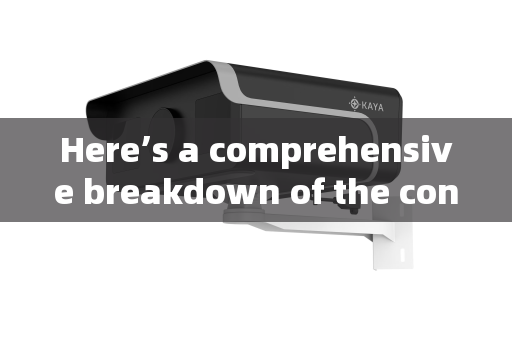
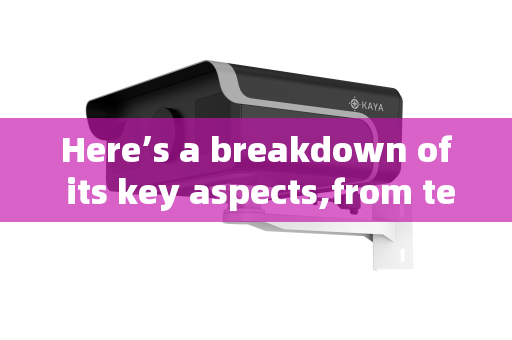
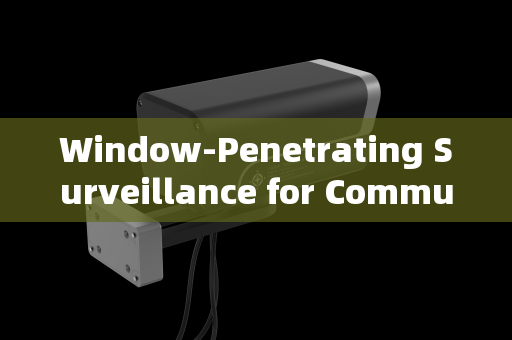
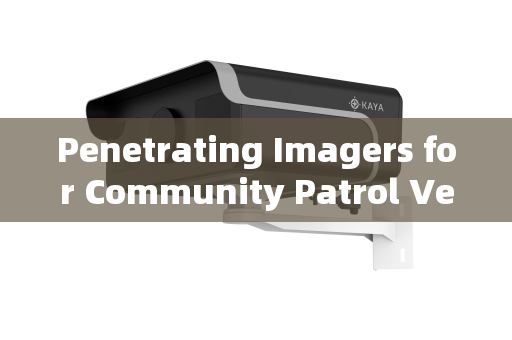
A penetration imaging system is a sophisticated surveillance and inspection tool designed to acquire visual information under extreme and obstructive conditions. Its core operation is based on advanced Laser Range-Gated Imaging (LRG) technology, also known as gated imaging. This technology innovatively combines a high-repetition-rate pulsed laser with a gated intensified camera.
The system works by emitting short, powerful pulses of laser light (nanosecond duration) towards a target area. The gated camera is precisely synchronized with these laser pulses. By controlling the exact time delay (with precision better than 10 picoseconds) between the laser pulse emission and the camera's shutter opening, the system can selectively capture light reflected only from a specific "slice" of space at a desired distance. This process, repeated and stacked for different range slices, effectively eliminates backscatter from obscurants like smoke, fog, rain, or dust that lie between the camera and the target plane. The result is a high-contrast, clear image of objects behind the obscurant or medium.
Key technical components include a pulsed laser, a gated image-intensified camera (incorporating a Microchannel Plate (MCP) for optical gain exceeding 10^6, high-voltage modules, and precise timing/gating electronics), beam expanders, and imaging lenses. This configuration enables long-range imaging, high distance resolution, superior anti-interference capability, and effective backscatter rejection.

Penetration Imager Effect Images
Primary Capabilities and Advantages for Security
The system's defining capability is its power to penetrate various visual barriers under low-light or no-light conditions. It can clearly image through:
- Glass Media: Vehicle windows (car, truck, high-speed rail, aircraft portholes), architectural glass幕墙, and specialized security glass.
- Atmospheric Obscurants: Smoke, fog, haze, light rain, and snow.
- Other Media: Flames and certain aquatic environments (for underwater imaging).
This allows security forces to conduct non-intrusive, stand-off reconnaissance and inspection without alerting suspects or requiring physical contact, making it a powerful tool for covert surveillance and pre-emptive threat detection.
Application in Bonded Zone Checkpoint Security
At bonded zone checkpoints, penetration imaging systems play a multi-faceted role in enhancing security control:
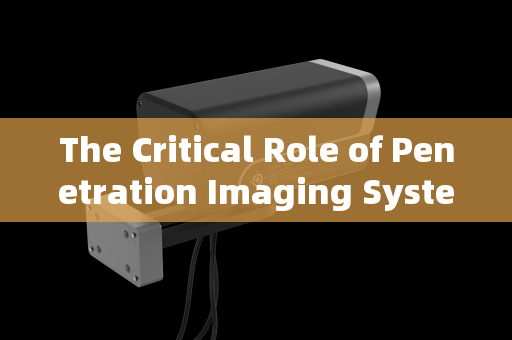
Penetration Imager Effect Images
-
Covert Vehicle and Cargo Inspection: Security personnel can remotely scan approaching or stationary trucks and containers. The system can see through tinted windows, dirty windshields, or light cargo coverings to identify hidden individuals, suspicious packages, or unauthorized modifications to cargo holds without the driver's knowledge, aiding in anti-smuggling (缉私) and counter-terrorism operations.
-
All-Weather, 24/7 Perimeter Surveillance: Bonded zones operate around the clock. The system’s ability to see through fog, mist, rain, and darkness ensures continuous monitoring of perimeter fences, access gates, and docking areas, maintaining a high security posture regardless of weather or time.
-
Incident Response and Law Enforcement: In case of a security breach, hostage situation, or fire within a bonded warehouse, responders can use the system to penetrate smoke and flames from a safe distance, locating casualties, assessing the interior layout, and identifying threats without blind entry. This is crucial for tactical rescue (反恐救援) and firefighting operations (消防) in these high-value, complex environments.
-
Counter-Surveillance and Force Protection: The systems can be deployed to monitor areas for covert observation posts or IED emplacements aimed at the zone, seeing through natural camouflage or light structures.
Broader Context: Integration into Professional Ecosystems
The value of penetration imaging extends beyond bonded zones, proving essential in related professional domains that often intersect with border and critical infrastructure security:
- Emergency & Rescue Services: Widely used by urban and forest firefighting (城市/森林消防), mine and water rescue (矿山/水域救援) teams for search and reconnaissance in smoke-filled or murky conditions, enhancing operational efficiency and personnel safety.
- Law Enforcement & Military Operations: Vital for security checks (安检执法), investigation and evidence collection (侦察取证), anti-riot operations (防暴除突), drug interdiction (缉毒), and military reconnaissance (军事打击/侦查). They are integral to Smart City, Smart Public Security (智慧公安), and Intelligent Security (智慧安防) initiatives.
- Coastal & Border Defense (海防边防): Enables long-range fog-penetrating imaging and glare suppression, ensuring the continuity of maritime missions, vessel approach monitoring, and border patrol activities in poor visibility.
Conclusion
In the high-stakes environment of bonded zone security, the penetration imaging system is far more than just a camera; it is a force multiplier and a critical decision-support tool. By providing the ability to see the unseen through visual clutter, barriers, and darkness, it fundamentally transforms checkpoint security control from a reactive, physical process to a proactive, intelligence-driven one. Its role in enabling non-intrusive inspections, ensuring all-weather surveillance, and enhancing emergency response directly contributes to thwarting smuggling, preventing terrorism, protecting assets, and saving lives. As global trade volumes grow and security threats evolve, the adoption of such cutting-edge imaging technology will become increasingly indispensable for maintaining the delicate balance between security and efficiency at the world's bonded zones.