Enhancing Public Safety: The Critical Role of Penetration Imaging Systems in Counter-Terrorism Inspections at Crowded Venues In an era where global security threats are increasingly sophisticated and public spaces remain prime targets for terrorist activities, the demand for advanced, non-invasive surveillance and inspection technologies has never been greater. Among these cutting-edge tools, Penetration Imaging Systems** have emerged as a transformative asset for security forces worldwide, particularly in conducting counter-terrorism inspections within crowded places such as transportation hubs, stadiums, shopping centers, and major public events. This article explores the pivotal function of these systems, delving into their technological underpinnings, operational advantages, and diverse application scenarios within the realms of emergency response, law enforcement, and national security.
Penetration Imager Effect Images
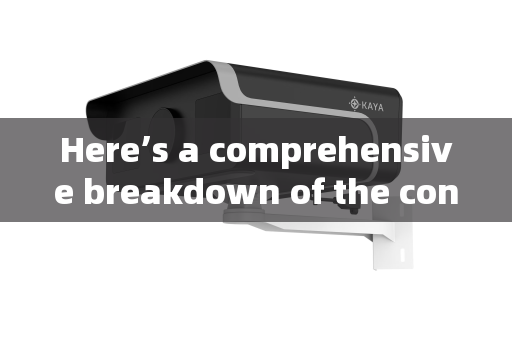
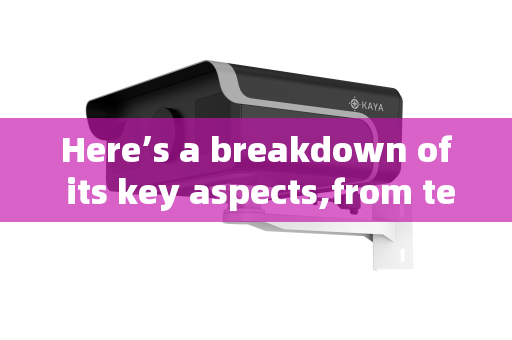
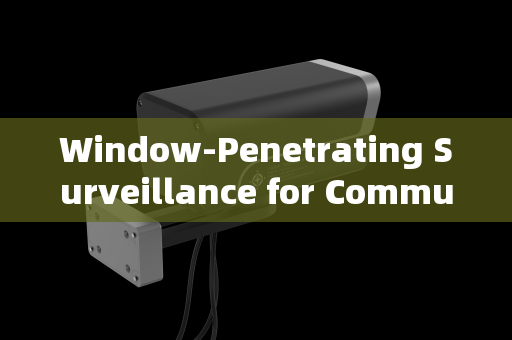
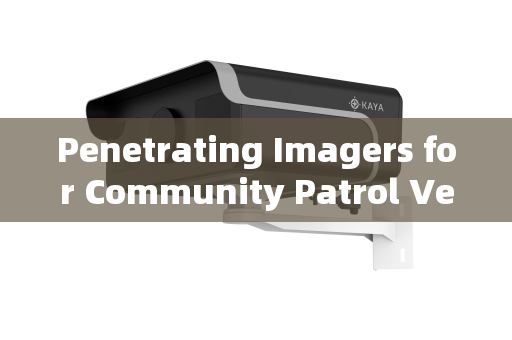
A Penetration Imaging System is a sophisticated electro-optical device designed to acquire clear visual intelligence through visually obstructive mediums and under extreme environmental conditions. Its core innovation lies in the application of Laser Range-Gated Imaging (LRGI) technology, also known as gated imaging. This system ingeniously integrates a high-repetition-frequency pulsed laser with a gated image-intensifier camera. By achieving precise nanosecond-level synchronization between the laser pulses and the camera's shutter, the system can selectively capture light reflected from specific distance "slices" of a scene. This process, akin to stacking temporal slices, effectively isolates the target from background clutter and intervening obstructions.
The key components include a pulsed laser, a beam expander, an imaging lens, and the crucial gated intensified camera. This camera incorporates a Microchannel Plate (MCP) image intensifier, high-voltage modules, and precise timing/gating circuits. This configuration enables exceptional capabilities: optical gain exceeding 10^6, an ultra-fast optical shutter with gating times below 3 nanoseconds, and timing synchronization accuracy better than 10 picoseconds. These features facilitate not only high-contrast two-dimensional imaging but also the acquisition of precise three-dimensional spatial data of the target.
Operational Advantages for Crowded Place Security
Penetration Imager Effect Images
The technical prowess of penetration imaging systems translates into direct, actionable benefits for counter-terrorism operations in densely populated environments:
- Non-Intrusive, Long-Range Inspection: The system can penetrate various types of glass—car windows, building curtain walls, specially treated glass, train windows, and aircraft portholes—from a significant standoff distance. This allows security personnel to screen vehicles or buildings without physical contact, alarm, or alert potential threats, maintaining a crucial element of surprise and operational security.
- Superior Performance in Adverse Conditions: It effectively overcomes performance degradation caused by backscatter from particulates in the air. The system maintains functionality through obscurants like fire, smoke, rain, snow, fog, and haze, which are common in attack or disaster scenarios. This ensures continuous situational awareness when conventional cameras fail.
- All-Weather, Day/Night Operation: The active laser illumination and signal gating render the system independent of ambient light. It provides high-resolution imagery in total darkness, twilight, or glaring conditions, guaranteeing 24/7 operational readiness.
- Enhanced Detection and Identification: The ability to see through obstructions allows for the early detection of concealed threats inside vehicles or buildings near crowded areas—such as weapons, explosive devices, or hidden individuals—enabling pre-emptive action to prevent attacks.
Application in Counter-Terrorism and Law Enforcement Scenarios
In the specific context of counter-terrorism inspections at crowded venues, penetration imaging systems serve multiple critical functions:
Penetration Imager Effect Images
- Vehicle-Borne Threat Detection: Scanning approaching or parked vehicles around sensitive venues for suspicious occupants, weapons, or IED components without halting traffic or causing public disruption.
- Building and Perimeter Surveillance: Monitoring the interiors of structures bordering public squares or event perimeters through windows, identifying potential sniper positions, hostage situations, or bomb-making activities.
- Pre-Event Venue Sweeps: Covertly inspecting empty stadiums, concert halls, or conference centers before public entry to rule out pre-planted explosives or hazardous materials.
- Large-Scale Event Security: Providing long-range, persistent surveillance over crowds during major gatherings, capable of penetrating light smoke or environmental haze to monitor for anomalous behavior or unattended packages.
- Hostage Rescue and Armed Assault Reconnaissance: In an active incident, providing rescue teams with the ability to see inside a building through windows, assessing terrorist and hostage locations, movements, and interior layouts before a tactical entry.
- Forensic Evidence Collection & Covert Surveillance: Assisting in investigations by documenting scenes through windows and supporting covert surveillance operations against targets in urban environments.
Broader Context: Multi-Domain Utility
The value of this technology extends beyond counter-terrorism, reinforcing its importance within broader public safety and defense ecosystems:
- Emergency Response: Vital for urban and wildland firefighting, search and rescue (SAR) operations in collapsed structures, mine disasters, and maritime incidents. It allows responders to locate victims through smoke and debris, significantly improving rescue efficiency and reducing responder risk. It is also used in high-fidelity fire training simulators.
- Maritime and Border Security: These systems enable long-range, haze-penetrating imaging and glare suppression for coastal surveillance, ship boarding inspections, port security, and border patrol, ensuring operational continuity in poor weather.
- Smart City Integration: They contribute to Smart Security, Smart Policing, and Smart City infrastructures, offering a persistent, all-weather imaging layer for critical infrastructure protection and urban management.
Conclusion
The penetration imaging system represents a paradigm shift in surveillance and inspection capabilities. By mastering the dimension of time in light capture, it defeats traditional optical limitations imposed by obstructions and adverse environments. In the high-stakes domain of counter-terrorism inspection in crowded places, it provides security agencies with an unparalleled, non-invasive tool for early threat detection, enhanced situational awareness, and proactive intervention. As threats evolve, the integration of such advanced, discriminating sensor technology into layered security architectures is not merely advantageous but essential for safeguarding public spaces, protecting lives, and maintaining societal resilience against terrorism. Its dual-use nature across emergency services, law enforcement, and defense underscores its foundational role in modern national security strategy.