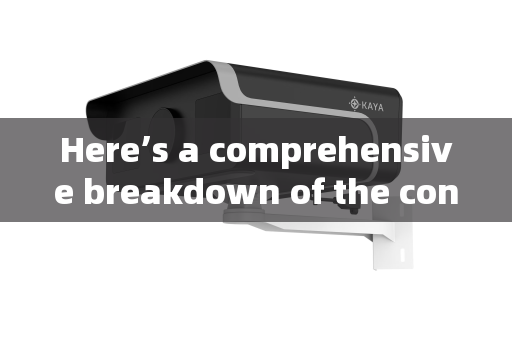
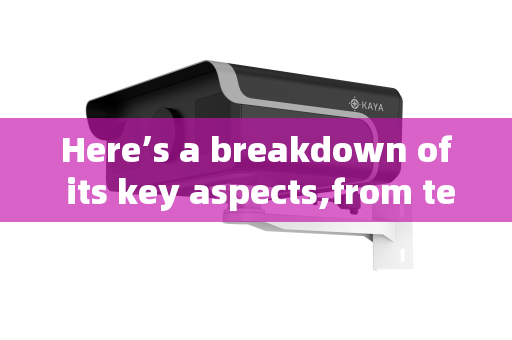
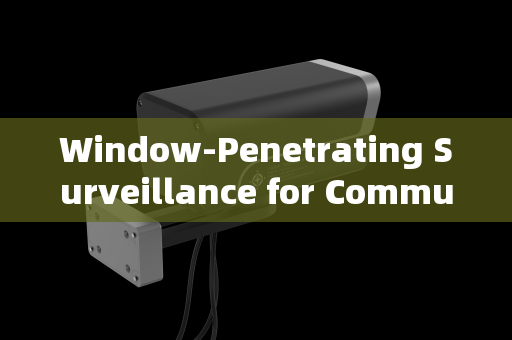
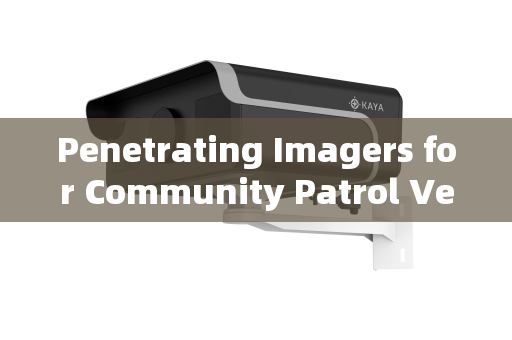
In the high-stakes domain of counter-terrorism and tactical law enforcement, the success of a raid and the safety of personnel hinge overwhelmingly on the quality of intelligence gathered during the pre-raid reconnaissance phase. Traditional optical and thermal imaging systems often fall short when faced with obscured visibility, deliberate concealment, or protective barriers employed by hostile elements. This is where advanced Penetration Imaging Systems (PIS), leveraging cutting-edge Laser Range-Gated Imaging (LRGI) technology, emerge as a game-changing asset. These systems provide a critical, often decisive, visual intelligence advantage by seeing through various visual obstructions to reveal hidden threats and layouts before an assault.
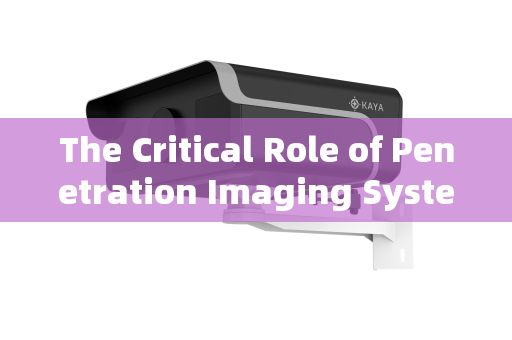
Penetration Imager Effect Images
Understanding the Penetration Imaging System: Technology and Capability
A Penetration Imaging System is not a mere camera; it is a sophisticated electro-optical system engineered for extreme-condition intelligence gathering. Its core innovation lies in the precise synchronization of a high-repetition-rate pulsed laser and a gated intensified camera. The system operates by emitting ultra-short (nanosecond) pulses of laser light towards a target area. The gated camera, whose shutter is controlled with exquisite temporal precision (with sync accuracy better than 10 picoseconds), opens only for a minutely controlled time window after each laser pulse is fired.
This process, known as time-slicing or range-gating, allows the system to selectively capture photons reflected only from a specific, pre-determined "slice" of space at a chosen distance. By stacking these slices, the system constructs a clear image of the target zone while effectively rejecting backscattered light from obscurants like smoke, fog, dust, rain, or snow that lie between the camera and the target plane. The camera's core, often a Microchannel Plate (MCP) image intensifier, provides optical gain exceeding 10^6, enabling detection in extremely low-light or even pitch-dark conditions.
Key Advantages for Covert Reconnaissance:
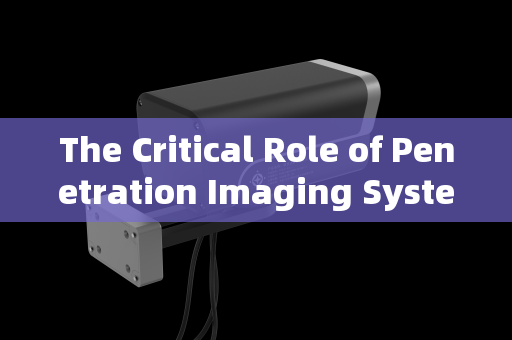
Penetration Imager Effect Images
- Extended Range & High Contrast: Operates effectively at long stand-off distances, keeping reconnaissance teams safe and undetected.
- Obscuration Penetration: Capable of imaging through atmospheric obscurants (smoke, fog, haze, precipitation) common in conflict or arson-delaying scenarios.
- Barrier Penetration: Its most tactically relevant feature is the ability to passively and covertly see through various types of glass—car windows, building windowpanes, glass facades, and even specialized laminates like those in aircraft or train windows—without alerting occupants. This allows for the identification of persons, weapons, explosives, and interior layouts.
- Anti-Interference & Spotlight Immunity: Highly resistant to active countermeasures like dazzling lights or attempts to blind sensors.
Application in Pre-Raid Reconnaissance of Terrorist Hideouts
The application of PIS in pre-raid scouting transforms the operational planning process:
-
Covert Structural and Personnel Intelligence: From a concealed position hundreds of meters away, operatives can use a PIS to map the interior of a suspected hideout through its windows. They can ascertain room layouts, the number and positions of occupants, and the presence of weapons, improvised explosive devices (IEDs), or other threat materials. This directly informs the dynamic entry plan, breaching points, and threat prioritization.
-
Vehicle-Borne IED and Troop Transport Assessment: Before intercepting a vehicle suspected of being a VBIED or transporting combatants, a PIS can scan through the windshield and side windows to confirm the driver/passenger count, spot visible weapons, or detect suspicious packages without initiating a potentially premature and dangerous stop.
Penetration Imager Effect Images
-
Operations in Adverse Environmental Conditions: Terrorist activities or raids do not halt for bad weather. Whether a hideout is shrouded in morning fog, smoke from trash fires (a common obscurant tactic), or heavy rain, a PIS maintains visual capability where conventional and thermal imagers (which cannot see through glass clearly) fail, ensuring the reconnaissance timeline is not weather-dependent.
-
Post-Blast/Arson Scene Assessment: In scenarios where a location has been subjected to an explosion or fire initiated by suspects, first responders and follow-on assault teams can use PIS to peer through the residual smoke and steam to locate casualties, identify secondary threats, or track fleeing individuals, all while maintaining a safe distance.
-
Maritime and Border Security Operations: For hideouts or smuggling operations near coastlines or in port areas, PIS provides long-range, fog-penetrating surveillance. It can monitor vessels or coastal structures through their portholes or windows, detecting illicit activities, unauthorized personnel, or threats during approach phases in poor visibility.
Integration into the Tactical Ecosystem
The intelligence product from a Penetration Imaging System seamlessly integrates into modern Command, Control, Communications, Computers, Intelligence, Surveillance, and Reconnaissance (C4ISR) networks. Real-time imagery can be streamed to commanders and tactical teams, enabling shared situational awareness and collaborative, data-driven decision-making. It complements other sensors like drones, ground radar, and signals intelligence, filling the critical "see-through-the-obstacle" gap.
In conclusion, in the perilous mission of neutralizing terrorist threats, the Penetration Imaging System is far more than just a piece of technology; it is a force multiplier and a lifesaver. By empowering law enforcement and military units with the ability to conduct detailed, covert, and all-weather reconnaissance through barriers and obscurants, it dramatically reduces the "fog of war" preceding a raid. This leads to more precise, surprise-oriented, and ultimately safer tactical interventions, safeguarding both operatives and potential hostages while ensuring mission success against concealed adversaries.