Introduction In the high-stakes realm of fire rescue and emergency response, situational awareness is the cornerstone of operational success and personnel safety. The ability to "see the unseen" – through blinding smoke, intense flames, dense particulate matter, and structural obstructions – has long been a critical challenge. Traditional thermal imaging, while invaluable, can be limited by saturation from extreme heat and an inability to differentiate targets behind barriers like glass. Enter the advanced penetration imaging system, a technological leap poised to dramatically improve efficiency and effectiveness in rescue operations. This article explores how this cutting-edge technology functions and its transformative potential for first responders.
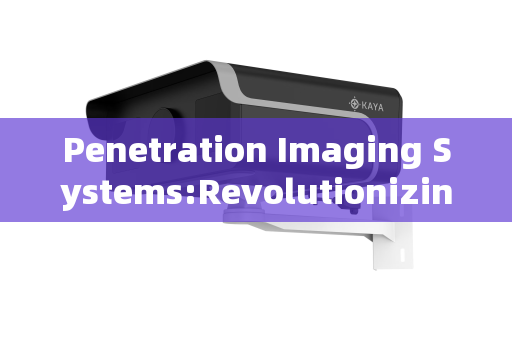
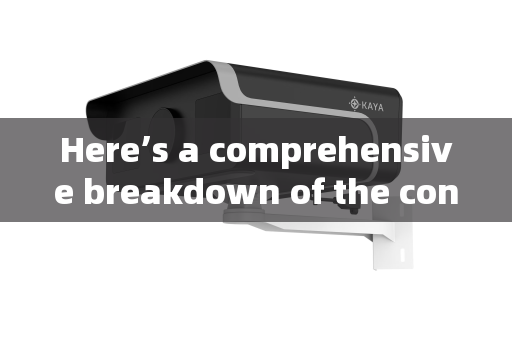
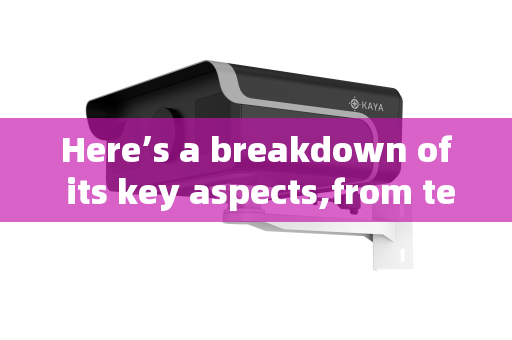
Penetration Imager Effect Images
Understanding Penetration Imaging Technology A penetration imaging system is not merely an enhanced camera; it is a sophisticated active imaging platform engineered for extreme environments. At its core, it utilizes Laser Range-Gated Imaging (LRG) or gated imaging technology. The system innovatively combines a high-repetition-rate pulsed laser with a gated, intensified camera. The principle involves emitting ultra-short, powerful pulses of laser light and precisely synchronizing the camera's shutter to open only for a minuscule, delayed time window – often in the nanosecond or picosecond range – corresponding to the return photons from a specific "slice" of distance.
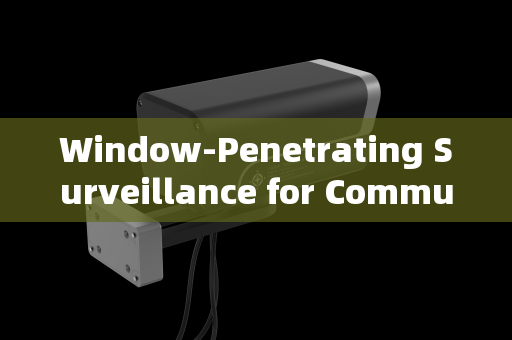
Penetration Imager Effect Images
This temporal slicing allows the system to selectively capture light reflected from a target at a pre-defined range while effectively rejecting unwanted backscatter from obscurants (smoke, fog, rain, snow) closer to the lens. Key performance characteristics include:
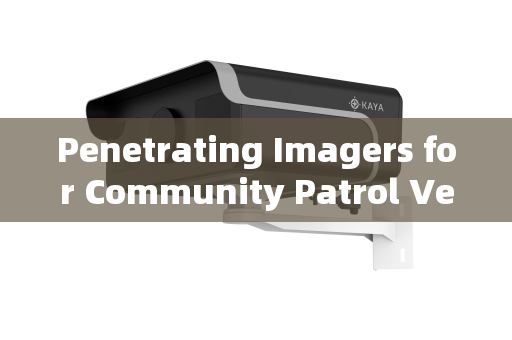
Penetration Imager Effect Images
- Extended Imaging Range & High Contrast: Achieves clear visualization over long distances even in low- or no-light conditions.
- Superior Resistance to Backscatter: Effectively "sees through" various obscuring media (fire, smoke, haze, precipitation).
- Barrier Penetration Capability: A hallmark feature is its ability to "see through" certain transparent and semi-transparent barriers with minimal reflection, including vehicle windows, architectural glass, train/aircraft windows, and even water surfaces for subsurface imaging.
- Precision Timing: With gating capabilities under 3 nanoseconds and synchronization precision better than 10 picoseconds, coupled with the high gain (over 10^6) from a Microchannel Plate (MCP) intensifier, the system can construct high-resolution imagery and accurate 3D range data of the target scene.
Component Core: The system typically comprises a pulsed laser emitter, a beam expander, an imaging lens, and the crucial gated intensified camera. The camera itself integrates the MCP image intensifier, high-voltage power supply, and precision timing/gating control modules.
Enhancing Efficiency in Fire Rescue Operations The application of penetration imaging directly addresses critical inefficiencies and dangers in firefighting and technical rescue:
- Rapid Victim Location and Situational Assessment: In structural fires, dense smoke renders conventional sight and standard cameras useless. Penetration imaging can "see through" the smoke cloud to identify trapped individuals, their posture, and location with far greater clarity than thermal imagers, which may only show a heat blob. This enables faster, more directed rescue efforts.
- Non-Intrusive Reconnaissance Through Barriers: Before making a forcible entry—a time-consuming and potentially hazardous action—respondents can use the system to scan a building's interior through windows or glass doors. Assessing room occupancy, fire spread, and structural integrity from the outside informs safer and more strategic entry plans.
- Vehicle Extrication and Industrial Rescue: In vehicle accident extrication, seeing through tinted, reflective, or smoke-damaged windows to locate occupants and identify airbag/component hazards speeds up the size-up process. Similarly, in industrial settings, it can allow inspection of hazardous compartments through observation ports without opening them.
- Navigating Complex and Obscured Environments: For search operations in large, smoke-logged structures like warehouses, or in outdoor scenarios like forest fires hampered by haze, the system's long-range, backscatter-suppressed imaging provides a clearer navigational path, helping teams avoid pitfalls and identify hotspots or victims more quickly.
- Training and Post-Incident Analysis: In live-fire training facilities ("hot houses") and simulation systems, the technology allows instructors to observe trainee movements and techniques through observation glass despite intervening smoke and flame, enhancing training quality and safety. It can also be used for post-fire investigation, safely examining a scene through remaining obscurants.
Broader Application Ecosystem The utility of penetration imaging extends beyond municipal fire departments, offering significant value across the emergency services and security spectrum:
- Law Enforcement & Counter-Terrorism: For tactical operations in low-visibility conditions (smoke, fog), through-window hostage situation assessment, covert surveillance, maritime interdiction (seeing through vessel windows), and evidence gathering in obscured environments.
- Maritime & Border Security: Its powerful capability for long-range imaging through fog, mist, and sea spray (haze penetration) and strong light suppression is critical for maritime domain awareness, safe navigation, port security, and coastal border patrol under adverse weather.
- Industrial & Critical Infrastructure Security: Monitoring of high-security facilities (e.g., power plants, refineries) through atmospheric obscurants and protective glass barriers.
- Search and Rescue (SAR): Enhancing capabilities for mountain rescue in fog, wide-area search in poor weather, and potentially locating individuals in water (underwater imaging capability).
Conclusion The question, "Can a penetration imaging system improve efficiency in fire rescue operations?" is answered with a resounding yes. By providing unprecedented visual access through the very elements that most impede rescue efforts—smoke, flame, and glass—this technology transforms the operational picture for first responders. It accelerates critical decision-making, reduces time spent on blind searches, mitigates risks to both victims and rescue personnel, and ultimately saves lives. As the technology matures and becomes more integrated into the responder's toolkit, penetration imaging stands as a pivotal innovation in the relentless pursuit of safer and more effective emergency response. Its adoption represents a significant stride forward for the fire rescue community, law enforcement agencies, and security forces operating in visually hostile environments worldwide.