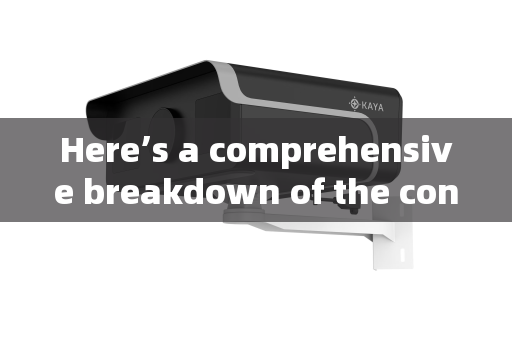
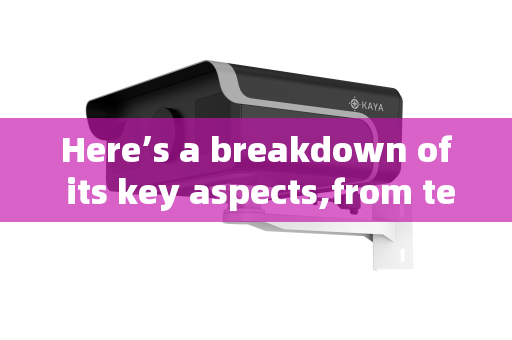
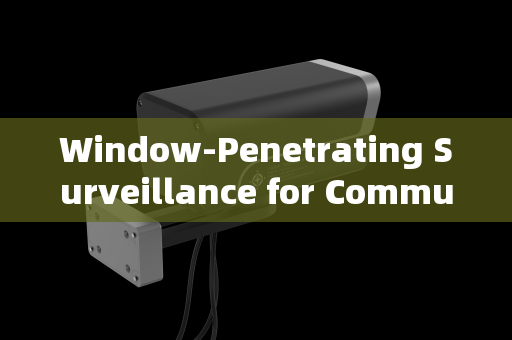
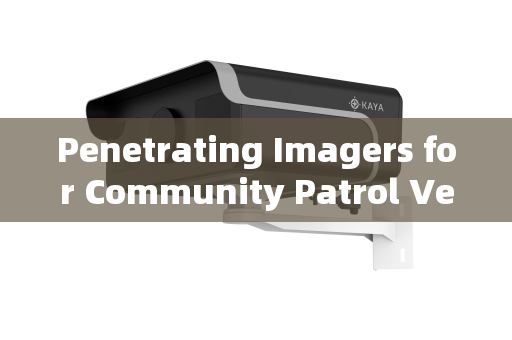
In the high-stakes realm of global aviation, security is paramount. Airports, as critical nodes in international transport, face continuous and evolving threats. Traditional surveillance and inspection methods, while robust, often grapple with limitations imposed by environmental conditions, physical barriers, and the need for discretion. This is where advanced Penetration Imaging Systems (PIS), leveraging cutting-edge Laser Range-Gated Imaging (LRG) technology, are emerging as a transformative force in airport security monitoring. These systems provide security personnel with unparalleled visual intelligence, fundamentally enhancing situational awareness and threat detection capabilities in challenging scenarios.
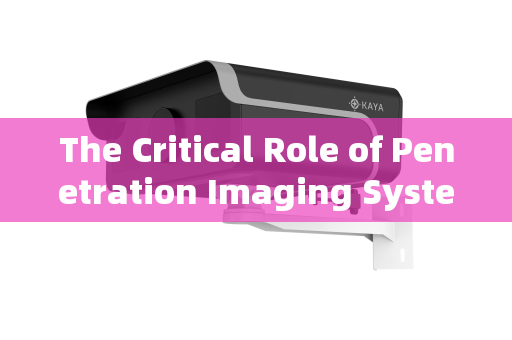
Penetration Imager Effect Images
Understanding Penetration Imaging Technology
At its core, a Penetration Imaging System is a sophisticated electro-optical device designed to "see through" visual obstructions that typically blind conventional cameras. It innovatively combines a high-repetition-rate pulsed laser with a gated, intensified camera. The system operates by emitting ultra-short (nanosecond) laser pulses toward a target scene. The key innovation lies in the precise, nanosecond-level synchronization between the laser pulse and the camera's electronic shutter (or "gate").
The camera’s shutter opens only for an extremely brief window (<3 nanoseconds), precisely timed to capture the laser light reflected from a specific "slice" of space at a predetermined distance. By rapidly adjusting this time delay, the system can sequentially scan and build a clear, high-contrast image of objects located behind obscuring media. This time-slicing and stacking process effectively filters out unwanted backscatter from particles (like fog, smoke, or rain) close to the camera and penetrates transparent or semi-transparent barriers.
The system's hardware typically comprises a pulsed laser, a beam expander, an imaging lens, and the crucial Gated Intensified Camera. This camera integrates a Microchannel Plate (MCP) image intensifier, high-voltage modules, and precision timing circuitry. This enables extraordinary optical gain (>10^6), ultra-fast gating (<3ns), and synchronization precision better than 10 picoseconds, allowing for high-fidelity imaging and even precise 3D data acquisition of the target.
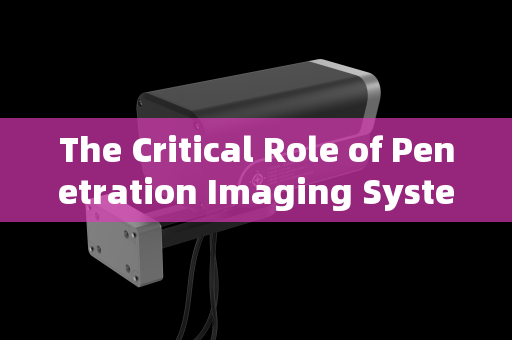
Penetration Imager Effect Images
Core Functions in the Airport Security Context
Within the complex and demanding airport environment, PIS delivers several critical functions:
-
Barrier Penetration for Covert Surveillance: A primary application is the ability to conduct long-range, non-intrusive reconnaissance through various glass barriers. This includes scanning aircraft cabin interiors through aircraft portholes (windows), inspecting vehicles through tinted car windows, or observing terminal activities through glass curtain walls and special laminated glass. Security teams can monitor suspect behavior, count occupants, or identify potential threats inside parked vehicles or stationary aircraft from a discreet distance without alerting subjects.
-
All-Weather, All-Condition Operational Resilience: Airports operate 24/7, regardless of weather. PIS excels in adverse environmental conditions that severely degrade standard CCTV and thermal imaging. It can effectively "see through" light fog, haze, smog, rain, and snow, maintaining clear imaging ranges for perimeter security, runway monitoring, and apron surveillance during inclement weather. This ensures continuous security coverage where it is most needed.
Penetration Imager Effect Images
-
Enhanced Fire and Emergency Response: In the event of an aircraft incident, fire, or other emergency involving smoke, PIS becomes an invaluable tool for firefighting and rescue (FFR) teams. It can penetrate smoke-filled cabins or terminal areas to locate trapped passengers, identify safe ingress/egress routes for responders, and assess internal fire spread. This capability significantly improves rescue efficiency and can help reduce casualties during critical emergency responses within airport infrastructure.
-
Counter-Terrorism and Law Enforcement Operations: For counter-terrorism units and airport police, PIS supports high-risk operations. It aids in hostage situation assessment by allowing visualization inside aircraft or rooms from outside, supports covert surveillance and evidence gathering on suspects, and enhances tactical situational awareness during intervention planning. Its ability to function in low-light or no-light conditions makes it ideal for nighttime operations.
-
Perimeter and Coastal Security Integration: For airports located near coastlines or with waterfront perimeters, PIS's capability for long-range penetration through mist and fog and glare suppression supports maritime security operations. It can monitor vessel approaches, deter unauthorized waterborne access, and maintain security visibility during poor maritime weather, integrating seamlessly with broader coastal and border defense systems.
Application Scenarios in Airport Ecosystems
- Apron and Stand Surveillance: Monitoring ground crew activities, baggage loading/unloading, and potential unauthorized access around aircraft under various weather conditions.
- Terminal Building Security: Covert observation through terminal windows for behavioral analysis, threat detection in retail or lounge areas, and monitoring of sensitive access points.
- Crisis Management & Hostage Rescue: Providing critical interior visual intelligence during an aircraft hijacking or terminal lockdown situation without compromising tactical positions.
- Customs and Border Control: Assisting in the inspection and interdiction of contraband by scanning vehicles or cargo containers' interiors from a distance, even through obscured windows.
- Fire & Rescue Services: Deployed by airport emergency services for search and rescue (SAR) operations in smoke-obscured hangars, terminals, or aircraft incident sites.
Conclusion
The Penetration Imaging System is far more than just a camera; it is a force multiplier for airport security agencies. By overcoming the fundamental limitations of traditional optical surveillance—obscuration by barriers and environmental clutter—it delivers clear, actionable intelligence exactly when and where it is needed most. As security challenges grow more complex, the integration of such intelligent imaging solutions into the layered security architecture of airports is becoming essential. It empowers security personnel, firefighters, and law enforcement officers to make informed decisions, ensure proactive threat mitigation, and ultimately, safeguard the lives of passengers and staff, thereby upholding the integrity and safety of the global aviation network. Its role is pivotal in the evolution towards smarter, more resilient Aviation Security (AvSec) and critical infrastructure protection frameworks.