The Silent Watcher: How Penetration Imaging Systems Revolutionize Pre-Raid Reconnaissance in Counter-Terrorism Operations The success of any high-risk law enforcement or military operation, particularly a raid on a terrorist hideout, hinges on one critical phase: pre-raid reconnaissance. The quality of intelligence gathered during this phase directly determines operational planning, risk assessment, and ultimately, the safety of personnel and the probability of mission success. In this high-stakes domain, technological superiority is a decisive force multiplier. Among the most transformative tools available today is the Penetration Imaging System (PIS)**, a sophisticated device that is fundamentally altering the dynamics of covert surveillance and threat assessment.
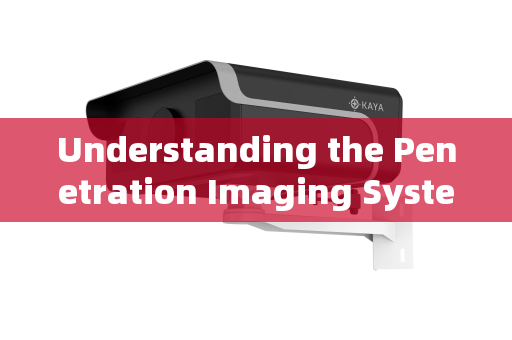
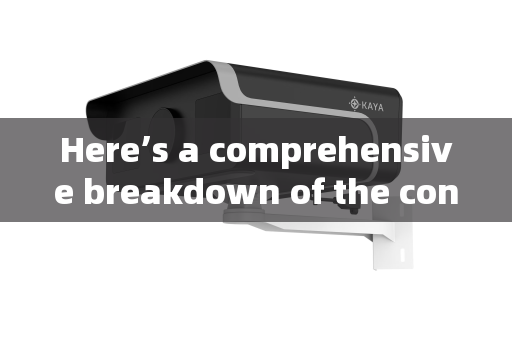
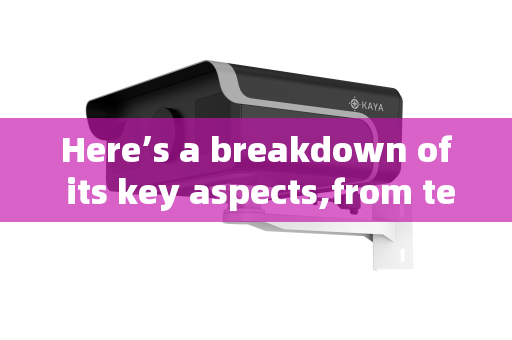
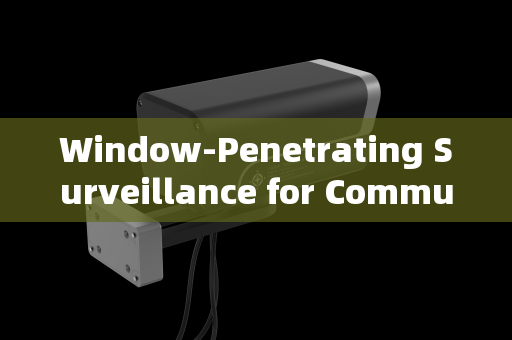
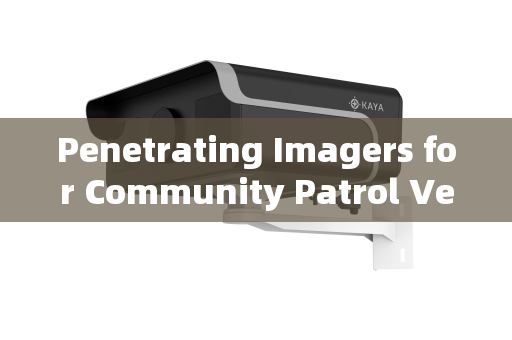
Penetration Imager Effect Images
At its core, a Penetration Imaging System is not a conventional camera or thermal imager. It is an advanced electro-optical system built upon Laser Range-Gated Imaging (LRGI) or Gated Imaging Technology. This innovative approach ingeniously combines a high-repetition-rate pulsed laser with a gated intensifier camera.
Here’s how it works: The system emits ultrashort, powerful pulses of laser light (in the nanosecond regime). The synchronized, gated intensifier camera acts as an ultra-fast, precise optical shutter. It opens only for an exceedingly brief window (less than 3 nanoseconds), perfectly timed to capture the laser light reflected from a specific, pre-determined "slice" of distance. By systematically adjusting this time delay, the system scans and "stacks" these optical slices, building a clear, high-contrast image of a target area. This process effectively suppresses all light from outside the gated range.
The key components enabling this feat include a pulsed laser, a beam expander, imaging optics, and the critical Gated Intensifier Camera. This camera incorporates a Microchannel Plate (MCP) image intensifier, high-voltage modules, and timing circuitry, achieving an optical gain exceeding 10^6, a shutter speed under 3ns, and timing synchronization precision better than 10 picoseconds. This allows for high-precision 3D information acquisition of the target scene.
Critical Advantages for Covert Reconnaissance
The operational benefits of this technology for pre-raid intelligence gathering are profound:
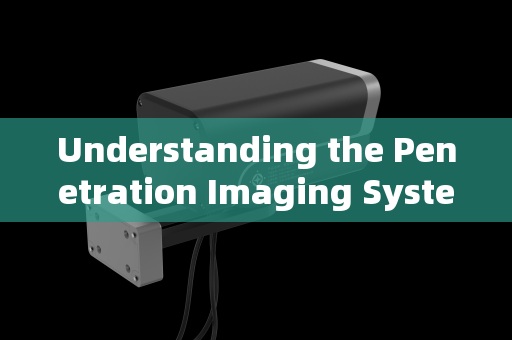
Penetration Imager Effect Images
-
"See-Through" Capability: A PIS can non-invasively penetrate various transparent and semi-transparent barriers. This includes vehicle windows (standard, tinted, or armored), building glass facades, train windows, and aircraft portholes. Operators can conduct surveillance from a concealed position, gathering vital intelligence on occupant numbers, activities, layouts, and potential weapons without alerting the suspects or requiring physical breach.
-
Superior Performance in Degraded Environments: Terrorist hideouts are often chosen for their obscurity and environmental challenges. A PIS excels where other sensors fail. It effectively overcomes backscatter from obscurants, providing clear imaging through smoke, fog, haze, light rain, and snow. This ensures reconnaissance can continue during adverse weather or even in scenarios where adversaries use smoke screens.
-
Extended-Range, High-Resolution Imaging: The system offers long operational ranges with high distance resolution. This allows reconnaissance teams to maintain a safe stand-off distance from a potentially hostile location while still acquiring detailed imagery, minimizing the risk of detection and compromise.
-
Low-Light and Zero-Light Operation: Coupled with its active laser illumination, the system's extreme sensitivity functions perfectly in near-total darkness, enabling 24/7 surveillance capability without relying on ambient light that might betray the observer's position.
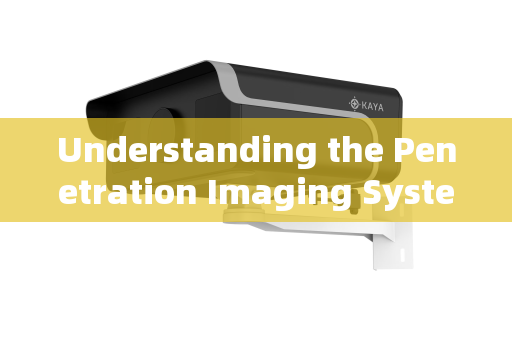
Penetration Imager Effect Images
The PIS in Action: Pre-Raid Reconnaissance Workflow
In the context of planning a raid on a suspected terrorist safe house, a PIS becomes an indispensable asset:
-
Initial External Assessment: From a concealed vantage point hundreds of meters away, operators can scan the building's windows. They can count individuals inside, observe their movement patterns, identify guard posts or lookouts, and potentially spot visible weapons or suspicious materials (e.g., wires, canisters) through the glass, day or night, and in most weather conditions.
-
Vehicle-Borne Intelligence: Before approaching the target building, vehicles parked nearby are key intelligence sources. A PIS can peer through windshields and windows to check for occupants, hidden items in seats or trunks, or even modified interiors suggesting the transport of hazardous materials—all without touching the vehicle.
-
Dynamic Situation Monitoring: During the final stages before the raid, the system can provide real-time surveillance to confirm the status of the target. It can detect if occupants are becoming agitated, moving to defensive positions, or attempting to destroy evidence, allowing command to adjust the tactical approach or timing instantly.
-
Post-Blast or Hostile Environment Reconnaissance: In scenarios involving fire, explosives, or deployed obscurants (e.g., tear gas), a PIS can penetrate the smoke and haze to locate casualties, identify structural hazards, or track adversary movements, providing critical situational awareness for the assault team.
Beyond Counter-Terrorism: A Versatile Tool
While its role in counter-terrorism is pivotal, the Penetration Imaging System's utility spans the spectrum of public safety and security:
- Emergency & Rescue Services: For urban and wildland firefighting, it acts as a "thermal imager plus," seeing through smoke to locate victims and identify fire hotspots behind glass. It is invaluable in maritime, mountain, and urban search-and-rescue (SAR) operations in poor visibility.
- Law Enforcement & Border Security: It aids in evidence collection through windows, countersurveillance, VIP protection sweeps, narcotics interdiction (inspecting vehicles/vessels), and coastal/port surveillance by penetrating sea fog and glare.
- Military Applications: Beyond direct action, it supports intelligence, surveillance, and reconnaissance (ISR), maritime interdiction, and operations in complex, obscured urban and natural environments.
Conclusion
The Penetration Imaging System represents a paradigm shift in reconnaissance technology. By mastering light and time at a nanoscopic level, it grants security forces the previously unimaginable ability to see the unseen. In the critical, nerve-racking hours before a raid on a terrorist cell, it transforms uncertainty into actionable intelligence. It reduces operational risk, enhances precision, and saves lives—both of the operatives and potential hostages or non-combatants. As threats evolve and adversaries seek shelter in complexity and concealment, tools like the PIS ensure that those sworn to protect maintain a decisive, silent advantage. It is not merely a camera; it is a cornerstone of modern, intelligence-led, and precision-focused counter-terrorism operations.