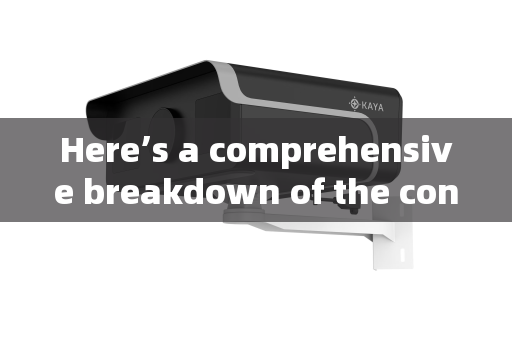
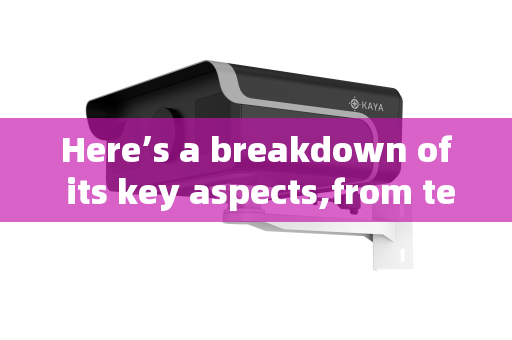
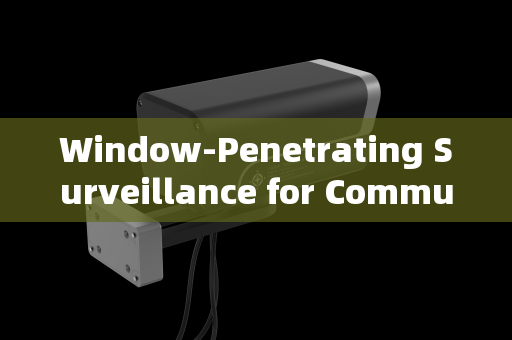
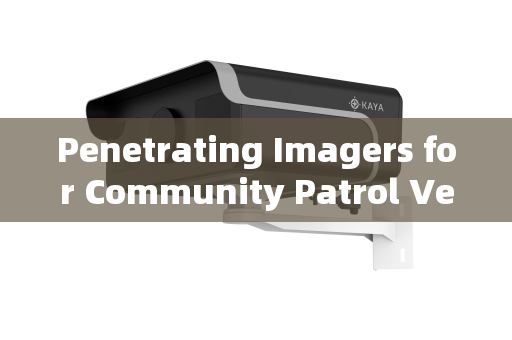
Revolutionizing Airport Security: The Critical Role of Penetration Imaging Systems in Vehicle and Personnel Screening The modern airport port is a complex nexus of global travel and commerce, where ensuring the seamless flow of authorized movement while rigorously intercepting threats is a paramount, ongoing challenge. Traditional security inspection methods, while foundational, often grapple with limitations in challenging environmental conditions or when confronting concealed compartments. Herein lies the transformative role of the Penetration Imaging System (PIS). Leveraging advanced gated imaging technology, these systems are redefining the standards for non-invasive, long-range, and highly reliable surveillance and inspection, becoming an indispensable asset for comprehensive vehicle and personnel security protocols. At its core, a Penetration Imaging System is a sophisticated electro-optical device designed to acquire clear imagery under extreme conditions where conventional vision fails. Its operational principle is based on Laser Range-Gated Imaging (LRGI) technology. This innovative approach synergizes a high-repetition-rate pulsed laser with a gated intensifier camera. The system achieves precise temporal synchronization between nanosecond laser pulses and the camera's shutter. By controlling minute time delays, it effectively "slices" the field of view into distinct range segments, stacking these slices to construct a high-contrast image. This method provides exceptional capabilities: long imaging ranges, high distance resolution, robust resistance to interference, and, crucially, the effective suppression of backscatter from obscurants. The primary hardware ensemble typically comprises a pulsed laser, a gated/intensified camera (often incorporating a Microchannel Plate (MCP) intensifier, high-voltage and gating modules), beam expanders, and imaging lenses. The intensifier enables optical gains exceeding 10^6, acts as an ultra-fast optical shutter (below 3ns), and maintains synchronization precision better than 10ps, facilitating high-precision 3D information acquisition. In the context of airport port security, these technical capabilities translate into unprecedented operational advantages for both vehicle and personnel inspection details. For vehicle security inspections, the PIS is a game-changer. It enables long-range, standoff screening of vehicles approaching critical perimeters, parking areas, or cargo bays. Its signature ability to penetrate various glazing materials—car windows, truck windshields, bulletproof glass, bus glass, and even aircraft portholes—allows operators to conduct discreet, non-intrusive internal visual checks. Security personnel can identify concealed individuals, suspicious packages, weapons, or contraband inside a vehicle without alerting the occupants or necessitating immediate physical intervention. This capability is vital for monitoring high-risk lanes or conducting random screening operations. Furthermore, the system’s proficiency in cutting through atmospheric obscurants like fog, haze, smoke, rain, and snow ensures continuous 24/7 operational readiness regardless of weather, maintaining a persistent security umbrella over the airport's vehicular approaches and grounds. Regarding personnel security in open or semi-open areas, while not replacing physical checkpoints for direct passenger screening, PIS offers critical support in broader surveillance and monitoring roles. It can be deployed to observe movement in perimeter zones, cargo handling areas, or remote apron sections. The technology can aid in detecting anomalous behavior, unauthorized intrusions, or items left unattended from significant distances and in poor lighting. Its ability to "see through" light environmental clutter enhances situational awareness for security teams, acting as a force multiplier for patrols and fixed surveillance points. The utility of Penetration Imaging Systems extends far beyond the airport, underscoring their versatility and robustness. In Emergency and Rescue Scenarios (urban firefighting, wilderness SAR, mine disasters, water rescue), they are pivotal for search and reconnaissance, enabling responders to navigate through smoke and flame to locate victims, thereby enhancing efficiency and reducing casualties. They are equally valuable for high-level fire training facilities. In Military, Law Enforcement, and Counter-Terrorism Operations, PIS supports missions involving armed interdiction, surveillance, evidence collection, anti-smuggling operations, and covert tracking, forming a backbone for modern "Smart Security" and "Smart Policing" initiatives. For Coastal and Border Defense**, its long-range, fog-penetrating, and glare-suppression imaging ensures maritime security operations and port safety can proceed unimpeded by adverse weather. In conclusion, the Penetration Imaging System plays a multifaceted and critical role in elevating security at airport ports. By providing the unique capability to conduct clear, long-range, non-invasive inspections through glass and environmental barriers, it addresses specific vulnerabilities in traditional methods. It empowers security forces with enhanced standoff detection, continuous all-weather operation, and improved situational awareness for both vehicle and perimeter personnel monitoring. As a dual-use technology proven in the most demanding emergency, military, and homeland security applications, its integration into airport security architecture represents a significant leap forward in proactive, intelligent, and resilient threat detection and prevention.
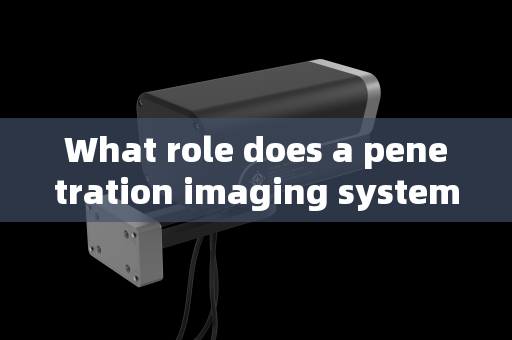
Penetration Imager Effect Images
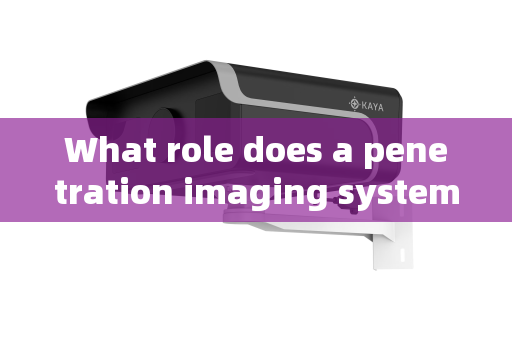
Penetration Imager Effect Images
Penetration Imager Effect Images