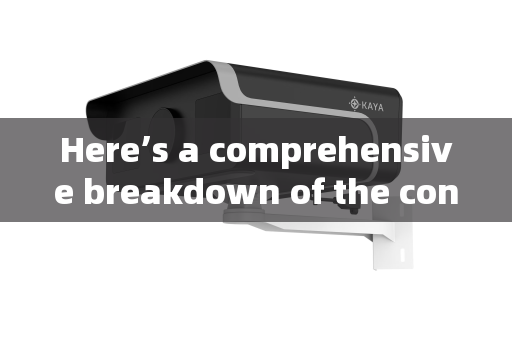
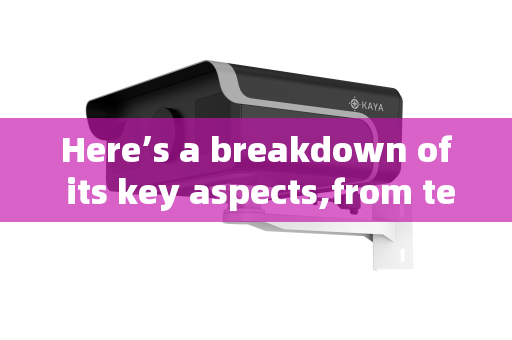
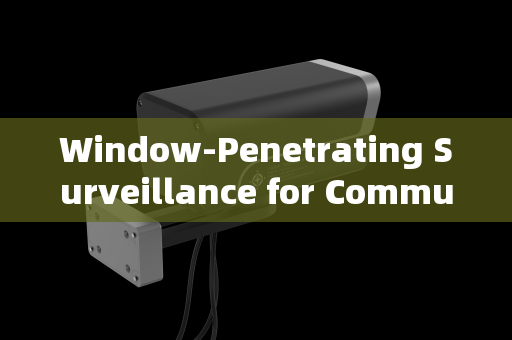
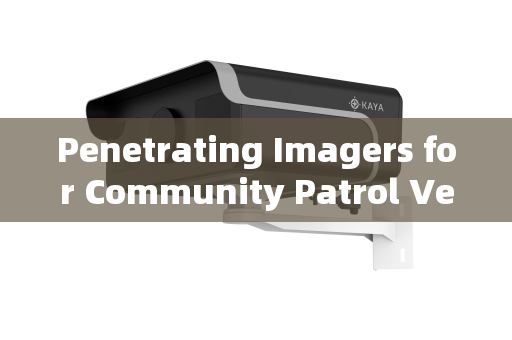
The modern bonded zone, a critical nexus of global trade, presents a unique and formidable security challenge. It is a high-stakes environment where the imperative to facilitate the rapid flow of goods and people must be meticulously balanced against the absolute necessity to prevent smuggling, terrorism, and other transnational threats. Traditional security measures at checkpoint perimeters—reliant on human visual inspection, basic cameras, or physical searches—often fall short against sophisticated concealment methods and environmental obstacles. In this complex landscape, the Penetration Imaging System (PIS), leveraging advanced Laser Range-Gated (LRG) or Gated Imaging technology, has emerged as a transformative, non-invasive force multiplier for security control.
Penetration Imager Effect Images
Understanding the Core Technology: Seeing Through the Impossible
At its heart, a Penetration Imaging System is an active electro-optical surveillance tool engineered to overcome the fundamental limitations of human vision and conventional imaging. Its operational principle is a feat of precision timing. The system integrates a high-repetition-rate pulsed laser with a gated, intensified camera. It works by emitting ultra-short, nanosecond-duration laser pulses towards a target area. The key innovation lies in the precise, synchronized control of the camera’s ultrafast optical shutter (the "gate"), which opens for an equally brief window—often under 3 nanoseconds—only when the reflected light from a specific, pre-determined distance slice returns. By systematically delaying this gate relative to the laser pulse, the system electronically "slices" and scans through space, building a high-contrast, slice-by-slice image of the scene.
This method confers several decisive advantages crucial for perimeter security: Exceptional Range and Resolution: It achieves clear imaging over long distances, with precise distance discrimination. Superior Anti-Interference & Backscatter Suppression: By rejecting light scattered from particulates (fog, smoke, rain) in the immediate foreground, it maintains clarity in恶劣 weather. Covert, Non-Intrusive Penetration: Its most significant feature is the ability to "see through" various obscurants and transparent barriers—such as vehicle windshields, tinted windows, glass幕墙, aircraft portholes, and train windows—without any physical contact or obvious inspection, even in total darkness.
The Pivotal Role at Bonded Zone Checkpoints: A Multi-Layered Shield
Penetration Imager Effect Images
The application of PIS at bonded zone ingress/egress points and internal patrol routes revolutionizes several tiers of security protocol:
-
Vehicle and Cargo Inspection (Non-Intrusive Screening): Screening trucks and containers is a primary bottleneck. A PIS, deployed at a distance, can passively scan approaching or stationary vehicles. It can penetrate windshield glare, tint, and dirt to verify driver identity, detect concealed individuals in cabins, or identify suspicious activity without alarming the occupants. More critically, by imaging through side windows or specially designed transparent sections of cargo holds, it can perform preliminary internal cargo scans for anomalies, acting as a high-speed pre-filter before more intrusive X-ray or physical inspection.
-
Perimeter and Infrastructure Surveillance: Bonded zones encompass warehouses, yards, and fencing. PIS units mounted on fixed towers or mobile units provide 24/7 surveillance capability, irrespective of lighting or weather. They can effectively monitor fence lines for intrusion attempts through fog or heavy rain, and inspect the interiors of buildings through external windows from a safe, standoff distance, identifying unauthorized personnel or unusual heat signatures (complementing thermal data) inside sensitive storage areas.
-
Counter-Smuggling and Anti-Terrorism Operations: The system’s ability to see through compartments and non-metallic barriers is invaluable for interdiction of contraband (drugs, illicit goods, currency) and counter-terrorism operations. It can aid in identifying hidden compartments in vehicle panels (visible through access points or modified structures) or detecting weapon-shaped objects inside a vehicle cabin. Its covert nature is essential for discreet monitoring of high-risk targets during investigations without compromising the operation.
Penetration Imager Effect Images
-
Emergency Response and Crisis Management: In the event of a fire, chemical spill, or security breach within the zone, PIS becomes a critical tool for firefighting and rescue command. It can peer through dense smoke and intense flame glare to locate trapped personnel, assess structural integrity from the outside, and guide rescue teams, thereby enhancing operational safety and effectiveness for first responders.
Technical Backbone for Demanding Scenarios
The robustness of these systems stems from their sophisticated components: the pulsed laser illuminator, the beam expander, the imaging lens, and crucially, the Gated Intensified Camera. This camera core incorporates a Microchannel Plate (MCP) image intensifier, high-voltage modules, and precision timing circuitry. This assembly enables phenomenal optical gain (exceeding 10^6x), ultra-fast gating (<3ns), and synchronization精度 better than 10 picoseconds. This not only facilitates penetration imaging but also allows for the extraction of high-precision 3D range data for each pixel, enabling accurate distance measurement and volumetric analysis of scanned spaces.
Conclusion: Integrating the Invisible Eye
The Penetration Imaging System transcends being merely a new camera; it is a paradigm shift in situational awareness for bonded zone security. By fulfilling the critical need for long-range, non-contact, all-weather, and barrier-penetrating surveillance, it directly addresses the vulnerabilities inherent in traditional checkpoint security. Its role is that of an invisible, ever-vigilant sentinel—enhancing detection capabilities, deterring malicious activities, accelerating legitimate throughput, and ultimately, fortifying the integrity of international supply chains. As threats evolve and the demand for seamless yet secure trade grows, the integration of PIS into the Smart Border and Smart Security infrastructure of bonded zones is not just advantageous but increasingly indispensable.