Introduction
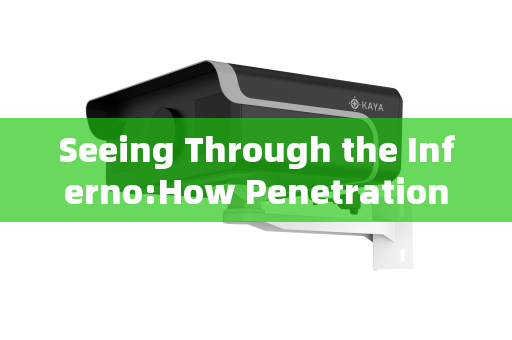
Penetration Imager Effect Images
In emergency response, military operations, and industrial safety, the ability to see clearly through visually obstructive and hazardous environments is not just an advantage—it is a critical necessity. Fire, in particular, presents one of the most challenging barriers for conventional optical and thermal imaging systems. Intense flames emit overwhelming broadband radiation, create turbulent, obscuring smoke, and generate intense thermal gradients that saturate sensors and obscure targets. Penetration imaging systems, specifically those employing advanced Laser Range-Gated (LRG) imaging technology, have emerged as a revolutionary solution to this problem. This article delves into the principles, capabilities, and diverse applications of these systems in achieving clear imaging through flames and other severe obstructions.
Understanding Penetration Imaging: The Core Technology
At its heart, a penetration imaging system is designed to acquire high-contrast visual information by selectively imaging a specific, narrow slice of space while rejecting unwanted scattered or emitted light from other regions. The key to its success lies in Laser Range-Gated Imaging, also known as gated imaging.
The system innovatively combines a high-repetition-rate pulsed laser with an intensified gated camera. The process is a precise dance of light and timing:
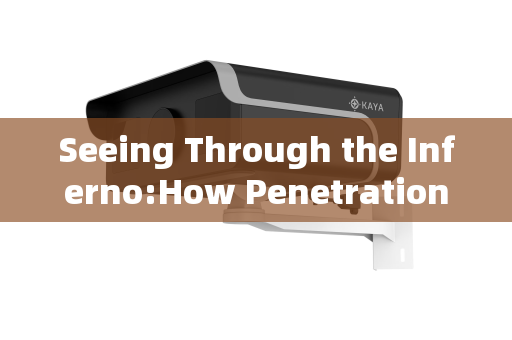
Penetration Imager Effect Images
- The system emits an extremely short, powerful pulse of laser light (on the order of nanoseconds) towards the scene.
- Simultaneously, the shutter of the intensified camera remains closed, blocking all light.
- After a precisely calculated time delay—corresponding exactly to the time it takes for the laser pulse to travel to the desired target distance and back—the camera's shutter opens for an equally brief "gate" period (e.g., less than 3 nanoseconds).
- During this nanosecond window, only the laser light reflected from objects at the specific "sliced" distance arrives and is detected. Light from flames, smoke particles, or water droplets in front of or behind this slice arrives either too early or too late, when the shutter is closed, and is therefore effectively rejected.
By rapidly repeating this process and stacking or scanning these temporal "slices," the system constructs a high-resolution, high-contrast image of the target, effectively seeing through the interfering medium like flame or fog. This method provides exceptional benefits: long operational range, high range resolution, superior resistance to backscatter and other interferences, and the ability to overcome blinding ambient light.
System Architecture and Key Components
A typical penetration imaging system comprises several core modules:
- Pulsed Laser Illuminator: Provides high-power, short-duration laser pulses at a high frequency.
- Beam Expander: Collimates and expands the laser beam to uniformly illuminate the field of view.
- Imaging Lens: Collects the returning light.
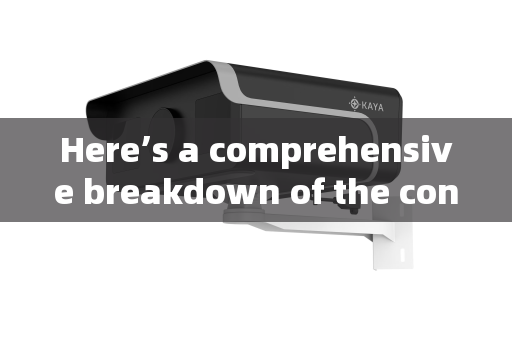
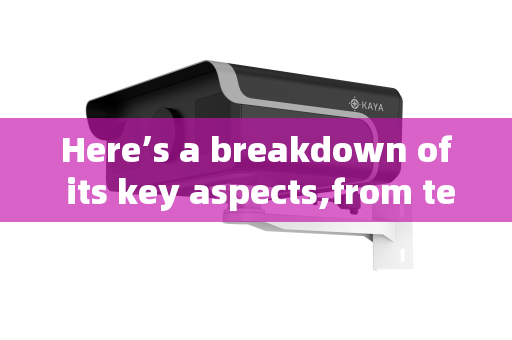
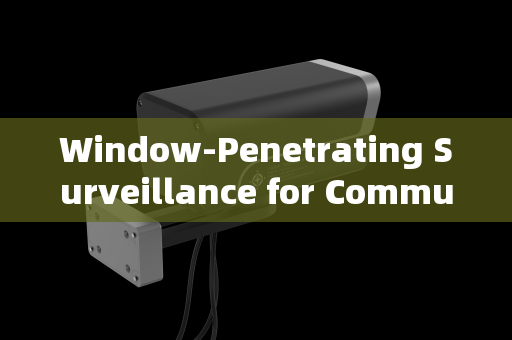
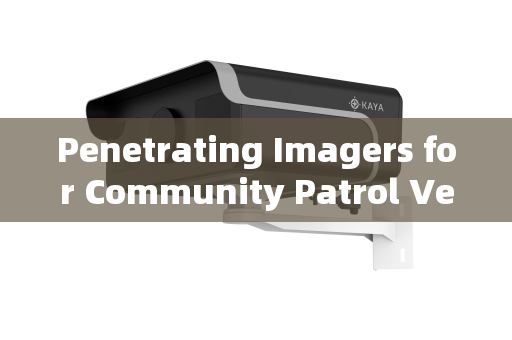
- Intensified Gated Camera: The core sensor. It integrates a Microchannel Plate (MCP) image intensifier, a high-voltage power supply, and precision timing/gating electronics. The MCP provides optical gain exceeding 10^6, while the gating mechanism acts as an ultra-fast shutter. The entire system operates with synchronization precision better than 10 picoseconds, enabling accurate 3D data acquisition alongside 2D imaging.
Application Scenarios in Emergency, Security, and Defense
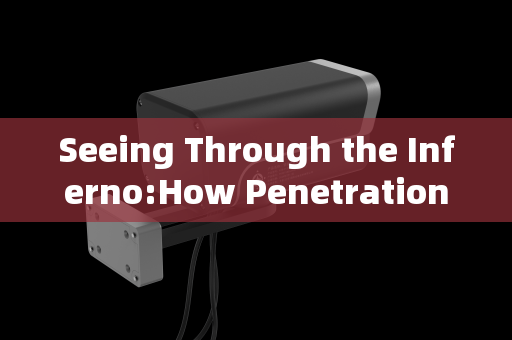
Penetration Imager Effect Images
The ability to penetrate not only flames but also glass, smoke, rain, fog, and water unlocks a vast array of applications.
Emergency & Firefighting Scenarios:
- Urban & Wildland Firefighting: Enables search and rescue teams to locate victims, identify structural integrity, and navigate through dense smoke and direct flame fronts inside burning buildings or forest fires. This dramatically improves rescue efficiency and reduces firefighter casualties.
- Industrial & Mine Rescue: Provides visibility in smoke-filled tunnels or industrial facilities after an explosion or fire.
- Water Rescue: Capable of underwater imaging to assist in submerged vehicle or victim recovery.
- Training Facilities: Used in live-fire training simulators and for securing critical infrastructure like high-rise buildings and landmarks, allowing observation of training exercises through intense simulated fire.
Law Enforcement & Military Operations:
- Surveillance & Reconnaissance: Allows for covert, long-range observation through windows (car, train, aircraft, building), curtains, and light foliage.
- Force Protection & Counter-Terrorism: Essential for threat assessment in smoke-obscured environments during raids, hostage rescues, or counter-terrorism operations.
- Border Security & Anti-Smuggling: Facilitates the detection of concealed compartments in vehicles and cargo inspections through visual barriers.
- Evidence Collection & Crime Scene Investigation: Can document scenes obscured by smoke or debris.
- Traffic Enforcement: Potentially used for detecting vehicle overloading or unauthorized modifications through glass.
Maritime & Border Security:
- All-Weather Navigation & Surveillance: Performs long-range penetration imaging through fog, mist, and rain, ensuring operational capability for maritime patrols, ship docking, and coastal surveillance in adverse weather.
- Anti-Glare Imaging: Suppresses glare from the sun or bright lights on the water, maintaining clear visibility for critical tasks.
Conclusion
Penetration imaging systems, powered by laser range-gated technology, represent a paradigm shift in situational awareness for extreme environments. By mastering the dimension of time at the nanosecond level, they effectively cancel out the visual noise created by flames, smoke, and other obstructions. From saving lives in fiery infernos to ensuring mission success for security personnel in challenging conditions, these systems are proving to be indispensable tools. As the technology continues to evolve, its integration into Smart City frameworks, Advanced Public Safety networks, and Next-Generation Homeland Security platforms will further solidify its role as a cornerstone of modern emergency response and tactical operations, truly allowing users to see the unseen.