In emergency response and tactical operations, visibility is often the first casualty. Dense smoke in firefighting scenarios or obscurants deployed in law enforcement situations can blind conventional optical systems, creating life-threatening delays and critical information gaps. This is where advanced penetration imaging systems come into play, serving as technological lifelines. These specialized systems are engineered to achieve a crucial objective: how does a penetration imaging system achieve imaging through smoke and other visual obstructions? By leveraging specific bands of the electromagnetic spectrum that interact minimally with smoke particles, they provide real-time visualization where standard cameras and the human eye fail, fundamentally enhancing situational awareness for first responders and tactical teams.
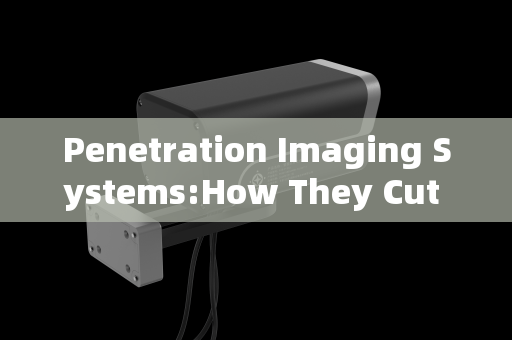
Penetration Imager Effect Images
The Science Behind Seeing Through the Obscuration
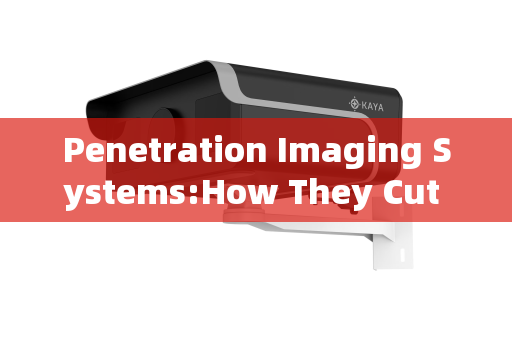
Penetration Imager Effect Images
The core principle enabling a penetration imaging system to function lies in wavelength selection. Smoke, fog, and dust primarily scatter and absorb visible light (wavelengths from ~400-700 nanometers), creating an opaque barrier. However, longer wavelengths, such as those in the infrared (IR) and terahertz ranges, are less affected by this scattering. There are two primary technological approaches. First, active near-infrared (NIR) or short-wave infrared (SWIR) imaging uses a built-in laser or LED illuminator operating at a wavelength that penetrates the smoke. The system's sensor is finely tuned to detect this reflected illumination, effectively "seeing" the illumination it provides, much like a car's fog lights but at an invisible wavelength. Second, thermal imaging or long-wave infrared (LWIR) systems detect the heat signatures (blackbody radiation) emitted by objects and individuals. Since thermal radiation in the 8-14 micrometer range passes through smoke with relative ease, these systems can render a clear heat-based image of the scene, revealing personnel, structural hotspots, or hidden objects.
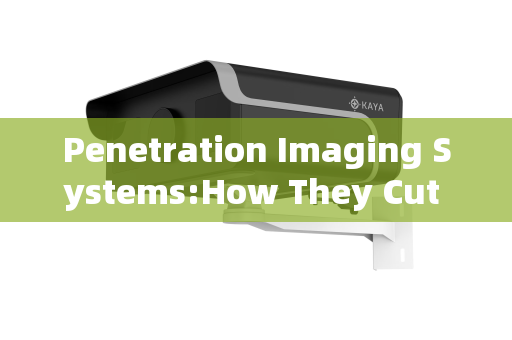
Penetration Imager Effect Images
Operational Applications in Fire and Tactical Response
The practical value of these systems is immense across the emergency and police professional domain. For fire services, a penetration imaging camera is indispensable for interior attack and search-and-rescue. Firefighters can navigate zero-visibility environments, identify the seat of a fire behind smoke, locate unconscious victims, and identify structural integrity hazards, all while maintaining their orientation. In law enforcement and military tactical operations, these systems allow for assessment and engagement through obscurants like smoke grenades. They enable officers to detect concealed suspects, identify threats, and conduct safer building clearances when vision is compromised. The ability to achieve imaging through smoke translates directly into faster decision-making, enhanced officer safety, and more successful mission outcomes, whether saving lives in a burning structure or resolving a high-risk standoff.
As sensor technology, artificial intelligence for image enhancement, and system miniaturization continue to advance, the capabilities of penetration imaging will only grow. Future systems may offer fused images combining multiple spectral bands for unparalleled clarity or integrate augmented reality displays directly into responder helmets. Ultimately, the question of how does a penetration imaging system achieve imaging through smoke is answered by a blend of sophisticated physics and purposeful engineering. These systems do not merely "see"; they reveal the critical information hidden within the chaos, ensuring that those who run toward danger are equipped with the vision to succeed and survive.
(Images suggested for inclusion: 1. Diagram comparing visible light scattering vs. IR transmission through smoke. 2. Side-by-side photo comparison: standard camera view vs. penetration imaging system view in a smoke-filled room. 3. Firefighter using a handheld thermal imaging camera during a training exercise. 4. Tactical operator with a helmet-mounted imaging system.)