Of course. This is a critical capability for law enforcement, from traffic stops and patrol to tactical operations and checkpoint security. The goal is to overcome the visual obstructions of tint, glare, dirt, and reflections to see inside a vehicle's occupant compartment clearly. Here’s a breakdown of the technologies, how they work, their applications, and important considerations for mobile law enforcement. Standard glass is opaque to most Long-Wave Infrared (LWIR) used by typical thermal cameras. This is why you can't use a common thermal imager to see through a window—it only shows the temperature of the glass and the reflections on it.
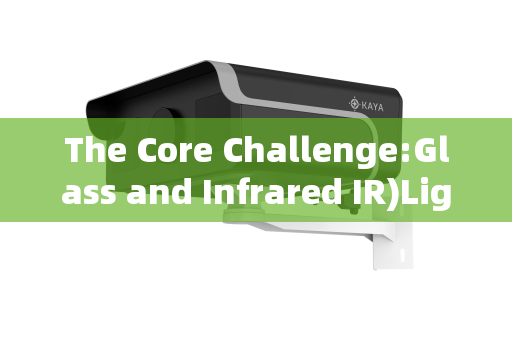
Penetration Imager Effect Images
The solution lies in using specific parts of the electromagnetic spectrum that can penetrate glass.
Short-Wave Infrared (SWIR) Imaging – The Primary Solution
SWIR (wavelengths ~0.9 – 1.7 µm) is the most effective and direct "see-into-the-vehicle" technology.
- How it works: SWIR cameras use reflected light, much like visible cameras, but they detect light in a band just beyond what the human eye can see. This band penetrates silica (glass) very effectively and cuts through haze, light fog, and some tints.
- What it reveals:
- Clear view through windows: Sees occupants, weapons, contraband on seats, and movements.
- Reduces glare and reflection: Significantly diminishes windshield reflections from the sun or headlights.
- Sees through some tint films: While not all, it penetrates many common dyed and metallized tints better than visible light.
- Works day or night: Can be used with covert IR illuminators (which are invisible to the human eye) for nighttime operations.
- Mobile Form Factors: Can be mounted on patrol car dashboards, tactical vehicles, or even handheld by an officer approaching a vehicle.
Use Case: An officer at a nighttime traffic stop uses a handheld SWIR monocular while approaching. They can clearly see the number and posture of occupants, and potential threats like a weapon being concealed, before reaching the window.
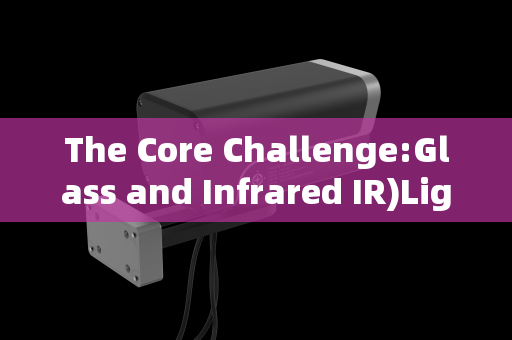
Penetration Imager Effect Images
Thermal Imaging (LWIR) – For Indirect and Perimeter Sensing
While standard thermal cannot see through glass, it is invaluable in mobile law enforcement for related purposes:
- Occupant Counting & Anomaly Detection: A hot body (person) inside a vehicle will heat up the interior surfaces (roof liner, windows) over time. A skilled operator can often infer the number and rough position of occupants by analyzing these "heat shadows."
- Recent Activity Detection: Can detect if a vehicle's engine is hot (recently running) or if a person has just exited.
- Perimeter and Exterior Surveillance: Excellent for detecting individuals hiding around or under vehicles in dark environments, or for seeing through smoke.
- Mobile Use: Common as dash-mounted or handheld systems for patrol and tactical teams.
Radar-Based Occupant Detection (e.g., Ultra-Wideband Radar)
This is an emerging and powerful through-wall/through-material technology now being miniaturized for vehicles.
- How it works: It emits low-power radio waves that penetrate materials like glass, plastic, and sheet metal. It detects the micro-movements caused by breathing and heartbeats.
- What it reveals:
- Presence of living beings: Can confirm if a person (or pet) is inside a vehicle, even if completely hidden from view (e.g., in a trunk, under a blanket).
- Count occupants: Advanced systems can differentiate between multiple breathing sources.
- Works in all conditions: Unaffected by visual obstructions, light, or weather.
- Mobile Form Factors: Can be integrated into handheld devices or small units for covert placement near a suspect vehicle.
Use Case: A K9 unit responds to a report of a suspected human trafficking vehicle. A handheld UWB radar sensor is used to scan the closed trunk from outside, confirming the presence of a living person before taking action.
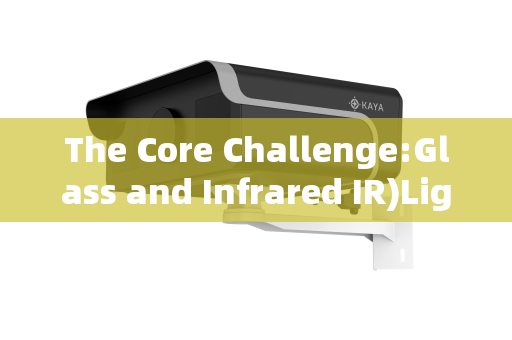
Penetration Imager Effect Images
Multispectral & Sensor Fusion Systems
The most advanced mobile platforms combine multiple sensors:
- Visible Camera: For standard license plate and detail recognition.
- SWIR Camera: For through-window occupant assessment.
- Thermal Camera: For perimeter awareness and anomaly detection.
- Radar: For through-structure presence detection. The data is fused on a single screen, giving the operator a comprehensive "picture" of the vehicle and its threat potential.
Key Considerations for Mobile Law Enforcement
| Consideration | Explanation |
|---|---|
| Legal & Privacy | This is paramount. Use is generally justified under the "Plain View Doctrine" and for officer safety during lawful stops. Scanning vehicles at random or without cause may face legal challenge. Departmental policies and training are essential. |
| Cost | SWIR and advanced radar systems are significantly more expensive than standard thermal or visible cameras. |
| Training | Operators must be trained to interpret images correctly (e.g., understanding SWIR artifacts, not mistaking thermal reflections for people). |
| Covert vs. Overt | Handheld and discreet dash-mounted systems offer tactical advantage. Obvious roof-mounted systems may act as a deterrent. |
| Environmental Limits | While better than visible light, heavy rain, snow, or very dense, dark factory tint can still degrade SWIR performance. |
Conclusion
For the specific task of "seeing through vehicle windows clearly," SWIR imaging is the most direct and effective penetrating imager available today. It provides a near-visual, clear image of the interior compartment.
For mobile law enforcement, a layered approach is most effective:
- SWIR for direct visual assessment of occupants and interior.
- Thermal for situational awareness and detecting external threats or anomalies.
- Radar for confirming the presence of hidden individuals when intelligence suggests it.
These technologies, used within a strong legal and policy framework, provide a powerful force multiplier that enhances officer safety, enables better decision-making, and aids in evidence collection and suspect apprehension.