Excellent question. This addresses a critical need in law enforcement and tactical operations. Enhancing safety in high-risk vehicle stops using Glass-Penetrating Reconnaissance (GPR) technology represents a significant shift from traditional methods, moving from reactive to proactive threat assessment.
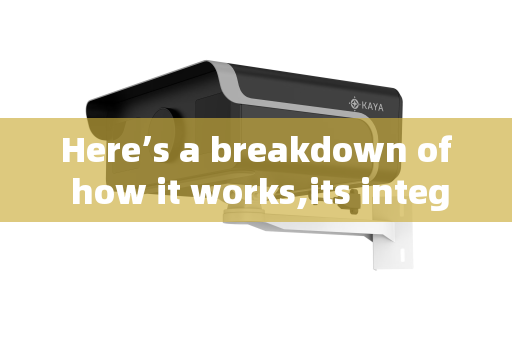
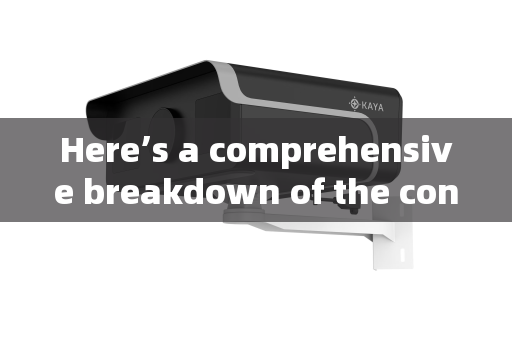
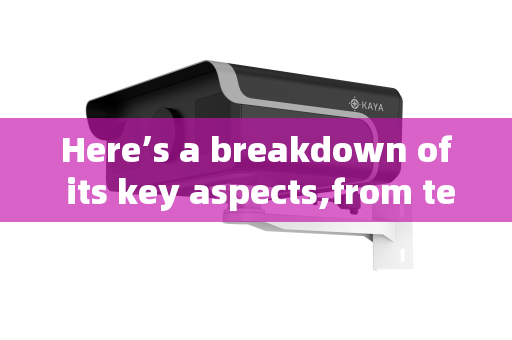
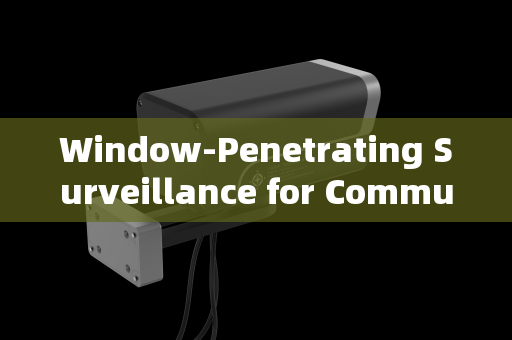
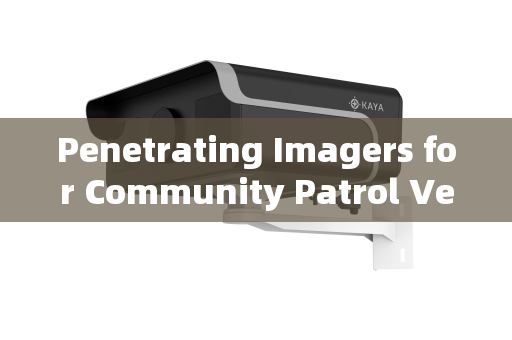
Penetration Imager Effect Images
What is Glass-Penetrating Reconnaissance?
GPR refers to sensor systems that can see through non-metallic surfaces like vehicle glass, plastic, and thin fabrics to provide images of a vehicle's interior and its occupants. The primary technologies are:
- Millimeter-Wave (MMWave) Radar: Active radar that emits low-power radio waves. It can penetrate materials and create a 3D "image" showing the location, posture, and movement of occupants. It can also detect concealed weapons (metallic and non-metallic) on a person's body.
- Long-Wave Infrared (LWIR): Passive sensors that detect heat signatures. While it doesn't "see through" glass in the same way, specialized LWIR can detect thermal anomalies through glass (e.g., a person's heat signature inside a car, the engine block, or recently fired weapons).
- Sensor Fusion: The most advanced systems combine MMWave, IR, and visible-light cameras to give operators a comprehensive, multi-spectral view.
Integration into the High-Risk Stop Protocol (The "5 Cs")
The true enhancement comes from integrating this technology into established high-risk stop procedures. The classic "5 Cs" are: Communicate, Cuff, Control, Search, and Conduct a careful removal. GPR directly augments the initial phases.
Penetration Imager Effect Images
Phase 1: Approach and Containment (The "Set-Up")
- Traditional: Officers take positions of advantage (behind engine blocks, doors). Threat assessment is based on visible movement.
- Enhanced with GPR: A dedicated operator or a drone/UAV equipped with a GPR sensor scans the vehicle from a safe distance (e.g., 50-100 feet away) before close approach.
- Actionable Intelligence Gained:
- Occupant Count & Positioning: "Three occupants: driver upright, passenger slouched, one in rear behind driver."
- Movement & Behavior: "Rear occupant is moving hands toward the floorboard area."
- Weapon Detection: "MMWave indicates a high-density object (likely a firearm) on the front passenger's right hip."
- Potential Hazards: "IR shows an unusually hot object in the footwell, possibly a laptop (IED risk indicator)."
Phase 2: Communication and Compliance
Penetration Imager Effect Images
- Traditional: Commands are given. Compliance is judged by visible hands and overt actions.
- Enhanced with GPR: Commands can be more specific and risk-informed. Instead of "Everyone show me your hands!" it could be, "Driver, keep your hands on the wheel. Passenger in the rear, we can see you near the floorboard, move your hands slowly to the headrest." This demonstrates superior situational awareness, often shocking and deterring non-compliance.
Phase 3: Controlled Extraction
- Traditional: Occupants are removed one by one, often under significant uncertainty.
- Enhanced with GPR: Officers know exactly how many people to expect and can monitor for concealed weapons during the exit process, directing search and cuffing priorities.
Key Benefits for Officer and Public Safety
- Proactive Threat Identification: Moves the "discovery" of a weapon from the moment it is brandished to minutes before, allowing for tactical adjustment.
- Informed Decision-Making: Allows commanders to de-escalate or escalate appropriately based on concrete data, not just suspicion.
- Reduced Ambiguity & Surprise: Dramatically decreases the chance of being surprised by a hidden occupant or weapon.
- De-escalation Potential: Confirming the absence of a threat can justify a shift to a less confrontational posture.
- Evidence Gathering: Records occupant movements and weapon handling before the stop even begins, crucial for prosecution.
Critical Considerations and Challenges
- Technology Limitations: Glass with metallic tinting (a common modification) can degrade performance. Heavy rain, fog, or complex interiors can create confusing returns. It is a decision-support tool, not a perfect "X-ray vision" crystal ball.
- Cost and Training: These systems are expensive and require significant training to interpret data correctly. Misinterpretation (e.g., mistaking a child's car seat for a crouching person) could have serious consequences.
- Tactical Integration: Requires new Standard Operating Procedures (SOPs). Who operates the sensor? How is the information communicated instantly to all team members? This necessitates new training drills.
- Legal and Privacy Concerns: This is a major area of debate. Scanning a vehicle without a warrant, especially in non-exigent circumstances, could face Fourth Amendment challenges. Clear policies must define its use only for high-risk scenarios (BOLO for violent felons, confirmed armed suspects, etc.) to avoid pervasive surveillance.
- Public Perception: Must be framed as a safety tool for all (protecting occupants from misunderstandings as well). Transparency about its capabilities and legal safeguards is essential to maintain public trust.
Conclusion
Enhancing high-risk stops with Glass-Penetrating Reconnaissance is a powerful, force-multiplying concept. It shifts the paradigm from reacting to visible threats to understanding hidden ones before they manifest.
The ultimate enhancement is not just technological, but cognitive: providing officers with precious time and information to make better, safer decisions. However, its successful implementation hinges on overcoming significant hurdles in training, tactics, cost, and navigating the legitimate legal and ethical landscape to ensure its use enhances both safety and civil liberties.