Excellent topic! "Low-Light" is a broad term with significant implications in several fields, most notably photography/videography, biology, and technology.
Penetration Imager Effect Images
In Photography & Videography
This is the most common context. Low-light refers to shooting in environments with minimal ambient light (dusk, dawn, indoors, night streets, concerts).
-
Challenges:
- Noise/Grain: The camera sensor amplifies the signal to capture more light, introducing unwanted colored speckles (digital noise) or grain (film).
- Slow Shutter Speeds: Leads to motion blur from either camera shake or subject movement.
- Focus Difficulties: Autofocus systems struggle in low contrast.
- Reduced Dynamic Range: Loss of detail in shadows and highlights.
-
Solutions & Techniques:
Penetration Imager Effect Images
- Wider Aperture (Lower f-number): Lenses like f/1.8 or f/1.4 allow more light to hit the sensor.
- Higher ISO: Increases sensor sensitivity, but with a trade-off in increased noise.
- Slower Shutter Speed: Requires a tripod to prevent camera shake. Useful for static scenes.
- Image Stabilization: In-body (IBIS) or in-lens (OIS) helps shoot at slower shutter speeds handheld.
- Use of Flash/Artificial Light: To illuminate the subject, though this changes the ambient look.
- Post-Processing: Modern software (Adobe Lightroom, DxO PureRAW, Topaz) uses AI to reduce noise remarkably well.
- Shooting in RAW: Captures more data, allowing for greater recovery of shadows in editing.
-
Equipment: "Low-light monsters" like the Sony A7S series, cameras with large sensors (full-frame, medium format), and fast prime lenses are prized for this purpose.
In Biology & Ecology
Refers to organisms or visual systems adapted to environments with little light.
- Adaptations:
- Tapetum Lucidum: A reflective layer behind the retina in animals like cats, deer, and owls. It reflects light back through the retina, effectively giving photoreceptors a second chance to capture photons. This causes "eyeshine."
- Increased Rod Cells: Rods are more sensitive to light than cones (which see color). Deep-sea fish and nocturnal animals have rod-dominated retinas.
- Larger Eyes/Pupils: To gather more light (e.g., tarsiers, owls).
- Bioluminescence: Many deep-sea creatures (anglerfish, plankton) produce their own light for communication, predation, or camouflage.
In Technology & Sensors
The ability of electronic devices to see in low-light conditions.
Penetration Imager Effect Images
-
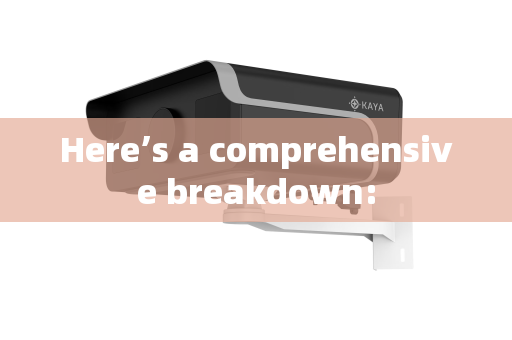
Security/Night-Vision Cameras:
- Infrared (IR) Illumination: Uses IR LEDs invisible to the human eye but detectable by the camera sensor, creating a monochrome (green/black) image.
- Starlight Sensors: Advanced image sensors that can produce usable color images in extremely low light (e.g., moonlight).
- Thermal Imaging: Detects heat (infrared radiation) rather than visible light, working in total darkness.
-
Smartphone Cameras: Use computational photography to excel in low-light:
- Night Mode: Takes multiple frames at different exposures and aligns/merges them to reduce noise and boost detail.
- Pixel Binning: Combines data from adjacent pixels on a high-megapixel sensor to act as one larger, more light-sensitive pixel (e.g., "4-in-1" binning).
In Botany
Refers to plants that thrive in shaded conditions.
- Low-Light Plants: Adapted to the forest floor where canopy blocks sunlight (e.g., snake plants, pothos, ZZ plants, ferns).
- Adaptations: Often have broader, thinner leaves to maximize light capture.
Key Concept: The Trade-Off
Across all fields, low-light capability involves a fundamental trade-off:
- In Photography: Light sensitivity vs. Image noise.
- In Biology: Light sensitivity vs. Visual acuity/color vision.
- In Technology: Sensor sensitivity vs. Cost, power consumption, and image processing complexity.
Quick Comparison Table
| Field | Meaning | Key Challenge | Primary Solution |
|---|---|---|---|
| Photography | Shooting with minimal ambient light | Noise & Motion Blur | Wider aperture, higher ISO, tripod, AI processing |
| Biology | Survival & vision in dark environments | Capturing enough photons for sight | Tapetum lucidum, more rod cells, larger eyes |
| Technology | Enabling cameras to see in the dark | Sensor noise & lack of signal | IR illumination, sensor tech (Starlight), computational photography |
In summary, "Low-Light" is about overcoming the scarcity of photons. Whether it's a photographer opening up their lens, an owl's eye evolving a reflective layer, or an engineer designing a new sensor, the goal is the same: to extract a clear, usable signal from a very weak source of light.
Was there a specific area of low-light you were curious about?