Introduction
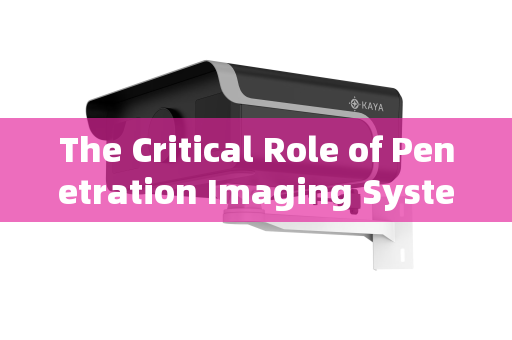
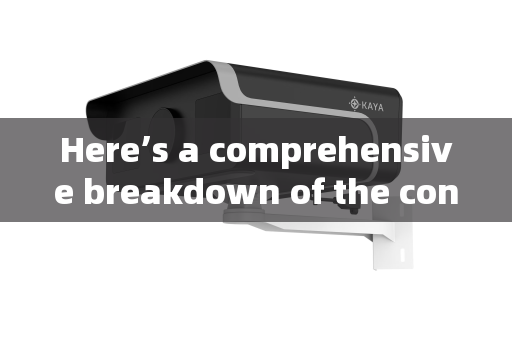
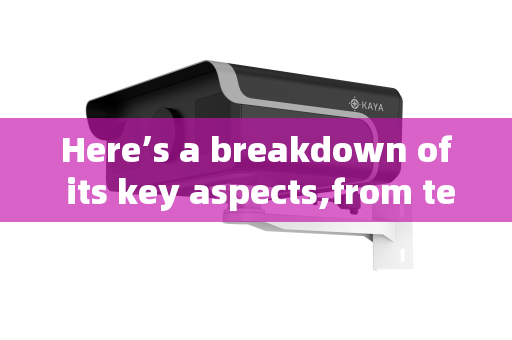
Penetration Imager Effect Images
Border security remains a paramount challenge for nations worldwide, with smuggling activities—ranging from narcotics and weapons to human trafficking and contraband—posing persistent threats to economic stability, public safety, and national sovereignty. Traditional surveillance methods, including visible-light cameras, thermal imagers, and radar, often falter under conditions of darkness, obscurants, or when targets conceal themselves behind barriers. This operational gap is where advanced Penetration Imaging Systems emerge as a transformative technology. Leveraging cutting-edge Laser Range-Gated (LRG) imaging, these systems provide law enforcement and border agencies with an unparalleled capability to detect, identify, and monitor illicit activities under the most challenging environmental and concealment conditions.
Understanding Penetration Imaging Technology
A Penetration Imaging System is not a conventional camera. It is a sophisticated active imaging suite that masterfully combines high-repetition-rate pulsed lasers with an intensified gated camera. The core innovation lies in its precise nanosecond-level time synchronization. The system emits short, powerful laser pulses. The camera's ultra-fast "gated" shutter opens only for a precise, delayed moment corresponding to the time it takes for light to travel to a specific distance slice and back, effectively ignoring all scattered light from other ranges (like fog, smoke, or rain droplets close to the sensor). By stacking these temporally "sliced" images, the system constructs a high-contrast image of the target zone.
Key technical components enable this:
- Pulsed Laser Illuminator: Provides the coherent, time-coded light source.
- Gated Intensified Camera: The heart of the system, incorporating a Microchannel Plate (MCP) image intensifier, high-voltage modules, and timing circuitry. It achieves extraordinary optical gain (>10^6), shutter speeds below 3 nanoseconds, and synchronization precision better than 10 picoseconds.
- Beam Expander & Imaging Lens: Shape the laser output and collect returning photons.
This architecture grants the system its defining characteristics: long operational range, high range resolution, exceptional resistance to backscatter and environmental interference (fog, rain, snow, haze, smoke), and the unique ability to "see through" transparent and semi-transparent barriers with minimal sensory signature.
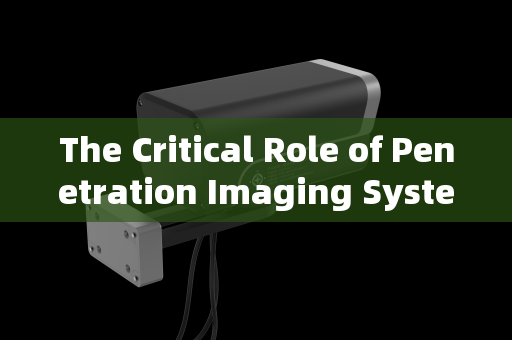
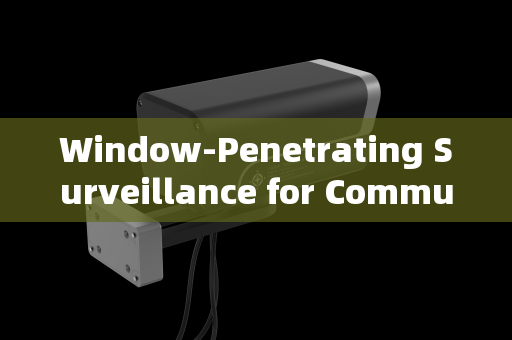
Penetration Imager Effect Images
Application in Border and Coastal Security: A Game Changer for Smuggling Reconnaissance
In the context of border and coastal surveillance, the capabilities of penetration imaging translate into direct tactical and strategic advantages:
-
Concealment Defeat: Smugglers frequently use vehicles, containers, or vessels with modified compartments. A penetration imaging system can peer through standard and tinted vehicle windows, glass panels, or acrylic surfaces from a standoff distance. This allows operators to conduct non-invasive, undetected inspections of car trunks, cargo holds of lorries, or cabins of vessels moored offshore, identifying hidden personnel, packages, or anomalies without alerting the subjects.
-
All-Weather, Day/Night Operational Readiness: Border regions often experience severe weather. Unlike thermal imagers whose contrast can diminish in heavy rain or fog, LRG technology actively suppresses these obscurants. It provides clear imaging through precipitation, mist, and light fog, ensuring continuous surveillance capability during critical smuggling windows (often at night or in poor weather).
-
Long-Range, Covert Observation: The system's powerful illumination and sensitive detection enable long-range reconnaissance of border crossings, remote trails, and coastal approaches. Operators can monitor suspicious activity from a concealed position kilometers away, gathering essential intelligence for interdiction planning without compromising the operation.
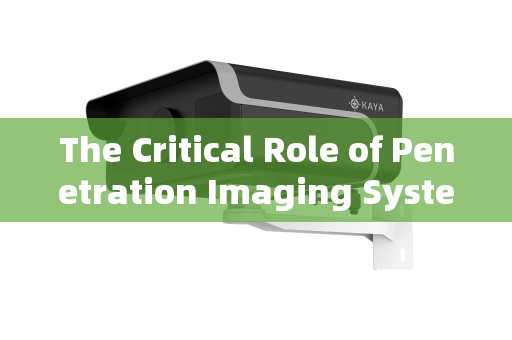
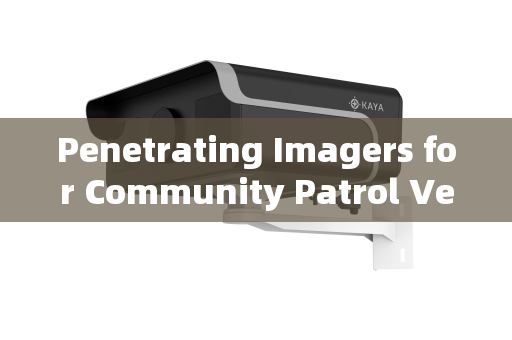
Penetration Imager Effect Images
-
Maritime and Coastal Domain Awareness: For coastal borders, the system's ability to perform in haze and its strong light suppression feature are vital. It can clearly image vessels attempting to land contraband at night, despite interference from shore lights or vessel navigation lights. Its capability for limited underwater imaging can also aid in detecting submerged or semi-submerged objects used in smuggling.
-
Enhanced Evidence Gathering: The high-resolution, detailed imagery obtained serves as powerful forensic evidence. It can document the presence of illicit goods behind barriers or the actions of individuals within vehicles, strengthening cases for prosecution.
Integration into Broader Security Operations
The value of penetration imaging extends beyond a single sensor. It integrates seamlessly into broader "Smart Border" and "Smart Coastal Defense" frameworks. Data fusion with radar tracks, Automatic Identification System (AIS) data, and thermal surveillance creates a comprehensive common operational picture. It is equally critical in counter-terrorism operations and tactical armed response scenarios along borders, where identifying threats inside structures or vehicles before engagement is crucial for operator safety and mission success.
Conclusion
The fight against border smuggling demands technological superiority. Penetration Imaging Systems, built upon laser range-gated technology, provide a decisive edge. By enabling high-fidelity, barrier-penetrating reconnaissance in total darkness and through environmental obscurants, they transform the operational landscape for border patrol, coast guards, and customs agencies. They move surveillance from mere detection of movement to positive identification and intent assessment of concealed activities. As smuggling tactics evolve, the deployment of such advanced imaging systems is not merely an upgrade—it is an essential component of a modern, robust, and effective border security strategy, ensuring that borders are not just lines on a map but intelligent, persistent shields of national security.