Seeing the Unseen: The Role of Penetration Imaging Systems as the Silent Sentinel in High-Level Security Site Surveillance**
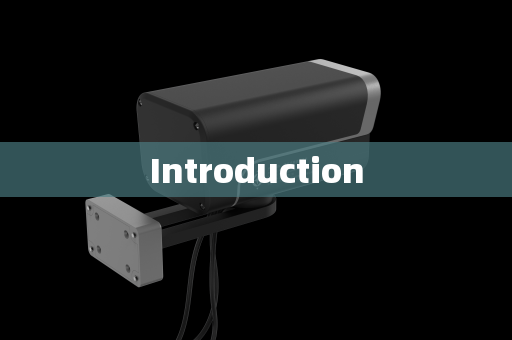
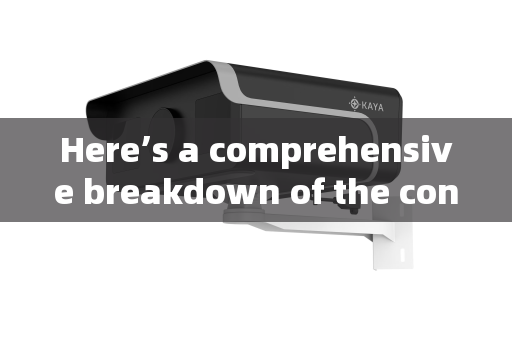
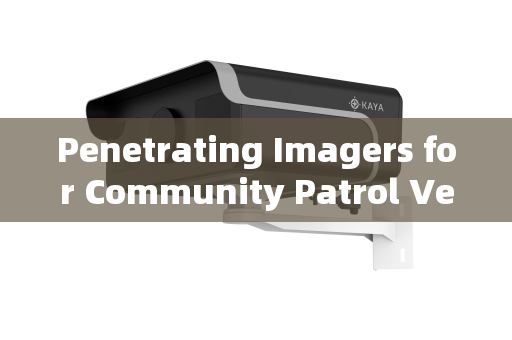
Penetration Imager Effect Images
In the realm of high-level security, whether guarding critical infrastructure, government facilities, border zones, or major event venues, the imperative for comprehensive, all-area supervision is paramount. Traditional surveillance systems—visible light cameras, thermal imagers, radar—often reach their operational limits when confronted with visual obstructions, adverse weather, or deliberate concealment. This is where Penetration Imaging Systems (PIS), leveraging advanced Laser Range-Gated Imaging (LRGI) or Gated Imaging Technology, emerge as a transformative force. They redefine the very notion of "line-of-sight," acting as a silent, all-seeing sentinel capable of maintaining persistent surveillance under conditions that would blind conventional sensors.
Understanding Penetration Imaging Systems
At its core, a Penetration Imaging System is a paradigm shift in electro-optical surveillance. It innovatively combines a high-repetition-rate pulsed laser with a gated image-intensified camera. The system’s genius lies in its precise, nanosecond-level synchronization. The laser illuminates the scene with ultra-short pulses. The camera’s intensifier acts as an ultrafast optical shutter, opening only for a meticulously delayed, precise time window corresponding to the return of light from a specific "slice" of space. By progressively scanning through these time/distance slices and stacking the images, the system constructs a clear, high-contrast picture of the target zone.
This process delivers unparalleled capabilities:
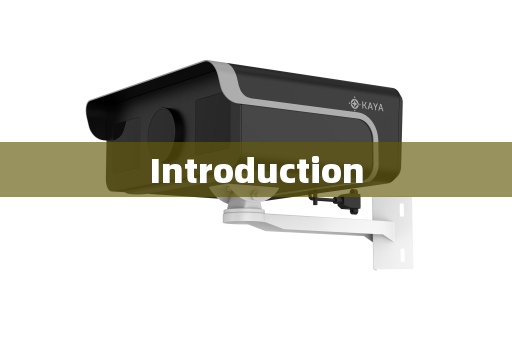
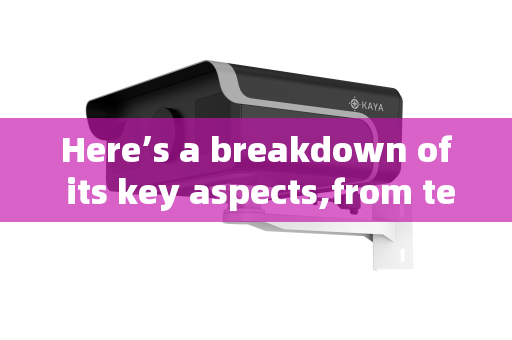
Penetration Imager Effect Images
- Long-Range, High-Resolution Imaging: Achieves detailed reconnaissance over significant distances.
- Superior Backscatter Suppression: Effectively "sees through" obscurants like smoke, fog, mist, rain, and snow by rejecting light scattered from particles close to the sensor.
- Active Penetration: The key differentiator—it can penetrate various transparent and semi-transparent barriers with minimal reflection or sensor awareness. This includes vehicle windows, architectural glass, train windows, aircraft portholes, and even water surfaces.
The system comprises a pulsed laser, a gated image-intensified camera (incorporating a Microchannel Plate (MCP) intensifier, high-voltage module, timing module, and gating circuitry), beam expander, and imaging lenses. The camera provides >10^6 optical gain, shutter speeds below 3ns, and timing synchronization precision better than 10ps, enabling not just imaging but high-precision 3D information acquisition.
The Pivotal Role in Full-Area Supervision of High-Level Security Sites
For a high-security site, "full-area supervision" means leaving no blind spots, physical or environmental. PIS plays three critical, interlocking roles in achieving this:
The Role of the Unseen Penetrator: Eliminating Sanctuary Spaces Concealment behind glass is a common tactic for surveillance avoidance or hostile planning. PIS neutralizes this advantage. It enables covert, non-invasive reconnaissance through windows of suspicious vehicles parked near sensitive perimeters, through the glass facades of adjacent buildings, or into structures from a standoff distance. In scenarios involving counter-terrorism, VIP protection, or evidence gathering, the ability to discreetly confirm occupant numbers, identify objects, or monitor activity inside a vehicle or room without alerting the subjects is a game-changer. It extends the site’s secure bubble far beyond its physical walls.
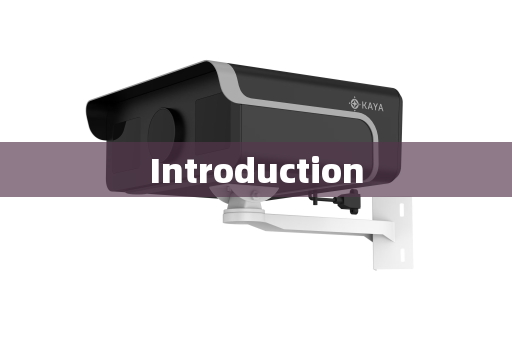
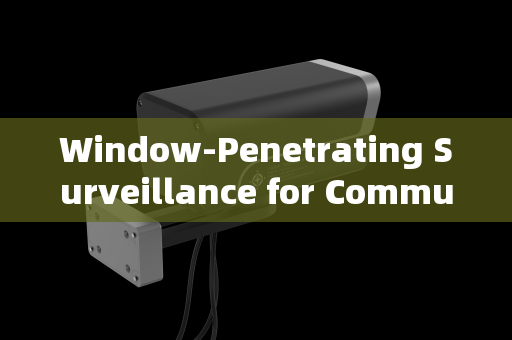
Penetration Imager Effect Images
The Role of the Environmental Dominator: Ensuring 24/7/365 Operational Readiness Security threats do not subside in bad weather or at night. PIS provides all-weather, all-light dominance. Its ability to suppress backscatter ensures clear imaging through fog, haze, and precipitation, which is crucial for coastal or border surveillance sites, port security, and critical infrastructure monitoring in variable climates. Coupled with its active illumination, it delivers high-definition imagery in pitch darkness, eliminating the vulnerabilities of moonless or overcast nights. This guarantees that the site’s surveillance envelope remains intact regardless of environmental hostility, supporting maritime interdiction, border patrol, and force protection tasks continuously.
The Role of the Situational Awareness Amplifier: From 2D Imaging to 3D Intelligence Beyond seeing through obstacles, PIS enhances understanding of the scene. The precise time-gating provides accurate distance data for each pixel, facilitating high-resolution 3D profiling. This allows for better discrimination between targets and clutter, accurate sizing of objects, and improved tracking capability. In complex, cluttered environments—such as a port with numerous containers or a forested border area—this depth resolution is invaluable for detecting intrusions, identifying camouflaged positions, or conducting search and rescue (SAR) operations in disaster-stricken areas where visibility is near zero due to smoke or dust. It transforms surveillance video into rich, actionable intelligence.
Application Synergy Across Critical Domains
The functionalities of PIS translate directly into high-impact applications within and beyond static site security:
- Emergency & Rescue Services: In urban and wildland firefighting, it allows firefighters to "see" through smoke and flames to locate victims and identify structural integrity. For mine, water, and national USAR (Urban Search and Rescue) teams, it can peer through particulate-filled air or water surfaces. It is also vital for live-fire training simulation systems and protecting high-value assets like landmark buildings.
- Law Enforcement & Military Operations: Supports counter-narcotics, anti-smuggling operations by inspecting vehicles and containers; aids in surveillance, pursuit, and evidence collection; assists in crowd monitoring and riot control; and enables covert military reconnaissance and targeting.
- Coastal & Border Defense: Essential for long-range maritime surveillance, pier and approach security in heavy fog, and border monitoring under conditions where traditional cameras fail, ensuring continuity of operations for homeland security.
- Smart City & Secure Campus Integration: As a cornerstone technology for Smart Safe Cities, Intelligent Policing, and Perimeter Security, it provides a critical layer of persistent, penetrating surveillance for airports, power plants, data centers, and government compounds.
Conclusion
The Penetration Imaging System is far more than just another camera; it is a fundamental capability enhancer for comprehensive security. By mastering the dimensions of light and time, it fulfills the critical role of the omnipresent observer—one that sees through visual deception, conquers environmental chaos, and delivers precise spatial intelligence. In the high-stakes mission of securing sensitive sites, PIS moves the paradigm from reactive monitoring to proactive, predictive wide-area surveillance (WAS), ensuring that security forces are not just watching, but truly seeing everything that matters, under any condition. It is the silent sentinel that never blinks.