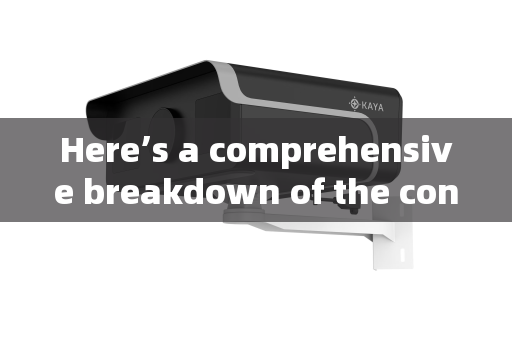
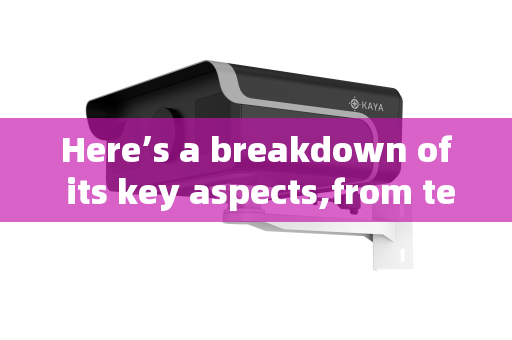
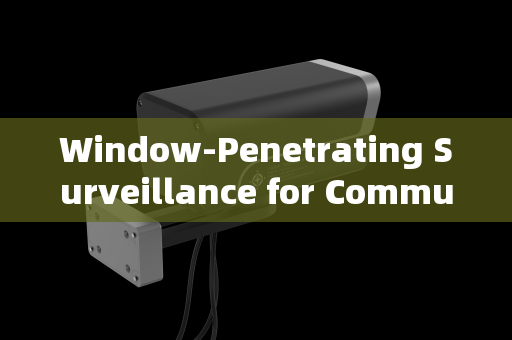
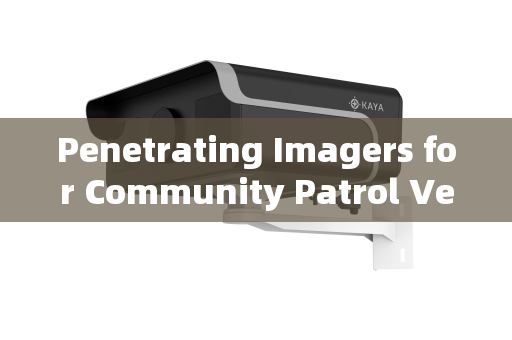
In the high-stakes domain of VIP security, where threats are often obscured by design, environment, or deliberate concealment, traditional surveillance and reconnaissance methods frequently reach their operational limits. The imperative to detect, assess, and neutralize potential dangers before they materialize necessitates technological superiority. This is where advanced Penetration Imaging Systems (PIS), leveraging cutting-edge Laser Range-Gated Imaging (LRGI) technology, emerge as a transformative force in modern security supervision for high-profile individuals.
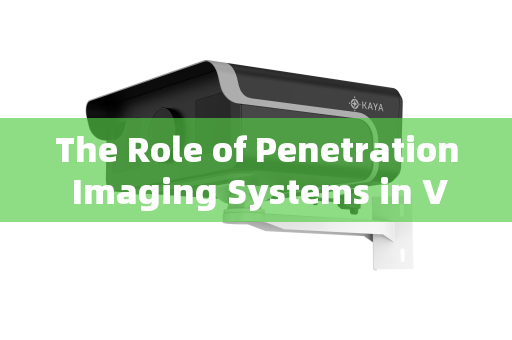
Penetration Imager Effect Images
Understanding Penetration Imaging: Technology and Capabilities
At its core, a Penetration Imaging System is a sophisticated electro-optical device engineered to "see through" visual obstructions and adverse environmental conditions. Its operational principle is an innovative fusion of high-repetition-rate pulsed lasers and gated image-intensifier cameras. The system achieves high-contrast imaging by emitting nanosecond-scale laser pulses and precisely synchronizing the camera's ultra-fast optical shutter (gating) to open only for the fleeting moment when light reflected from a specific "slice" of space returns. By sequentially stacking these temporally sliced images with exquisite timing control (synchronization precision better than 10 picoseconds), the system constructs a clear, detailed picture of the target scene.
This time-slicing or range-gating technique bestows several critical advantages for security applications:
- Superior Penetration: It can effectively "see through" common barriers such as vehicle windows (car, high-speed rail, aircraft), architectural glass, and speciality glazing without physical contact or alerting occupants.
- Defeat of Backscatter & Environmental Clutter: The gating mechanism rejects light scattered by intervening media (fog, smoke, rain, snow, haze, dust, water surface glare), allowing for clear imaging in conditions where conventional cameras and thermal imagers fail.
- Long-Range, High-Resolution Reconnaissance: It operates at significant distances with high spatial and range resolution, enabling stand-off surveillance.
- Covert Operation: Utilizing non-visible laser spectra and passive detection modes allows for discreet information gathering.
The system's hardware suite typically includes a pulsed laser illuminator, a gated/intensified camera (incorporating a Microchannel Plate - MCP - for gains exceeding 10^6), beam expanders, and imaging lenses. This integration enables high-precision 3D data acquisition of targets.
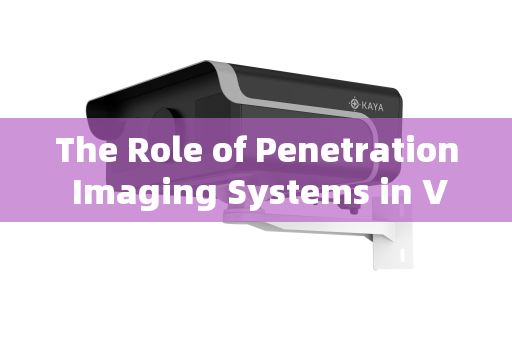
Penetration Imager Effect Images
Pivotal Roles in VIP Security Supervision
For VIP protection details, the capabilities of a Penetration Imaging System translate into multi-layered operational enhancements:
-
Preventive Threat Detection & Pre-Assessment: Prior to a VIP's arrival at a venue, motorcade route, or residence, security teams can conduct covert, long-range scans. The system can penetrate the windows of parked vehicles along a route or buildings overlooking a site to detect hidden occupants, weapons, or suspicious devices without alerting potential adversaries. This provides invaluable intelligence for securing the perimeter and conducting pre-emptive actions.
-
Dynamic Risk Assessment in Transit: During motorcade movements, PIS units can be deployed to scan adjacent vehicles, especially in slow-moving traffic or at intersections. The ability to see through tinted windows, sunroofs, and windshields helps identify potential mobile threats—such as armed individuals or IED components—that are invisible to standard visual and thermal surveillance. This enables real-time threat assessment and informed decision-making for escort vehicles.
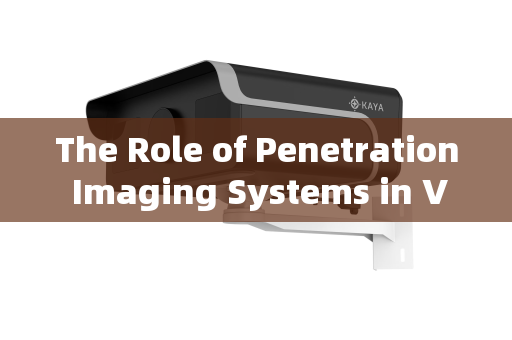
Penetration Imager Effect Images
-
Venue & Infrastructure Security Sweeps: For hotels, conference centers, or private residences, the system can inspect interior spaces through exterior windows or glass facades from a distant, secure position. This allows for the detection of unauthorized persons, hidden packages, or surveillance devices planted inside a "secured" area before the VIP enters, ensuring the inner perimeter's integrity without necessitating premature physical entry by teams.
-
Counter-Surveillance and Forensic Investigation: The system aids in detecting covert observation posts. A team can scan buildings, vehicles, or natural hides at a distance to locate individuals using optical devices (cameras, binoculars) behind windows. Following an incident, it can be used to gather forensic evidence from within vehicles or rooms without immediate scene entry, especially in hazardous environments (e.g., following a CBRN threat).
-
Enhanced Capability in Adverse Conditions: VIP schedules are immutable, regardless of weather. The PIS's robust performance in fog, smoke, haze, and darkness ensures continuous surveillance and reconnaissance capability during night operations or in environmentally challenged scenarios, a common weakness in traditional optical systems.
-
Maritime & Aviation Security: For maritime travel or at airports, the system supports hull inspections of nearby vessels for hidden threats and can conduct scans of aircraft cabins from the ground or through terminal windows, adding a layer of security during embarkation/disembarkation processes.
Integration and Future Outlook
The true potency of Penetration Imaging in VIP security is realized when its data feeds are integrated into a broader Command, Control, Communications, Computers, Intelligence, Surveillance, and Reconnaissance (C4ISR) framework. Fused with data from drones, ground sensors, and intelligence databases, and processed with AI for automated threat recognition (e.g., weapon detection), it creates a comprehensive, real-time situational awareness picture for the security command center.
In conclusion, the Penetration Imaging System transcends being merely a sensor; it is a force multiplier in VIP security supervision. By rendering the opaque transparent and revealing threats hidden behind barriers or within environmental clutter, it empowers protection teams to shift from a reactive posture to a proactive, intelligence-driven paradigm. It provides the critical "see-first, understand-fast" advantage essential for predicting and preventing attacks, thereby fundamentally enhancing the safety and security of high-value individuals in an increasingly complex threat landscape. As the technology matures and becomes more integrated with smart security architectures, its role as a cornerstone of advanced protective operations will only solidify.