In the high-stakes domain of law enforcement and tactical operations, the pursuit of a fleeing suspect vehicle presents a complex and dangerous challenge. Success hinges on the ability to acquire accurate, real-time intelligence about the vehicle’s occupants, their potential armament, and interior activities, often through visual obstructions and in adverse conditions. This is where advanced Penetration Imaging Systems (PIS), specifically those leveraging Laser Range-Gated Imaging (LRGI) technology, transition from sophisticated tools to indispensable assets in the reconnaissance phase of vehicular pursuits.
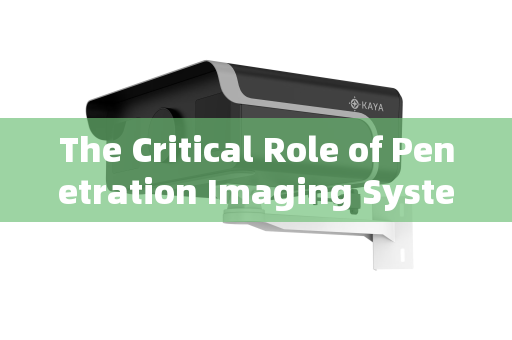
Penetration Imager Effect Images
Understanding the Penetration Imaging System: A Technological Breakthrough
At its core, a modern Penetration Imaging System is designed to "see the unseen." It masterfully overcomes the fundamental limitations of conventional optical and thermal cameras in scenarios involving obscurants, glare, or transparent barriers. The system’s operation is an elegant synergy of advanced components: a high-repetition-rate pulsed laser, a gated intensifier camera (incorporating a Microchannel Plate - MCP - intensifier, high-voltage and gating modules), beam expanders, and imaging lenses.
The technological innovation lies in the precise temporal synchronization between the nanosecond laser pulses and the ultra-fast optical shutter of the camera. This range-gating technique allows the system to selectively image only a specific, narrow "slice" of space corresponding to the time delay of light returning from the target distance. By progressively scanning through different range slices, the system constructs a clear image. This method provides exceptional range resolution, actively suppresses backscatter from intervening particles (like fog, smoke, or rain), and achieves high-contrast imaging over long distances. With an optical gain exceeding 10^6, a gating time under 3 nanoseconds, and timing precision better than 10 picoseconds, these systems can extract high-fidelity visual and three-dimensional data from targets concealed behind various media.
The Pivotal Role in Vehicle Reconnaissance: Gaining the Decisive Edge
Penetration Imager Effect Images
During the dynamic and critical phase of tracking a fleeing vehicle, a Penetration Imaging System plays several transformative roles:
-
Through-Glass Surveillance: The primary and most salient application is the ability to perform unobtrusive, long-range penetration of vehicle windows, windshields, and specialized glass (e.g., tinted, laminated). This allows tactical teams to conduct reconnaissance on the move, identifying the number of occupants, observing their behavior, detecting potential weapons or threats held by passengers, and monitoring for actions like the destruction of evidence. This intelligence is vital for formulating safe interdiction strategies, assessing threat levels, and ensuring the safety of officers and the public during a stop or tactical intervention.
-
All-Weather, All-Condition Tracking: Suspects do not flee only in clear daylight. Pursuits often occur at night, in heavy rain, fog, snow, or through smoke. The LRGI technology's inherent capability to mitigate atmospheric obscurants ensures continuous visual contact and reconnaissance capability where traditional cameras fail. The system's strong light suppression feature also counters dazzle from headlights, streetlights, or deliberate attempts to blind sensors.
-
Enhanced Situational Awareness in Complex Environments: A fleeing vehicle might attempt to hide in industrial areas with smoke, near fire scenes, or in wooded areas with dust and foliage. The penetration capability through such multiple media (smoke, flame, light foliage, haze) provides a persistent surveillance picture, preventing the suspect from using environmental conditions as a shield.
Penetration Imager Effect Images
-
Evidence Gathering and Forensic Pre-Assessment: The high-resolution imaging can serve as preliminary forensic evidence, capturing the interior scene of the vehicle before a takedown. This can be crucial for prosecutions related to trafficking (drugs, weapons), human smuggling (detecting overcrowding), or other crimes where the interior configuration is evidence.
Broad Application Context: From Tactical Ops to Integrated Security
The value of Penetration Imaging Systems extends beyond a single moving vehicle pursuit, integrating seamlessly into broader security and emergency response architectures:
- Law Enforcement & Counter-Terrorism: Vital for covert surveillance, counter-sniper operations, barricaded suspect resolutions, and checkpoint security where vehicle interior inspection is necessary from a safe standoff distance. It supports anti-smuggling details at borders and ports.
- Emergency Response & Search and Rescue (SAR): In urban and wildland firefighting, these systems allow firefighters to see through smoke and flames to locate victims or assess structural integrity. For maritime and aquatic rescue, and in mine disasters, the ability to image through water surface glare or particulate-filled air saves critical time and lives.
- Critical Infrastructure & Border Security: They enable long-distance maritime surveillance through haze for port security and coastal defense. They can monitor sensitive perimeters, VIP motorcade routes, and high-value assets, providing clear imaging regardless of weather or time of day.
Conclusion
In the reconnaissance of fleeing suspect vehicles, the Penetration Imaging System is far more than just a camera; it is a force-multiplying sensor that pierces the veil of visual obstruction. By delivering clear, actionable intelligence on occupant activity and threats through glass and in punishing environmental conditions, it empowers commanders and tactical teams with unparalleled situational awareness. This technology directly contributes to more informed decision-making, safer operational tactics, higher mission success rates, and ultimately, the enhanced protection of both officers and civilians. As threats evolve and operational environments grow more complex, the role of such advanced imaging systems in public safety and national security will only become more central and indispensable.