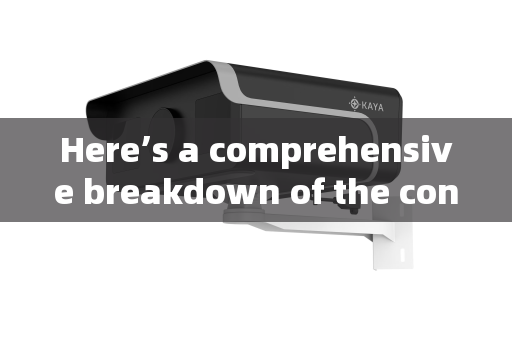
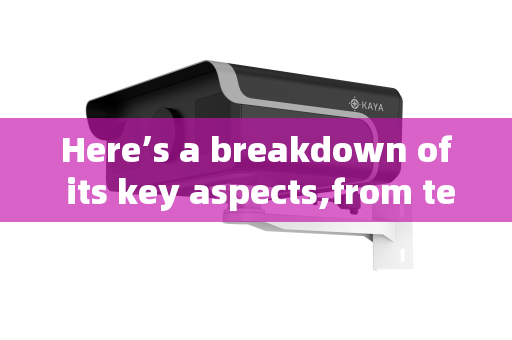
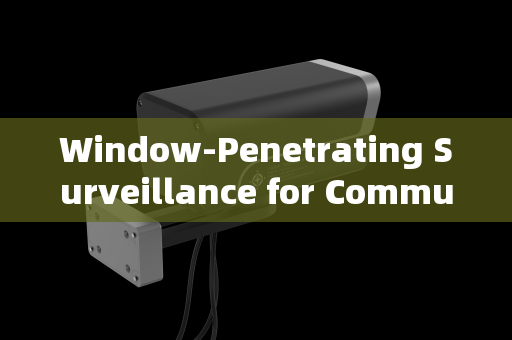
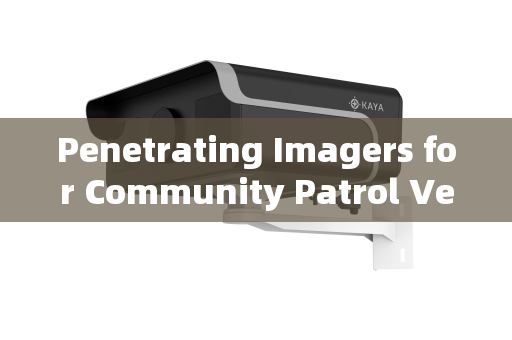
In the demanding and often unpredictable world of law enforcement, gaining a decisive informational advantage can mean the difference between mission success and failure, officer safety and peril. Mobile law enforcement vehicles, from patrol cars and SWAT trucks to command units, serve as the primary platforms for rapid response, surveillance, and tactical operations. The integration of advanced sensor technology is crucial in enhancing their capabilities. Among these technologies, the Penetration Imaging System (PIS) stands out as a transformative tool, fundamentally redefining the possibilities for vehicle-based reconnaissance.
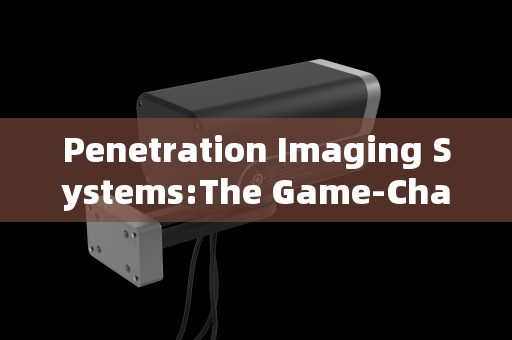
Penetration Imager Effect Images
Understanding Penetration Imaging Technology
At its core, a Penetration Imaging System is a sophisticated active imaging solution designed to "see through" visual obstructions that traditionally blind conventional cameras and the human eye. It leverages advanced Laser Range-Gated Imaging (LRGI) or Gated Imaging technology. This innovative approach combines a high-repetition-rate pulsed laser with a gated intensifier camera.
The system operates by emitting extremely short, nanosecond-duration laser pulses toward a target area. The gated camera, synchronized with picosecond-level precision to these pulses, acts as an ultra-fast shutter. It opens only for a precisely controlled, narrow time window corresponding to the round-trip time of the laser light reflecting off objects at a specific distance "slice." By progressively delaying this time window, the system scans through different depth planes, stacking the images to build a clear, high-contrast composite. This method effectively rejects unwanted backscatter from obscurants (like smoke, fog, or glare) located outside the gated range, illuminating only the targeted slice of space.
Key Capabilities for Reconnaissance
This technical foundation grants PIS remarkable capabilities critical for reconnaissance:
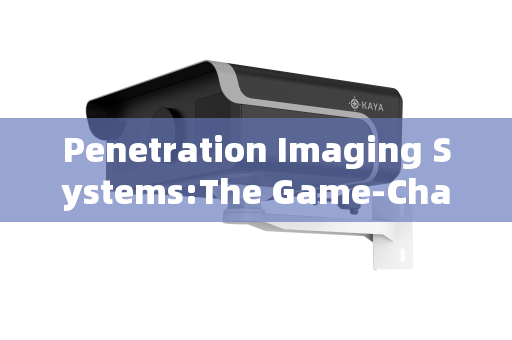
Penetration Imager Effect Images
- Long-Range, High-Resolution Imaging: Operates effectively at distances far beyond standard low-light or thermal cameras.
- Superior Penetration: Can "see through" various transparent and semi-transparent barriers including vehicle windows, glass curtain walls, special-grade glass, train windows, and aircraft portholes with minimal sensory signature ("non-intrusive" sensing).
- All-Weather & Condition Performance: Effectively overcomes the degrading effects of fire, smoke, rain, snow, fog, and haze, maintaining visibility in scenarios where other sensors fail.
- High Optical Gain & Precision: The intensifier camera, featuring a Microchannel Plate (MCP), provides over 10^6 optical gain and shutter speeds below 3 nanoseconds, enabling detection of extremely faint signals and precise 3D data acquisition.
Pivotal Role in Mobile Law Enforcement Vehicle Reconnaissance
When mounted on a mobile law enforcement vehicle, a PIS transforms it into a powerful, all-seeing reconnaissance node. Its role is multifaceted:
-
Enhanced Situational Awareness and Officer Safety: Before approaching a suspect vehicle, a stationary patrol car or tactical vehicle can use its PIS to discreetly scan the interior. This allows officers to identify the number of occupants, their positions, potential weapons, or visible threats (e.g., firearms on seats) through the windows, even in total darkness or through tinted glass. This intelligence is vital for formulating a safe approach strategy.
-
Covert Surveillance and Intelligence Gathering: For prolonged surveillance operations, a vehicle equipped with a PIS can maintain watch on a target location (e.g., a building with windows, a vehicle at a meetpoint) from a significant, non-compromising distance. It can gather information through windows despite darkness, light curtains, or adverse weather, providing continuous intelligence without alerting subjects.
-
Critical Incident Resolution: In barricade situations, hostage crises, or active shooter scenarios, a tactical vehicle can deploy its PIS to assess the interior of buildings through external windows from a protected position. It can detect movement, count individuals, or identify the layout behind smoked or reflective glass, informing breach points and negotiation tactics. The ability to "see through" fire and dense smoke is particularly invaluable for tactical firefighting units integrated with law enforcement during arson or hazardous material incidents.
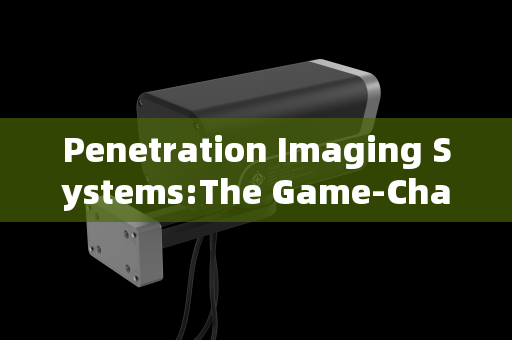
Penetration Imager Effect Images
-
Traffic Enforcement and Vehicle Inspection: Beyond tactical operations, PIS can be used for enhanced traffic safety and security. It can aid in identifying overcrowding in commercial vehicles or buses by scanning through windshields and side windows. It may also assist in preliminary scans for large, irregular objects within vehicles during routine stops or at checkpoints, though it does not replace physical inspection.
-
Maritime and Coastal Patrol Integration: For agencies involved in coastal or waterway patrol, vehicles equipped with PIS can perform long-range penetration of haze and glare to monitor vessel activities, identify personnel on decks or behind cabin windows, and enhance navigation and interdiction capabilities in poor visibility, supporting coastal defense and anti-smuggling operations.
Integration into Modern Policing Paradigms
The PIS aligns perfectly with the evolution towards Smart Policing, Smart Security, and Smart Cities. It provides the raw, actionable data layer necessary for intelligent command and control. Data from vehicle-mounted PIS can be streamed to command centers, fused with other surveillance feeds, and analyzed to support real-time decision-making for counter-terrorism, evidence collection, anti-riot operations, narcotics interdiction, and clandestine tracking missions.
Conclusion
The Penetration Imaging System is far more than just another camera for law enforcement vehicles. It is a force multiplier that extends an officer's vision through the most challenging visual barriers and environmental conditions. By delivering clear, actionable intelligence about what lies behind glass, inside vehicles, or within obscured environments, it dramatically enhances reconnaissance effectiveness, operational planning, and most importantly, officer and public safety. As threats evolve and operational environments grow more complex, the role of PIS in mobile law enforcement reconnaissance will undoubtedly become not just advantageous, but indispensable.