Introduction
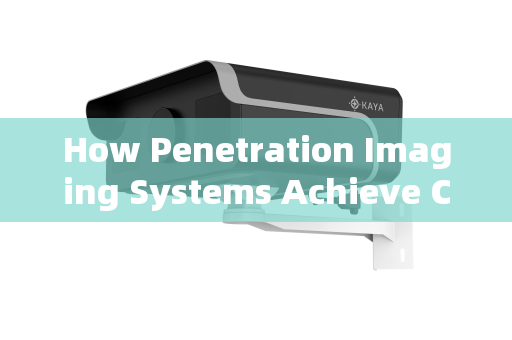
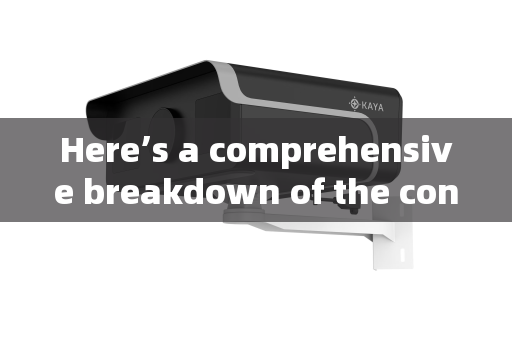
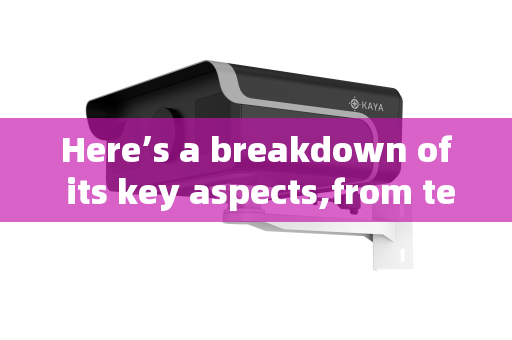
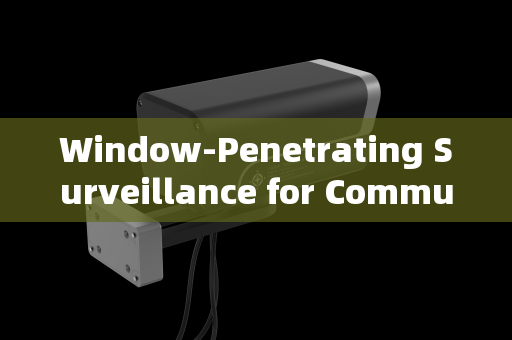
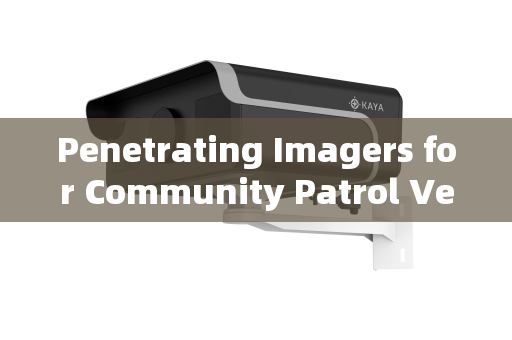
Penetration Imager Effect Images
In critical response scenarios—whether a high-risk law enforcement intervention, a covert surveillance operation, or a search-and-rescue mission inside a smoke-filled vehicle—visual intelligence is paramount. A fundamental obstacle in such situations is the tinted or obscured vehicle window, designed to provide privacy but posing a significant barrier to situational awareness. Traditional optical and thermal imaging methods often fail to deliver usable images through such media due to glare, reflection, absorption, or scattering. This is where advanced Penetration Imaging Systems (PIS), leveraging cutting-edge Laser Range-Gated Imaging (LRGI) or gated imaging technology, provide a transformative solution. This article explains how these systems achieve high-contrast imaging through tinted windows and explores their vital role in emergency response, law enforcement, and security operations.
The Core Technology: Laser Range-Gated Imaging
The breakthrough of modern penetration imaging lies in its innovative fusion of high-repetition-rate pulsed lasers and gated intensified cameras. The process is a masterclass in precision timing and controlled illumination, functioning as a form of "optical slicing" through obscurants.
-
Pulsed Illumination & Synchronized Gating: The system emits extremely short, powerful pulses of laser light (in the nanosecond regime) towards the target area. Crucially, the camera's sensor—an image intensifier equipped with a Microchannel Plate (MCP)—remains completely closed or "gated off" during the laser's journey to the target and its initial return. It only opens for an equally brief window (less than 3 nanoseconds), perfectly synchronized to capture only the light returning from a specific, pre-selected distance "slice."
-
Slicing Through Interference: Light reflected from the tinted window's surface (the primary source of glare) and from particles close to the observer (like fog, smoke, or rain droplets) arrives back at different times than light from the target behind the window. By introducing a precise time delay before opening the camera gate, the system effectively ignores this unwanted "backscatter" from the glass surface and proximate scatterers. It selectively collects only the photons that have travelled to the desired plane—the interior of the vehicle—and back.
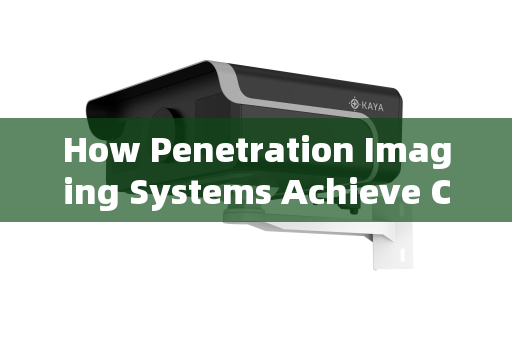
Penetration Imager Effect Images
-
Stacking for Clarity: By rapidly repeating this process and incrementally adjusting the time delay, the system can scan through multiple depth slices. These slices are then computationally stacked or processed to construct a clear, high-contrast composite image of the scene behind the obscured window. This method provides exceptional range resolution, long operational range, and robust immunity to environmental interference.
System Composition and Capabilities
A typical PIS comprises several key components:
- Pulsed Laser Illuminator: Provides the structured, high-power light pulses.
- Beam Expander: Shapes and directs the laser beam.
- Gated Intensified Camera: The core sensor, housing the MCP image intensifier, high-voltage supply, and precision timing/gating electronics. It achieves optical gains exceeding 10^6.
- Imaging Lens: Gathers the returning light.
- Precision Timing Module: The "brain" that synchronizes laser pulse and camera gate with precision better than 10 picoseconds.
This configuration enables the system to perform effectively in low-light or no-light conditions and penetrate not just tinted automotive glass, but also architectural glass, specialized laminates (e.g., in trains or aircraft), and various obscuring media like fog, smoke, and light foliage.
Application Scenarios in Emergency and Tactical Operations
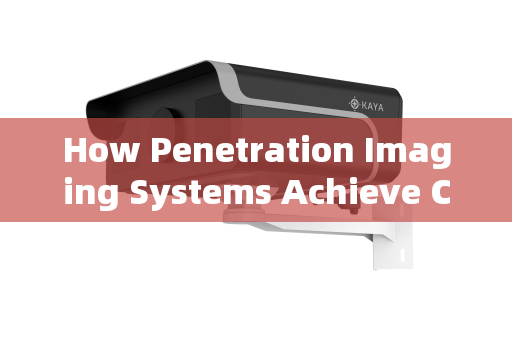
Penetration Imager Effect Images
The ability to see through visual barriers has profound implications across multiple high-stakes domains:
-
Emergency Response & Firefighting: For urban and wildland firefighting, PIS allows responders to perform search-and-rescue (SAR) in smoke-obscured environments, identify hotspots through flames, and assess structural integrity. It is invaluable in hazmat incidents for inspecting vehicle interiors from a safe distance. Training facilities and high-security buildings use this technology for advanced simulation and security audits.
-
Law Enforcement & Military Operations: This is a force-multiplier for tactical teams. It enables:
- Covert Surveillance & Reconnaissance: Observing occupants inside vehicles or buildings without alerting them.
- Pre-Assault Intelligence: Verifying threats, counting occupants, and identifying weapons or hazardous materials inside a suspect vehicle during barricade situations or VIP protection details.
- Checkpoint & Border Security: Screening vehicles for concealed persons, contraband (drugs, weapons, smuggled goods), or overcrowding without physical intrusion.
- Evidence Collection & Forensic Investigation: Documenting scenes or activities from a concealed position.
- It is integral to modern Smart City, Smart Policing, and counter-terrorism infrastructures.
-
Maritime & Border Security: For coastal and border patrol, PIS provides long-range penetration capability through mist, fog, and sea spray. It enhances navigation and surveillance for port security, ship boarding operations, and monitoring sensitive coastal areas in all weather conditions, day or night.
Conclusion
Penetration Imaging Systems represent a significant leap forward in sensor technology, turning the opaque into the observable. By mastering the dimension of time in light collection through Laser Range-Gated Imaging, these systems defeat the challenges posed by tinted windows, environmental obscurants, and absolute darkness. Their deployment empowers first responders, law enforcement officers, and security personnel with critical visual intelligence, enabling safer, more informed decisions, successful missions, and ultimately, the preservation of life and property in the most demanding scenarios imaginable. As the technology continues to evolve, its integration into command, control, and surveillance networks will only deepen, solidifying its role as an indispensable tool for modern security and emergency response.